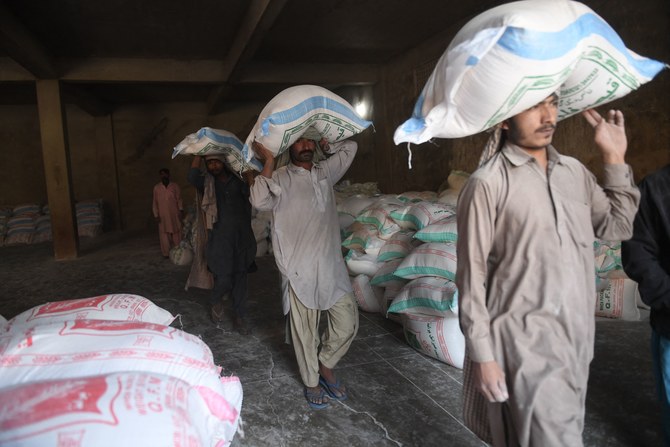

KARACHI: Pakistani industrialists said on Thursday they would sue the Sindh government in the Supreme Court over its decision to raise minimum wage to Rs25,000 ($144.30).
The Sindh administration in July announced an increase from Rs17,500 to Rs25,000 in the minimum wages for unskilled juvenile and adult workers employed at industrial and commercial establishments.
However, representatives of the business community at the Karachi Chamber of Commerce and Industry (KCCI) and the Sindh Industrial Trading Estate (SITE) Association challenged the decision in the Sindh High Court, which subsequently directed the provincial administration to review its decision but also directed business owners to ensure payment of the new minimum wage until authorities complete the reevaluation process.
The province’s industrialists say it is not possible for them to implement the decision, which they would challenge in the Supreme Court of Pakistan.
“Employers are preparing to go to the apex court since we are not left with any other option,” Ismail Suttar, president of the Employers’ Federation of Pakistan (EFP), told Arab News. “The increase in wages will not just remain limited to the unskilled workers. We will have to raise the wages of skilled employees as well if the decision is implemented. It is not humanly possible for us to do that.”
Suttar said the decision would force industrialists to move to other provinces.
“This will destroy our businesses and make industrialists relocate from the province since it will increase the cost of doing business here,” he continued. “I am thinking of moving my own industry to Balochistan since it will be a one-time cost.”
Sindh Chief Minister Murad Ali Shah expressed his resolve to implement his administration’s decision.
“An unprecedented tsunami of price hike in the country has deprived poor people of simple bread and butter,” he said. “Therefore, the government has decided to ensure payment of Rs25,000 in minimum wage and may increase it further to provide relief to the low paid employees in public and private sector.”
Pakistani labor representatives said the country’s workers were suffering due to the painful economic situation in the country.
“Most of the industries are not even paying the minimum wage of Rs17,500 to workers despite the fact that the prices of most essential items like flour and electricity have substantially increased,” Nasir Mansoor, deputy general secretary of the National Trade Union Federation (NTUF), told Arab News.
“The situation is painful for the working class as they are reeling from the impact of high prices,” he said. “Wages constitute only three to five percent of the overall cost of industrial inputs and implementing the Sindh administration’s decision will not impact the overall cost to a large extent.”
As the stakeholders debate the pros and cons of the minimum wage implementation, the province’s Minimum Wage Board has two months to submit its recommendations to the government as per the court’s orders.