BAKU: Azerbaijan released Thursday two Iranian truck drivers whose arrest last month on charges of illegally crossing into the country strained ties between Baku and Tehran.
The move marks a thaw between Azerbaijan and Iran a week after their foreign ministers agreed to resolve a crisis in ties through dialogue.
Azerbaijan’s customs department said Thursday it had handed over the drivers to the Iranian side in a decision “guided by principles of humanitarianism, mutual respect and good neighborliness.”
The standoff between the countries was sparked by allegations from Tehran that its sworn enemy Israel maintained a military presence in Azerbaijan. Baku denied the claims.
Iran vowed to take any necessary action and staged military drills near its border with Azerbaijan.
Azerbaijan’s Foreign Minister Jeyhun Bayramov spoke last week by phone with his Iranian counterpart Hossein Amir-Abdollahian and the pair agreed to resolve differences through dialogue.
Israel is a major arms supplier to Azerbaijan, which late last year won a six-week war with neighbor Armenia for control of the disputed Nagorno-Karabakh region.
Azerbaijan and Iran have long been at loggerheads over Tehran’s backing of Armenia in the decades-long Nagorno-Karabakh conflict.
The war last year ended with a Russian-brokered cease-fire that saw Armenia cede swathes of territory — including a section of Azerbaijan’s 700-kilometer (430-mile) border with Iran.
Baku said the drivers entered Azerbaijan through that territory, bypassing border control to avoid customs duties it had imposed recently — to Iran’s fury — on cargo transit to Armenia.
Tehran has long been wary of separatist sentiment among its ethnic Azeri minority, who make up around 10 million of Iran’s 83 million population.


![]()


Baku frees Iranian truck drivers as ties thaw with Tehran
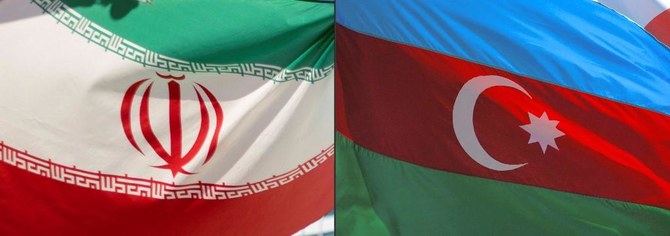
Short Url
https://arab.news/rhepm
Baku frees Iranian truck drivers as ties thaw with Tehran
- Standoff between the countries was sparked by allegations from Tehran that its sworn enemy Israel maintained a military presence in Azerbaijan


Mali, Burkina say restricting entry for US nationals in reciprocal move
ABIDJAN: Mali and Burkina Faso have announced travel restrictions on American nationals in a tit-for-tat move after the US included both African countries on a no-entry list.
In statements issued separately by both countries’ foreign ministries and seen Wednesday by AFP, they said they were imposing “equivalent measures” on US citizens, after President Donald Trump expanded a travel ban to nearly 40 countries this month, based solely on nationality.
That list included Syrian citizens, as well as Palestinian Authority passport holders, and nationals of some of Africa’s poorest countries including also Niger, Sierra Leone and South Sudan.
The White House said it was banning foreigners who “intend to threaten” Americans.
Burkina Faso’s foreign ministry said in the statement that it was applying “equivalent visa measures” on Americans, while Mali said it was, “with immediate effect,” applying “the same conditions and requirements on American nationals that the American authorities have imposed on Malian citizens entering the United States.”
It voiced its “regret” that the United States had made “such an important decision without the slightest prior consultation.”
The two sub-Saharan countries, both run by military juntas, are members of a confederation that also includes Niger.
Niger has not officially announced any counter-measures to the US travel ban, but the country’s news agency, citing a diplomatic source, said last week that such measures had been decided.
In his December 17 announcement, Trump also imposed partial travel restrictions on citizens of other African countries including the most populous, Nigeria, as well as Ivory Coast and Senegal, which qualified for the football World Cup to be played next year in the United States as well as Canada and Mexico.
In statements issued separately by both countries’ foreign ministries and seen Wednesday by AFP, they said they were imposing “equivalent measures” on US citizens, after President Donald Trump expanded a travel ban to nearly 40 countries this month, based solely on nationality.
That list included Syrian citizens, as well as Palestinian Authority passport holders, and nationals of some of Africa’s poorest countries including also Niger, Sierra Leone and South Sudan.
The White House said it was banning foreigners who “intend to threaten” Americans.
Burkina Faso’s foreign ministry said in the statement that it was applying “equivalent visa measures” on Americans, while Mali said it was, “with immediate effect,” applying “the same conditions and requirements on American nationals that the American authorities have imposed on Malian citizens entering the United States.”
It voiced its “regret” that the United States had made “such an important decision without the slightest prior consultation.”
The two sub-Saharan countries, both run by military juntas, are members of a confederation that also includes Niger.
Niger has not officially announced any counter-measures to the US travel ban, but the country’s news agency, citing a diplomatic source, said last week that such measures had been decided.
In his December 17 announcement, Trump also imposed partial travel restrictions on citizens of other African countries including the most populous, Nigeria, as well as Ivory Coast and Senegal, which qualified for the football World Cup to be played next year in the United States as well as Canada and Mexico.
Latest updates


© 2025 SAUDI RESEARCH & PUBLISHING COMPANY, All Rights Reserved And subject to Terms of Use Agreement.