

Louvre Abu Dhabi showcases historic cultural links between China, Islamic world

Masterpieces on display include the Louvre Abu Dhabi’s rare Yuan dynasty (1279-1368) gold cup with dragon-shaped handle from China, which may have been made for a nomadic dignitary. (Supplied)
Short Url
Updated 21 October 2021
Follow

Louvre Abu Dhabi showcases historic cultural links between China, Islamic world

  • Second international exhibition of the year explores artistic exchange stretching back centuries

DUBAI: Over the past decade the world has watched as China has expanded its economic presence in the Gulf region, becoming the biggest trading partner and external investor for many Middle Eastern countries.

Yet what many forget is that China’s relationship with the Arab world dates back to antiquity — to the time of the Silk Road and the birth of Islam in the Arabian Peninsula.

Thanks to Arab explorers, such as the 14th-century adventurer Ibn Battuta, and the expansion of trade activities in Europe, business and cultural exchange flourished between China and the Arab world.


The show includes over 200 masterpieces from the Louvre Abu Dhabi in partnership with the Guimet Museum in Paris. (Supplied)

What many analysts refer to as China’s “new Silk Road” is, in essence, a return to this shared past, one that is explored through the exhibition “Dragon and Phoenix: Centuries of Exchange between Chinese and Islamic Worlds,” on display at the Louvre Abu Dhabi until Feb. 12, 2022. 

The show includes over 200 masterpieces from the Louvre Abu Dhabi in partnership with the Guimet Museum in Paris, and showcases the cultural and artistic exchange between the two civilizations for more than 800 years up till the 18th century. 

The exhibition pays tribute to the Dragon, representing China, and the Phoenix, referring to the Islamic world, with artifacts dating back to the establishment of the first Arab merchant colonies in the trading city of Canton in the 8th century.


Fabulous animal, dragon. (Supplied)

Objects reveal the journeys of tradesmen and explorers from the Arab world through Central Asia and across the Indian Ocean to China and South-east Asia. 

“Dragon and Phoenix: Centuries of Exchange between Chinese and Islamic Worlds” was curated by Sophie Makariou, president of the Guimet Museum, in collaboration with Souraya Noujaim, scientific, curatorial and collections management director, and Guilhem Andre, Louvre Abu Dhabi’s chief curator of Asian and medieval art.

“The exhibition gives visitors the opportunity to compare artworks, set side by side, from different regions that are connected by overwhelming aesthetic and symbolic similarities,” Andre told Arab News.


The exhibition also includes paintings, silverware, ceramic, glassware, manuscripts and luxury fabrics. (Supplied)

“The works appear similar at first glance, but when you uncover their history and provenance you are made aware of the many threads of inspiration and cultural exchange which run between the Chinese and Islamic worlds. Each of these items and the materials used represent mediums for artistic exchange between these great cultures.”

Masterpieces on display include the Louvre Abu Dhabi’s rare Yuan dynasty (1279-1368) gold cup with dragon-shaped handle from China, which may have been made for a nomadic dignitary.

Another highlight is the Panni Tartarici (or Tartar cloths) — Mongol silk fabric with gold threads — from the Guimet collection.


The exhibition will be accompanied by a cultural program, including weekend family film screenings. (Supplied)

A calligraphy section features paintings and calligraphies by Wen Zhengming (1470-1559), Dong Qichang (1555–1636) and Zha Shibiao (1615–1698) on loan from the Guimet Museum. These works correspond to the exquisite letters of Arabic script found in a selection of illuminated manuscripts from the Qur’an.

The exhibition also includes paintings, silverware, ceramic, glassware, manuscripts and luxury fabrics. 

“Wherever trade routes exist, artistic and cultural exchange exists in parallel,” Andre said. “With every exhibition, we hope that visitors come away with an understanding that, as humans, we have more in common than we realize, whether historically or in the present day. Exhibitions such as this allow us to trace the routes of exchange and inspiration between peoples and cultures that have been present for thousands of years and will continue to be sources of inspiration.” 
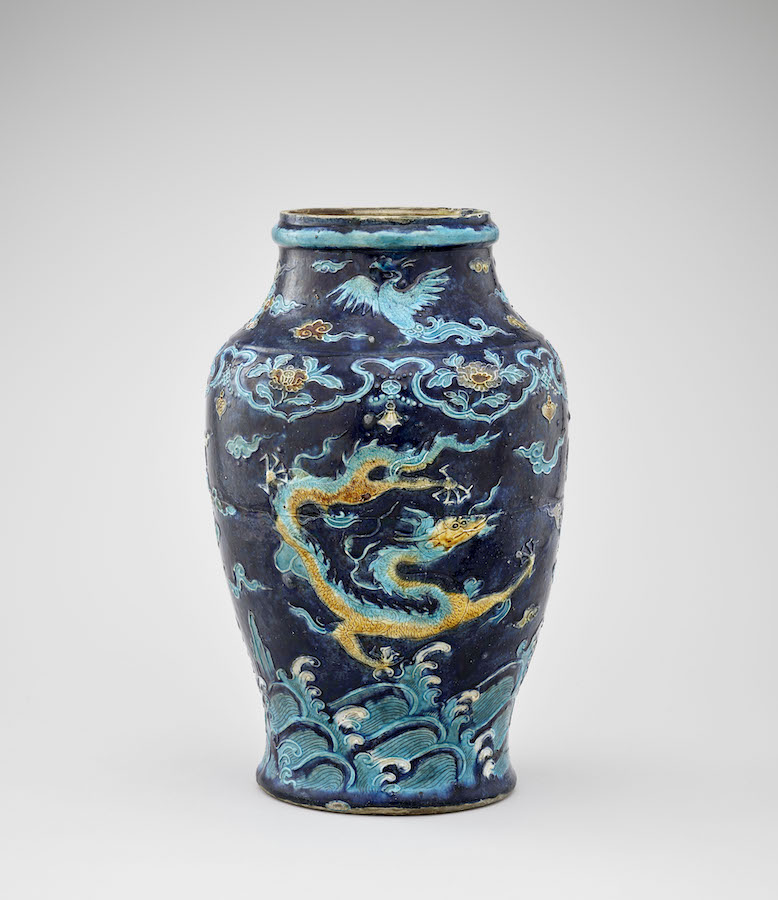


Vase with dragons and clouds. (Supplied)

The exhibition will be accompanied by a cultural program, including weekend family film screenings. 

Andre said that the exhibition is the Louvre Abu Dhabi’s most important show of 2021. With the opening of Expo 2020, this is a pivotal year for the UAE in terms of cultural exchange, he added. 

In 2022, the Louvre Abu Dhabi will feature a performance piece by local artist Ahmed Al-Areef. Starting in October, educational activities and programs will include daily express tours for adults, Take Me to Asia interactive events with museum educators, “MakeandPlay” activities inspired by the exhibition, and masterclasses.

Russian cyclist finds warm welcome on Saudi Arabia’s roads 

Updated 20 January 2026
Follow

Russian cyclist finds warm welcome on Saudi Arabia’s roads 

  • Anna Rodnishcheva’s ride through Kingdom is defining chapter in solo expedition
  • Rodnishcheva cycled to Aqaba, crossed the border into Saudi Arabia, and has since traveled through Tabuk, AlUla, Madinah, Jeddah, and Taif on her way to Riyadh

MAKKAH: Solo adventurer Anna Rodnishcheva, 27, has undertaken an ambitious journey that spans countries, climates and cultures — on a bicycle. 

Born and raised in Moscow and trained as a biologist before becoming an event photographer, she now finds herself pedaling thousands of kilometers across unfamiliar landscapes in pursuit of discovery, connection, and the simple joy of movement.

In her conversation with Arab News, Rodnishcheva offered a detailed account of her ongoing route in Saudi Arabia, describing how the expedition is her third major cycling adventure.

After previously riding from Moscow to Sochi and later from Vladivostok to Sochi — a route that stretches across the entirety of Russia — she felt compelled to explore foreign lands by bicycle.

She set off from Moscow heading south last June, passing through Russia, Georgia, and Turkiye before flying from Antalya to Amman. She cycled to Aqaba, crossed the border into Saudi Arabia, and has since traveled through Tabuk, AlUla, Madinah, Jeddah, and Taif on her way to Riyadh.

Rodnishcheva explained that physical preparation played only a small role in her planning. She began slowly and allowed her body to adapt naturally over the first month. 

The true challenge, she said, was in the mental and financial preparation. She spent a year and a half planning the journey, even though she originally intended to postpone it for several more years. 

Ultimately, her belief that “life is short” convinced her to start with the resources she already had. Although she sought medical evaluations and additional vaccinations, she was unable to complete them all and decided to continue regardless.

Her journey through Georgia and Turkiye presented unexpected difficulties. Simple tasks such as finding groceries or locating bicycle repair shops became more challenging outside of Russia, where she knew how to navigate on a budget. 

She also encountered language barriers, though the situation improved when a local cyclist joined her in Georgia. The intense midsummer heat added another layer of difficulty, but she had prepared herself for such conditions.

One of the most striking moments of her trip occurred as she crossed from Jordan into Saudi Arabia. She described the experience as surreal and emotionally overwhelming, likening it to the adventures of a literary hero traveling across the Arabian Peninsula. 

Her anxiety eased unexpectedly when she got a flat tire at the border, bringing her back to the present. 

Despite being warned that crossing by bicycle would be prohibited, the process went smoothly, and she was struck by the friendliness of both Jordanian and Saudi officials. She expressed particular surprise at meeting a female Saudi passport officer, an encounter that challenged her previous assumptions about women’s roles in the Kingdom.

Rodnishcheva said the hospitality she had experienced in Saudi Arabia surpassed anything she had encountered on previous journeys. Drivers frequently stop to offer her water, fruit, or sweets, and several families have generously hosted her in their homes or guest flats. 

She emphasized that she feels completely safe traveling across the Kingdom, especially on the open roads between cities, noting the strong and visible security presence.

She has also observed significant differences in weather. While the stretch from the border to Jeddah was hot despite being winter, the climate changed dramatically after climbing Al-Hada in Taif, turning cooler and windier — a climate she compared to Russian summers.

Rodnishcheva documents her travels primarily through Russian-language platforms such as VK and Telegram. Although she maintains YouTube and Instagram accounts, she explained that her schedule left little time for frequent updates.

Offering a message to women around the world who dream of embarking on similar adventures, she said such journeys were “not as scary as they seem before you start,” though they may not suit everyone.

Her closing advice? “Listen to your heart.”