

Pandemic has spurred engagement with online extremism: Experts

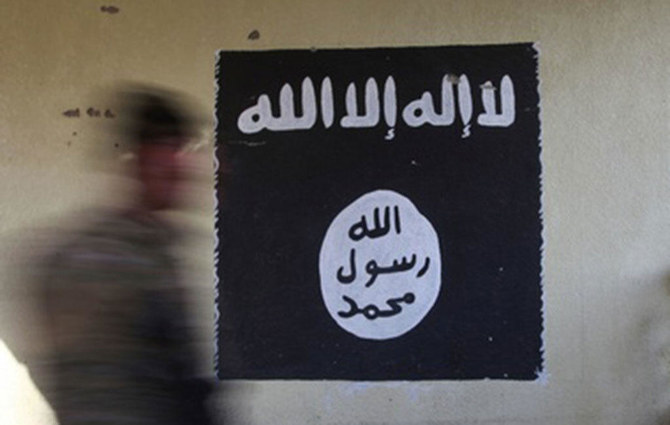
Islamist extremism remains the greatest threat to British public safety. (Reuters file photo)
Short Url
Updated 19 October 2021
Follow

Pandemic has spurred engagement with online extremism: Experts

  • 7% more terror-related content reported in 2020 than preceding year
  • Most people referred to UK’s counter-extremism program have mixed, unclear or uncertain motivations

LONDON: Engagement with extremist content has proliferated over the last 18 months as people have been forced inside and online by COVID-19 lockdowns, experts have warned.

“What we’ve seen is evidence of spikes of online activity in a wide range of extremist issues during lockdown,” Jacob Davey, head of research and policy of far-right and hate movements at the Institute for Strategic Dialogue, told The Guardian.

“It is not just terrorist material but a broad cocktail of online harms, as people spent more time indoors.”

Last year, the UK’s Counter-Terrorism Internet Referral Unit said over 7 percent more pieces of suspected terrorism content were reported to them during 2020 compared with the year before.

Paul Gill, a professor of security and crime science at University College London, said the nature of the terror threat was already evolving after the defeat of Daesh’s so-called caliphate in 2019. “That has meant there were already fewer directed plots and a rise in self-initiation,” he told The Guardian.

The on-off lockdowns of the past 18 months have only served to turbocharge this change, as associating in person became more difficult and social isolation from community and family created “a perfect storm of other risk factors for radicalization,” Gill said.

“If you have any grievance you can go online and find people who will validate your grievance, and make you feel like you are part of something,” he added.

An increasing number of terrorist attacks — or closely related cases — were “hard to define,” he said.

The UK is currently coming to terms with the murder of an MP at the hands of a suspected Islamist, but as Gill alluded to, the circumstances surrounding the murder are not immediately obvious.

Some have blamed Islamist extremism, while others cite a rising tide of online hatred against public officials.

According to MI5, Islamist extremism remains the greatest threat to British public safety, but other forms — such as right-wing extremism — remain a clear threat, as does the growing category of instances with a mixed, unclear or uncertain motive.

Of all referrals to Britain’s counter-radicalization program from 2019 to 2020, the latest period for which figures are available, 51 percent were in the MUU category, while the rest were split between Islamists and right-wing radicals, at 24 and 22 percent respectively.



Zelensky defends Ukrainian athlete’s helmet at Games after IOC ban

Updated 2 sec ago
Follow

Zelensky defends Ukrainian athlete’s helmet at Games after IOC ban

CORTINA D’AMPEZZO: Ukrainian President Volodymyr Zelensky has defended a Winter Olympian’s right to wear a helmet featuring athletes killed during the war with Russia after skeleton racer Vladyslav Heraskevych said the IOC banned it at the Games.
Heraskevych wore the helmet during a training session in Cortina and had intended to use the Games in Italy to help maintain international pressure on Russia.
The 27-year-old said in a social media post on Monday that the International Olympic Committee had banned his custom helmet — which has portraits of Ukrainian athletes killed since Russia’s 2022 invasion — from training and competition.
The IOC has yet to publicly confirm that.
Heraskevych, who was Ukraine’s flag bearer, said the decision “simply breaks my heart.”
The skeleton racer said he would submit an official request to the IOC and continue to seek permission to use the helmet.
It is approaching four years since Vladimir Putin launched Europe’s deadliest conflict since World War II, just after the 2022 Beijing Winter Games.
“I thank the flag bearer of our national team at the Winter Olympics, Vladyslav Heraskevych, for reminding the world of the price of our struggle,” Zelensky said on X.
“This truth cannot be inconvenient, inappropriate or called a ‘political demonstration at a sporting event.’ It is a reminder to the entire world of what modern Russia is,” the president added.
Gestures of a political nature on the medal podium have been forbidden since 2021 under article 50 of the Olympic Charter but athletes are permitted to express their views in press conferences and on social media.
Ukrainian Sports Minister Matviy Bidnyi told AFP this month that Russia has killed “more than 650 athletes and coaches,” according to the latest data.
In various social media videos, Heraskevych has said the images represent only a fraction of the athletes killed since the full?scale invasion and include Olympians and Youth Olympic medallists, such as his former teammate, figure skater Dmytro Sharpar.
At the head of a delegation of 46 athletes, Heraskevych marched in Milan last week as his country’s flag bearer at the opening ceremony, alongside speed skater Yelyzaveta Sydorko.
He will be competing at his third Winter Games.