




COPENHAGEN, Denmark: As Europe braces for a steady influx of Afghan refugees fleeing the return of the Taliban and economic chaos, a recent shift in political rhetoric suggests that Scandinavian countries are less willing to help asylum-seekers now than they were in 2015, when they offered sanctuary to tens of thousands of displaced Syrians.
More than 123,000 Afghan civilians were evacuated from Kabul airport by US forces and their coalition partners between August 15, when the Taliban seized the capital, and August 31, when the last foreign troops left strife-torn Afghanistan.
Many of those who fled were taken to emergency processing centers in Spain, Germany, Qatar and Uzbekistan. The UN has warned that up to half a million Afghans could flee their country by the end of the year, with many looking to Europe as a potential sanctuary.

Afghans desperately try to board a departing US military cargo plane at Kabul Airpoirt in September when the Taliban sized control of the country. (AFP file photo)
However, opinions in the once welcoming Scandinavian states of northern Europe appear to have changed over the past six years, with the people there increasingly reluctant to open the doors to asylum-seekers.
“We will never go back to 2015. Sweden will not find itself in that situation again,” Stefan Lofven, Sweden’s prime minister, told the national daily newspaper Dagens Nyheter on Aug. 18, three days after the Taliban seized Kabul.
Indeed, as the situation in Afghanistan again brings the issue of European asylum policy to the fore, attitudes across Scandinavia appear to be hardening.
“Denmark first went down the nationalist-populist road, followed by Norway,” Swedish socialist MP Ali Esbati, who long predicted Sweden would follow suit, told Arab News.
“This is due in part to many people in Sweden feeling that we did what we could in 2015, and that we took the responsibility that a rich country should take while other countries did not.”

Even before the Taliban regained control in Afghanistan, more than 550,000 people in the country were forced to flee their homes this year due to fighting, according to UNHCR, the UN refugee agency. In addition to the deteriorating security situation, Afghans have also been contending with a severe drought and food shortages, leading to huge levels of internal displacement.
In 2020 almost 1.5 million Afghans fled to Pakistan and about 780,000 to Iran, according to UNHCR. Germany was third on the list of destinations, with 180,000 Afghans heading there, while Turkey took in 130,000.
Following the fall of Kabul, by early last month about 125,000 Afghans had applied for asylum in Turkey, 33,000 in Germany and 20,000 in Greece.
French authorities have indicated they will accept some refugees but have not specified how many. German authorities also did not specify a number but Chancellor Angela Merkel said 40,000 people still in Afghanistan might have the right to seek asylum in Germany.
Read the first part of the report: No country for asylum-seekers
The UK said it will take in 5,000 Afghans this year as part of a scheme to resettle 20,000 over the next few years. Austria, Poland and Switzerland said they will not accept any Afghan refugees and have been actively bolstering border security to prevent attempts to enter the countries illegally.
As for Scandinavia, the picture is unclear. Having earned praise for accepting thousands of Syrians at the height of the European refugee crisis in 2015-16, authorities in Sweden, Norway and Denmark appear less willing to bear the burden this time. In fact, the governments of the three nations have not guaranteed even those Syrians already granted asylum the right to remain.
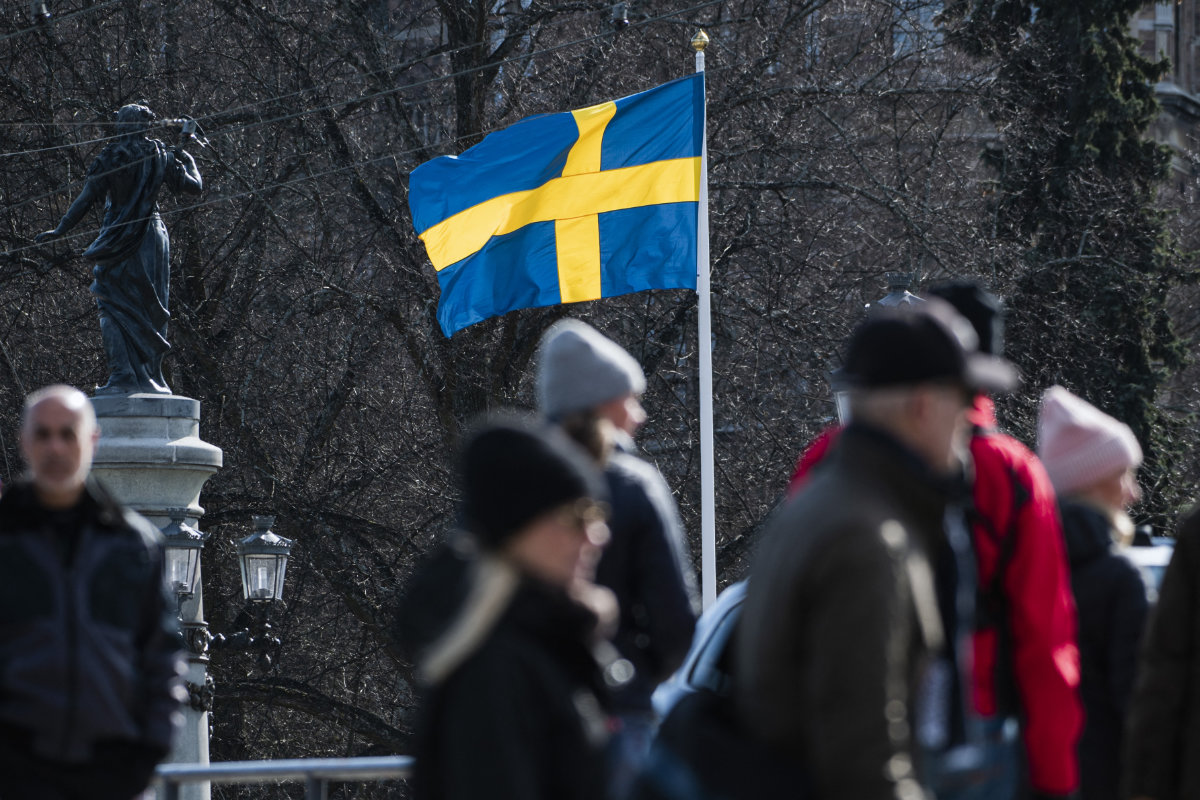
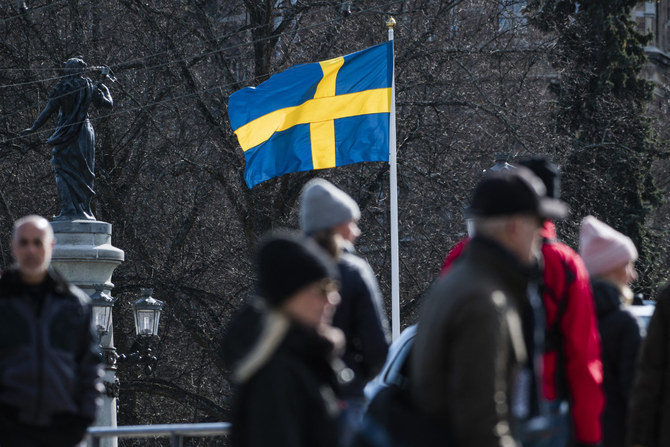
Housing shortages and rising crime levels have led to a hardening of attitudes in Scandinavian countries, including Sweden. (AFP)
This increasingly unwelcoming attitude appears to have developed for a number of reasons, including a shortage of housing and a feeling of embitterment toward other EU member states who have failed to accept their share of responsibility for refugees.
A rise in crime is also a factor. In Sweden, for example, first- and second-generation migrants are overrepresented in crime statistics. While the Swedish National Council on Crime Prevention has repeatedly cautioned that there is a difference between correlation and causation, immigration and crime are nevertheless now inextricably linked in the minds of many voters.
The same is true in Denmark. In Copenhagen, social media influencer and political hopeful Hussain Ali said it is time to break with the cultural trait of “berøringsfrygt,” which translates as a “fear of touching” sensitive topics.
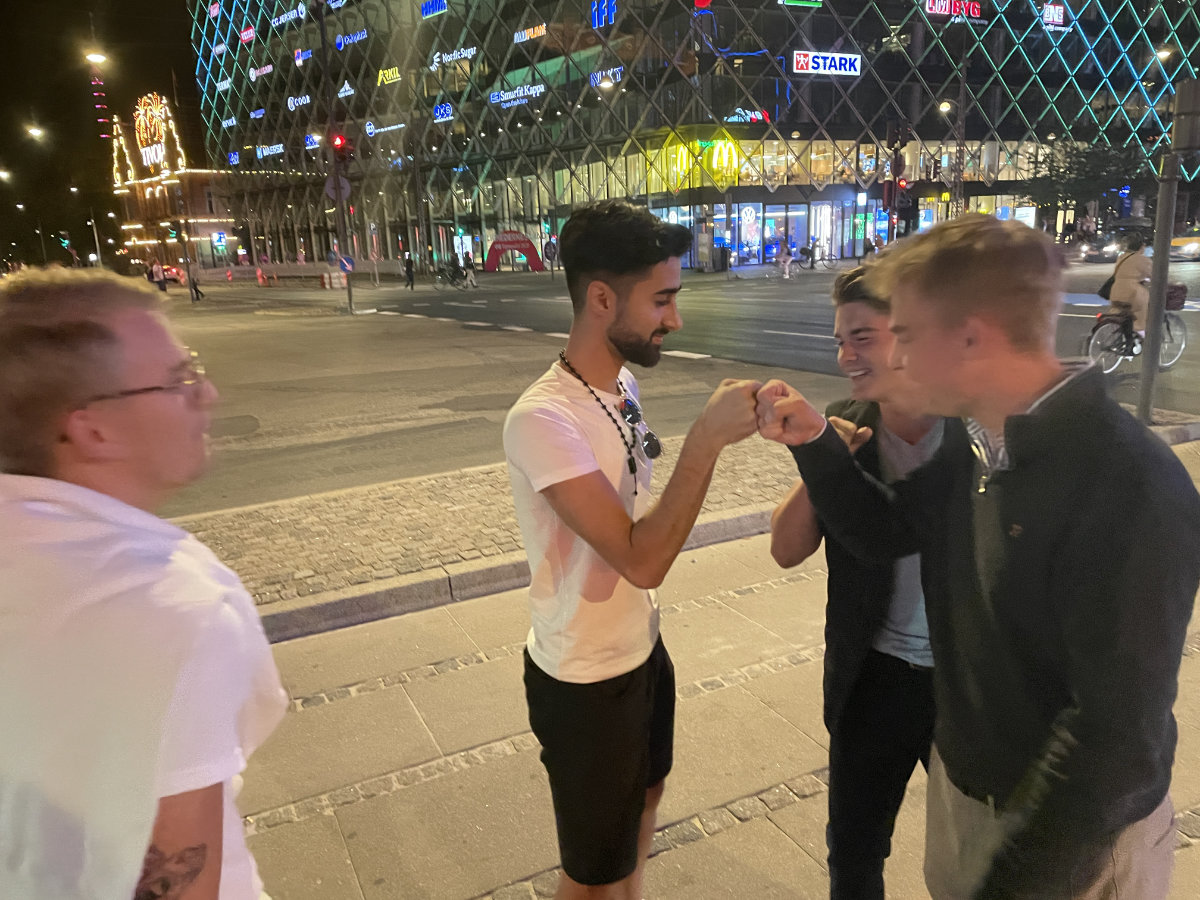
Fans greet and fist-bump Hussain Ali (left), with Copenhagen City Hall in the background. (Supplied)
Ali, a Dane of Iraqi heritage, is running for a seat in the city assembly on a conservative ticket. His impassioned social media posts railing against the failures of integration regularly attract thousands of likes. He recently suggested that all non-citizens convicted of crimes should be deported.
“There are so many young people who live in a bubble of resentment toward Denmark because they feel alienated,” he told Arab News. “They are stuck between Danish culture and the culture of their parents’ home countries.
“I tell them that if they brought their anti-social attitude back to Syria, for example, they would not last more than a minute without being punished. In the Middle East, you respect your elders — that’s part of their heritage that their parents should be teaching them.
“They are also creating damaging stereotypes and prejudice. Many of my friends are judged based on their skin color. People make assumptions about me at first sight.”
INNUMBERS
•123,000 - Afghan civilians evacuated from Kabul airport, August 15-31.
• 1,200 - Afghans deported from the EU in the first half of 2021.
While some might consider Ali a firebrand or an upstart, his message has clearly struck a chord with many. When he walks around Copenhagen he is regularly fist-bumped by young supporters. But not all of the attention he receives is positive.
As he sat outside a kebab shop during our interview, a young man who appeared to have an immigrant background shouted at him: “You’ve sold your soul.” Ali tensed up but remained seated.
“That guy is probably just frustrated and stuck in a situation where he doesn’t have an outlet for his creativity and ambition, despite all the opportunities in Denmark,” he said later.

Syrian refugees react to Denmark's decision to repatriate, initiating a sit-in in front of Christiansborg Palace in Copenhagen, Denmark. (AFP File/Getty Images)
Although the hardening of attitudes in Sweden and Norway has been less marked than it has been in Denmark, the mood is clearly swinging in a similar direction.
“The trajectory is quite typical, really,” said Esbati, the Swedish MP. “First a nationalist-populist party starts banging its one-issue drums on migration.
“Then it gets some sort of breakthrough in the media and in elections, followed by the conservative parties moving toward the (nationalist-populist) position. And finally the social-democrats and other left-leaning parties shift over time in the same direction.”
On June 23, the Swedish parliament approved a new immigration bill that makes temporary residency permits the norm, just like the Danish system.
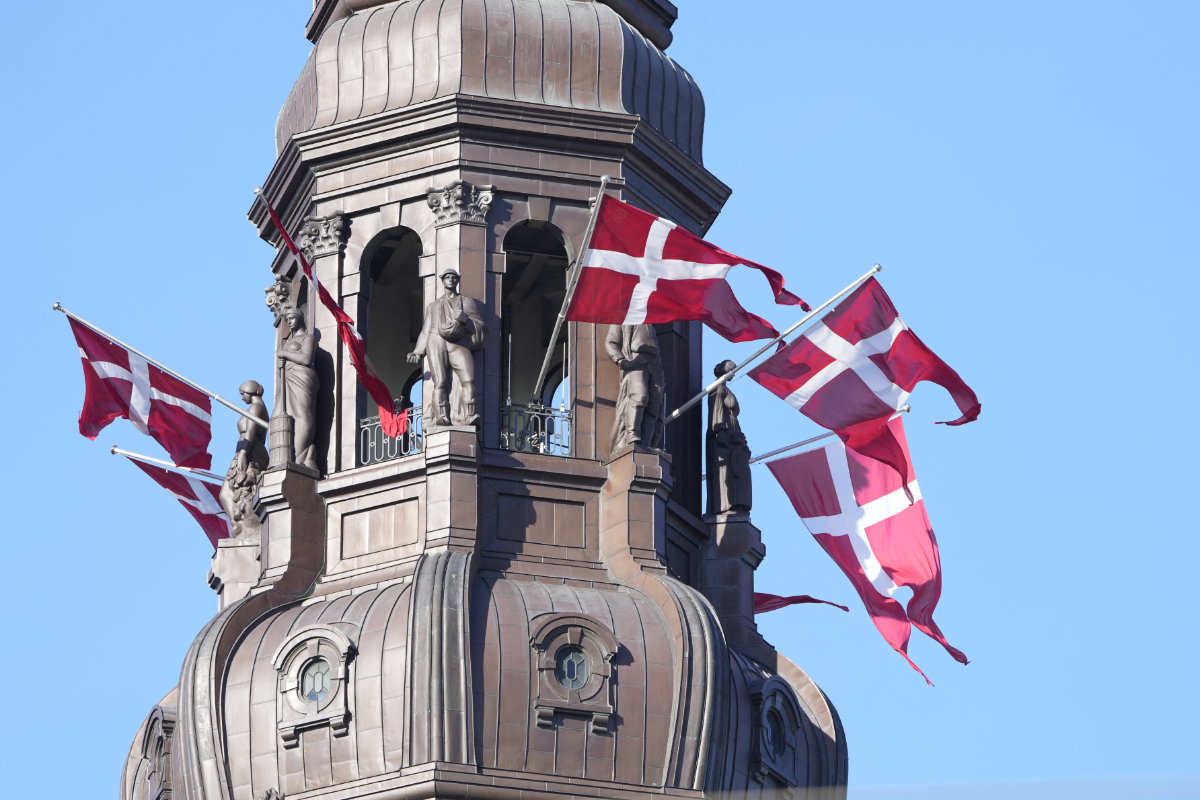
Danish flags wave in the spire of the Danish Parliament building in Copenhagen. Denmark has gone down the nationalist-populist road, rejecting asylum seekers from Afghanistan. (AFP file photo)
“We need an entirely new political (framework) in order for people to be included in society and to settle in,” Maria Malmer Stenergard, an immigration-policy spokesperson for the conservative Moderate Party, said during a recent appearance on national radio. “We have to start by decreasing immigration.”
As European states wrestle with their collective conscience about how best to balance their duty to protect vulnerable civilians with a desire to preserve their national identities, the growing appeal of the populist right in Scandinavia and elsewhere can only reduce the options available to Afghans who are too frightened to return home.
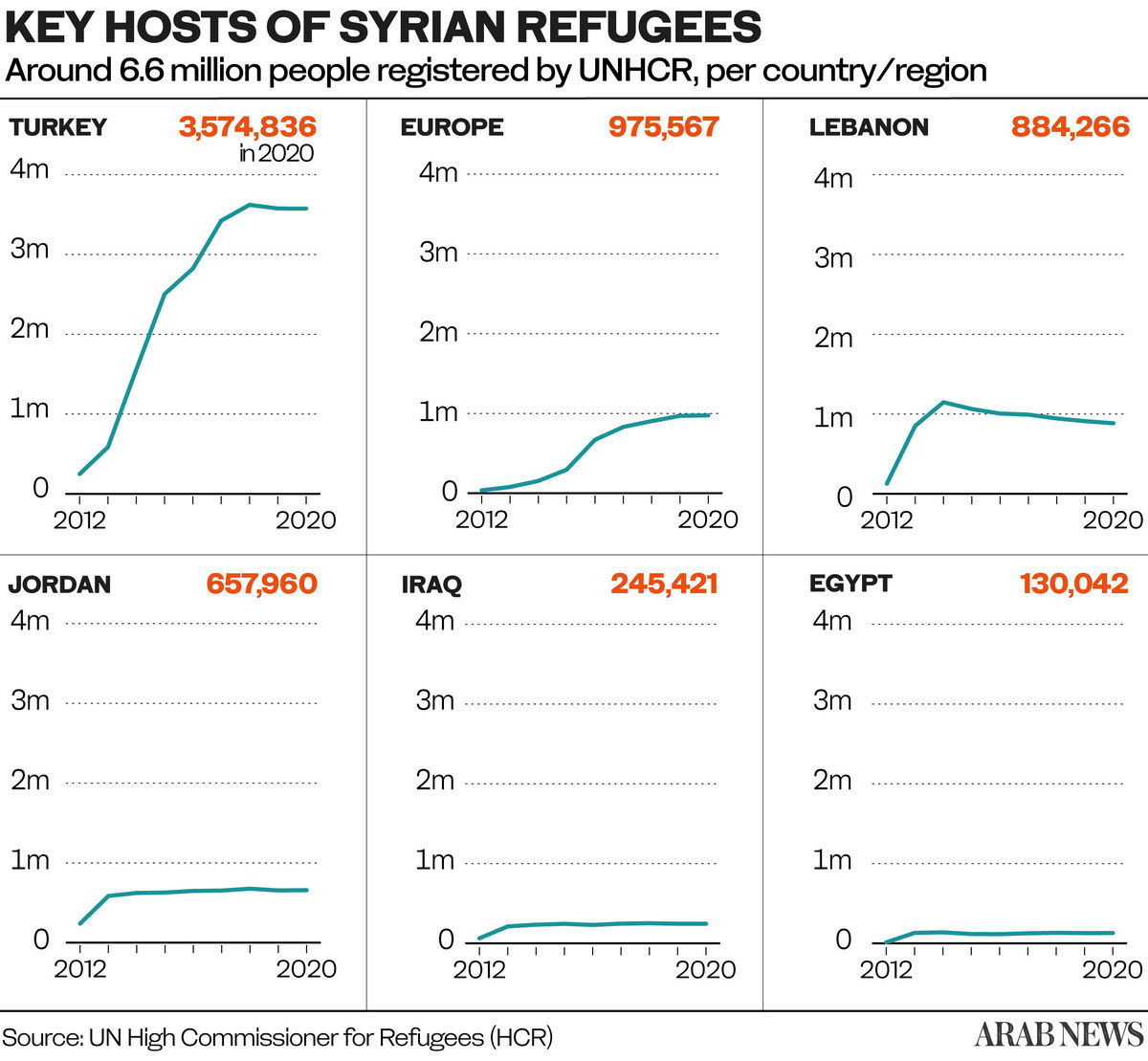 The stories of Syrians with firsthand experience of the welcome mat being pulled out form under them do not inspire confidence.
Hamdi and Sama Al-Samman were threatened by the Syrian regime at the end of 2011 for giving food, clothes and blankets to internally displaced families in their native Damascus.
“I knew we’d get in trouble,” Sama said. “But I couldn’t avoid helping those families.”
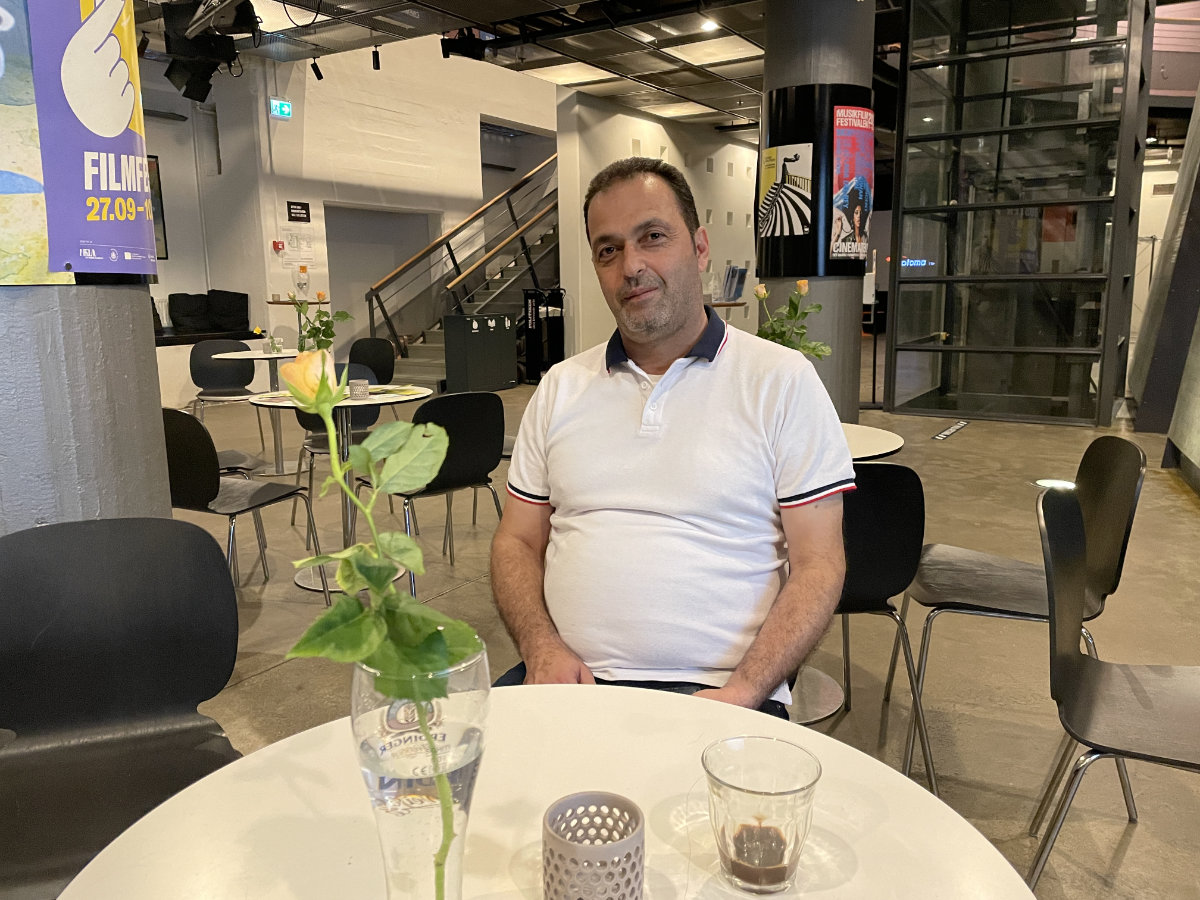
Hamdi Al-Samman arrived in Denmark in October 2014 after fleeing the Syrian regime. (Supplied)
She added that she began sleeping in her clothes in case the family had to flee in the middle of the night. When the situation became untenable in January 2013, the couple took their three children to Egypt.
From there, Hamid, an electrician by trade, headed to Europe, arriving in Denmark in October 2014.
“We chose Denmark because it would take just one year for the children and me to join him,” Sama said. “In Sweden, the family reunification process would take longer.”
Hamdi found work easily and, since joining him, Sama has been studying Danish so she can work in the preschool education system. Their daughter, Noor, who is in her final year of high school, wants to become an architect.
“Denmark has an amazing emphasis on education,” said Sama. “Our children have opportunities here that they would never have in Syria. Our daughter has opportunities because of gender equality.”
The family’s relief was short-lived, however. In January this year, Mette Frederiksen, Denmark’s prime minister, said her goal is to reduce the number of asylum-seekers to zero. A few months later, the Al-Sammans were informed that their temporary residency permits will not be renewed. They are appealing against the decision.


