

Who’s Who: Abdullah Mohammed Al-Sadhan, vice governor at KSA’s  Zakat, Tax and Customs Authority

Abdullah Mohammed Al-Sadhan
Short Url
Updated 18 October 2021
Follow

Who’s Who: Abdullah Mohammed Al-Sadhan, vice governor at KSA’s  Zakat, Tax and Customs Authority

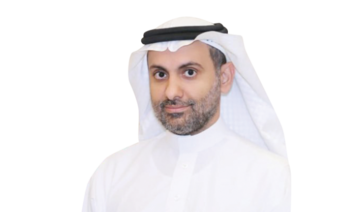
Abdullah Mohammed Al-Sadhan is vice governor of operations at the Zakat, Tax and Customs Authority after the merger of the General Authority of Zakat and Tax and the General Authority of Saudi Customs as of October 2021.

Prior to assuming this role, he served as deputy governor of operations at the erstwhile GAZT since 2017 and played a prominent role in the implementation of VAT in the Kingdom. This gained him a reputation as a strong and supportive leader who can successfully deliver national-level strategic projects in challenging and highly pressurized environments.

Before joining the ZATCA, he worked as director of planning and performance at STC from 2016 to 2017, where he devised and implemented strategic business plans, contributed to the expansion of business opportunities and managed bottom-line factors to maximize efficiency and realize substantial revenue growth.

He worked as an advisor at the Saudi Organization for Certified Public Accountants from 2013 to 2016, where he participated, in collaboration with the former Ministry of Commerce and Industry, in building and launching the Qaweem system, which allows companies to deposit all financial information electronically using innovative technology tools, such as InlineXBRL. Here, Al-Sadhan also played a prominent role in establishing the Bayan Credit Bureau.

Prior to this, he also worked with the Saudi Stock Exchange from 2006 to 2013, where he led major projects including new system implementations and the introduction of a new issuer listing process.

Al-Sadhan is also currently a board member at the Saudi Business Center and SOCPA since January 2019.

He was a member of the Audit Committee at the Bayan Credit Bureau from June 2017 to December 2020.

He earned a bachelor’s and master’s degree in professional accounting from King Saud University and a diploma in commercial banks credit from the Arab Academy for Banking and Financial Services.

Ramadan begins with celestial spectacle in Saudi Arabia's north 

Updated 7 sec ago
Follow

Ramadan begins with celestial spectacle in Saudi Arabia's north 

  • Venus-crescent moon alignment visible over Northern Borders Region skies
  • Meteorology Center completes operational plan for the holy month

ARAR/JEDDAH: The holy month of Ramadan has commenced in Saudi Arabia with a striking astronomical display in the Northern Borders Region, setting a serene tone for the month as meteorological authorities confirmed full readiness to support pilgrims in Makkah and Madinah, the Saudi Press Agency (SPA) reported.

On Tuesday evening, the skies over Arar witnessed a rare alignment as the planet Venus paired with the slender crescent moon marking the first day of Ramadan. Appearing shortly after sunset, the crescent shimmered low on the western horizon above Venus — one of the brightest celestial bodies — in a display enhanced by clear skies.

While the conjunction is a recurring astronomical phenomenon caused by the apparent proximity of the two bodies as viewed from Earth,  its coincidence with the start of the holy month added a special aesthetic and spiritual dimension to the atmosphere in the north, SPA said.

Meteorological readiness

As the faithful began their fasting, the National Center for Meteorology (NCM) announced the completion of its operational and technical preparations for Ramadan 1447 AH.

The plan includes heightened performance levels at observatories in the Kingdom’s airports to manage increased flight traffic and aviation safety. (SPA)

NCM Chief Executive Dr. Ayman bin Salem Ghulam confirmed that the center has finalized a comprehensive plan to ensure round-the-clock weather monitoring for Makkah, Madinah, and the roads leading to the Two Holy Mosques. The initiative aims to provide accurate forecasting to enhance the safety and comfort of the influx of visitors and Umrah pilgrims.

The plan includes heightened performance levels at observatories in the Kingdom’s airports to manage increased flight traffic and aviation safety.

To ensure pilgrims have real-time access to information, the NCM has integrated its data with the "Nusuk" and "Tawakkalna" smart applications. Ten-day extended forecasts and real-time alerts will also be available via the "Anwaa" app and displayed on guidance boards along highways.

The center has mobilized 14 media platforms to deliver swift weather alerts, ensuring high standards of security and logistical support throughout the season.