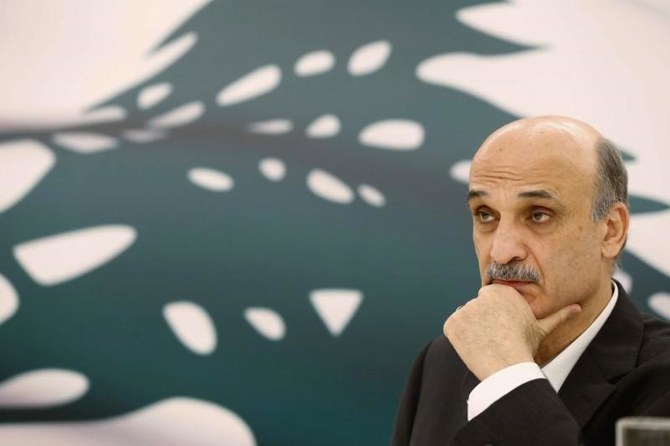
BEIRUT: The head of the Christian Lebanese Forces party (LF) denied late on Friday his group had planned street violence in Beirut that killed seven people, and said a meeting held the day before was purely political.
Thursday’s violence, which began as people were gathering for a protest called by Shiite Muslim group Hezbollah against the judge investigating last year’s Beirut port blast, was the worst in over a decade and stirred memories of the country’s ruinous sectarian civil war from 1975-90.
Samir Geagea told Voice of Lebanon International radio that a meeting held on Wednesday by a political grouping the LF belongs to had discussed action options should Iran-backed Hezbollah succeed in efforts to remove the judge.
Geagea said the option agreed upon in that event was to call for a public strike, and nothing else.
The powerful Hezbollah group stepped up accusations against the LF on Friday, saying it killed the seven Shiites to try to drag the country into a civil war.
The violence, which erupted at a boundary between Christian and Shiite neighborhoods, has added to concerns over the stability of a country that is awash with weapons and grappling with one of the world’s worst ever economic meltdowns.
Asked whether the presence of LF members in the areas of Ain Al-Remmaneh and Teyouneh, where the shooting erupted, meant the incident was planned, Geagea said they were always present in these areas.
The security coordinator in the party contacted the authorities when they heard a protest was planned and asked for a heavy military presence in the area “as our priority was for the demonstration to pass by simply as a demonstration and not affect civil peace,” Geagea said.
Geagea said his party was assured that would be the case.
“The army has arrested snipers so they need to tell us who they are and where they came from.”
Nineteen people have been detained so far in relation to the incident.


![]()

Lebanese Christian group denies Hezbollah claim it planned Beirut bloodshed
Short Url
https://arab.news/wkmnw
Lebanese Christian group denies Hezbollah claim it planned Beirut bloodshed


Latest updates


Recommended


© 2026 SAUDI RESEARCH & PUBLISHING COMPANY, All Rights Reserved And subject to Terms of Use Agreement.