Sydney to scrap hotel quarantine for overseas visitors

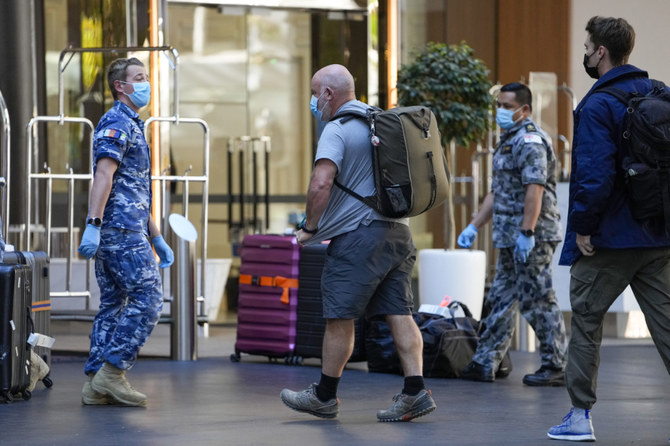
Currently, anyone who enters Australia has to qualify for an exemption to travel and fork out many thousands of dollars to be locked in a hotel room for 14 days. (AP)
Short Url
Updated 15 October 2021
Follow

Sydney to scrap hotel quarantine for overseas visitors

SYDNEY: Sydney is scrapping mandatory quarantine for overseas travelers from next month, officials said Friday, signalling a faster-than-expected end to tough coronavirus restrictions.
Australia’s borders have been closed for the last 19 months to prevent the spread of Covid-19, stranding tens of thousands of Australians overseas and leading critics to dub the country a “hermit state.”
Currently, anyone who enters Australia has to qualify for an exemption to travel and fork out many thousands of dollars to be locked in a hotel room for 14 days.
New South Wales Premier Dominic Perrottet said that, from November 1, fully vaccinated travelers to the state will have to test negative before getting on the plane, but would not have to quarantine at all on arrival.
“For double vaccinated people around the world, Sydney, New South Wales, is open for business,” he said. “Hotel quarantine will be a thing of the past. This is a significant day for our state.”
Sydney’s 100-plus-day lockdown lifted last week and lingering rules are gradually being phased out.
Under a national post-pandemic road map, borders were to gradually reopen in November, with only Australians and permanent residents allowed in with mandatory home quarantine.
Perrottet’s comments indicate those restrictions will be scrapped faster than planned — with tourists able to come to Australia too and quarantine requirements removed altogether.
The last 19 months have been devastating for Australia’s tourist industry, with visitor numbers down 98 percent since before the pandemic, according to Tourism Australia statistics.
The announcement also raises the prospect that Sydney residents will be allowed to visit Paris but not Perth, as Western Australia’s borders with the rest of the country remain closed.


Indonesia landslide death toll rises to 74

Updated 2 sec ago
Follow

Indonesia landslide death toll rises to 74

  • Heavy rain triggered the landslide that tore through a mountain village in Java’s West Bandung region on January 24
  • Around 50 houses were damaged and more than 160 people remain displaced, according to local authorities
JAKARTA: The death toll from a landslide in Indonesia has climbed to 74, authorities said Friday, extending the search for missing people and bodies nearly two weeks since it began.
Heavy rain triggered the landslide that tore through a mountain village in Java’s West Bandung region on January 24, burying dozens of homes and displacing hundreds.
Thousands of rescuers, supported by police, military and volunteers, have been digging through mud and debris manually and using heavy equipment.
The local search and rescue agency said 74 victims had been identified.
“There are still a number of residents on the missing persons list who have not yet been found,” said the agency’s head Ade Dian Permana, without giving a figure.
“Weather conditions remain the main challenge, with thick fog and rain still covering the search area, significantly impacting visibility and stability in the area,” said Ade.
He said the search would continue but with adjustments as it had now entered the recovery phase.
The Indonesian navy has said that 23 personnel that were training in the area were among those caught in the landslide that struck Pasirlangu village.
Around 50 houses were damaged and more than 160 people remain displaced, according to local authorities.
The government has pointed to the role forest loss played in flooding and landslides on the neighboring island of Sumatra late last year, which killed around 1,200 people and displaced more than 240,000.
Forests help absorb rainfall and stabilize the ground held by their roots, and their absence makes areas more prone to landslides.
Such disasters are common across the vast Indonesian archipelago during the rainy season, which typically runs from October to March.