

Swiss bank closes its office in Lebanon due to economic crisis

Short Url
Updated 29 September 2021
Follow

Swiss bank closes its office in Lebanon due to economic crisis

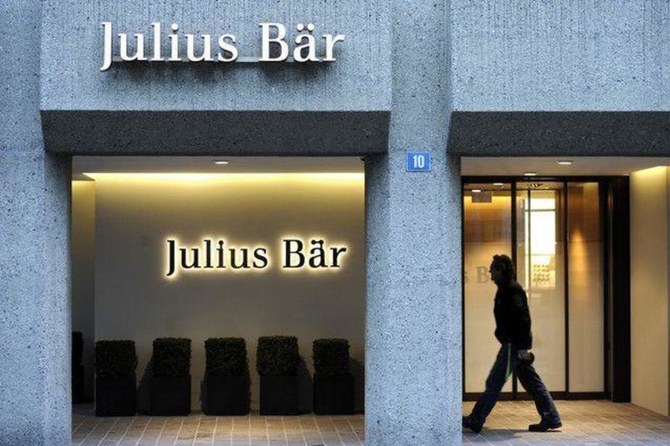
RIYADH: Swiss bank Julius Baer will close its office in Beirut, due to the ongoing economic crisis affecting the country, according to information obtained by Asharq Business.

Closing Julius Baer’s office in the Lebanese capital is a “strategic commercial decision that takes into account the difficult conditions that Lebanon is witnessing,” the bank disclosed in an email, stressing that the decision was not taken to save costs.

The Swiss bank stressed that this step will not have any impact on its existing customers, as the bank will continue to serve them and cover the Lebanese market, but without a direct presence.

The bank will continue to serve its clients and manage their financial arrangements from its headquarters in Zurich.

All employees in the Lebanon office will be transferred to Switzerland, according to Asharq, and clients must sign a document approving the transfer of their operations from Beirut to Zurich.

Despite the current situation in Lebanon, the ancient Swiss bank, founded in 1890, emphasized the importance of the Mediterranean country as a profitable market.

Saudi POS spending opens 2026 with a 31% surge: SAMA 

Updated 4 sec ago
Follow

Saudi POS spending opens 2026 with a 31% surge: SAMA 

RIYADH: Saudi Arabia’s total point-of-sale transactions reached SR17 billion ($4.5 billion) in the week ending Jan. 3, with all sectors recording positive weekly growth. 

According to the latest data from the Saudi Central Bank, the total POS value represented a 30.6 percent week-on-week increase, while the number of transactions rose 15.7 percent to 255.36 million. 

Spending on freight transport, postal and courier services recorded the sharpest increase, surging 110.9 percent to SR74.22 million, followed by education, which rose 66.4 percent to SR235.51 million. 

Expenditure on personal care increased by 31.7 percent, while spending on books and stationery rose 36 percent. Jewelry outlays climbed 48 percent to SR544.12 million. 

Further gains were recorded across other categories. Spending at pharmacies on medical supplies rose 42.1 percent to SR284.81 million, while expenditure on medical services increased 20.8 percent to SR556.27 million. 

The food and beverages sector saw outlays rise 41.4 percent to SR2.7 billion, accounting for the largest share of POS transactions.

Restaurants and cafes followed with a 20.9 percent increase to SR1.9 billion, while apparel and clothing spending rose 30 percent to SR1.6 billion, ranking third. 

Together, the top three categories accounted for approximately 36.53 percent of total POS spending, or SR6.22 billion. 

Saudi Arabia’s major urban centers mirrored the national surge.

Riyadh, which accounted for the largest share of POS spending, saw a 21 percent increase to SR5.61 billion, up from SR4.63 billion the previous week.

The number of transactions in the capital rose 12.2 percent to 79.6 million. 

In Jeddah, transaction values increased 25.6 percent to SR2.24 billion, while Dammam posted a 26.1 percent rise to SR831.93 million. 

POS data, tracked weekly by SAMA, provides an indicator of consumer spending trends and the ongoing growth of digital payments in Saudi Arabia. 

The data also highlights the expanding reach of POS infrastructure, extending beyond major retail hubs to smaller cities and service sectors, supporting broader digital inclusion initiatives. 

The growth of digital payment technologies aligns with Saudi Arabia’s Vision 2030 objectives, promoting electronic transactions and contributing to the Kingdom’s broader digital economy.