

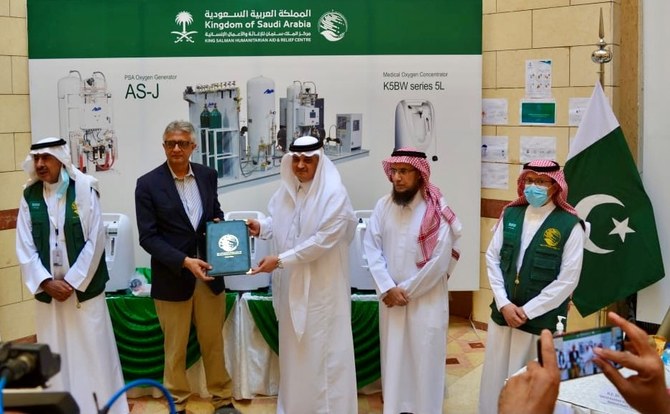

ISLAMABAD: King Salman Humanitarian Aid and Relief Center (KSRelief) has provided medical aid and equipment, including oxygen generating plants, to Pakistan to combat the COVID-19 pandemic, the organization said on Friday.
Saudi Ambassador to Pakistan Nawaf bin Said Al-Malki handed over the medical equipment to health ministry officials in Islamabad in the presence of the director of the humanitarian agency Dr. Khalid M. Al-Othmani.
Pakistan is the fifth-largest beneficiary of aid from KSRelief and has received $132.65 million from it since 2005.
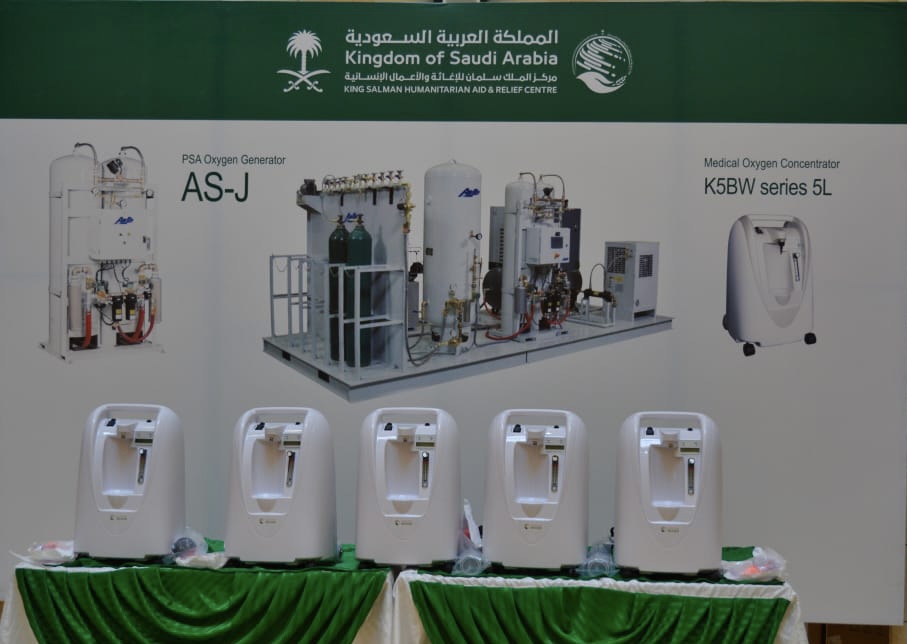
KSRelief donated this medical equipment for Pakistani hospitals in Islamabad, Pakistan, on September 24, 2021. (Photo courtesy: Saudi embassy, Islamabad)
According to the information available on the aid agency’s website, KSRelief has completed 137 projects in the fields of education, health care, water, sanitation, hygiene, emergency camps and community support in the South Asian country.
According to a statement issued by the Saudi humanitarian organization, the equipment handed over to Pakistan included 18 oxygen generating plants, each one consisting of cylinder filling unit, an air compressor, and oxygen generator, along with 360 bedside oxygen concentrators.
Saudi Ambassador to Pakistan Nawaf bin Said Al-Malki is handing over medical equipment to Special Assistant to Prime Minister on Health Dr. Faisal Sultan in Islamabad, Pakistan, on September 24, 2021. (Photo courtesy: Saudi embassy, Islamabad)
“This gift is presented by KSRelief which is always at the forefront to serve the humanity,” Al-Malki said while addressing the handover ceremony in Islamabad. “The Saudi leadership under King Salman will always stand by Pakistan in order to enrich our brotherly relations.”
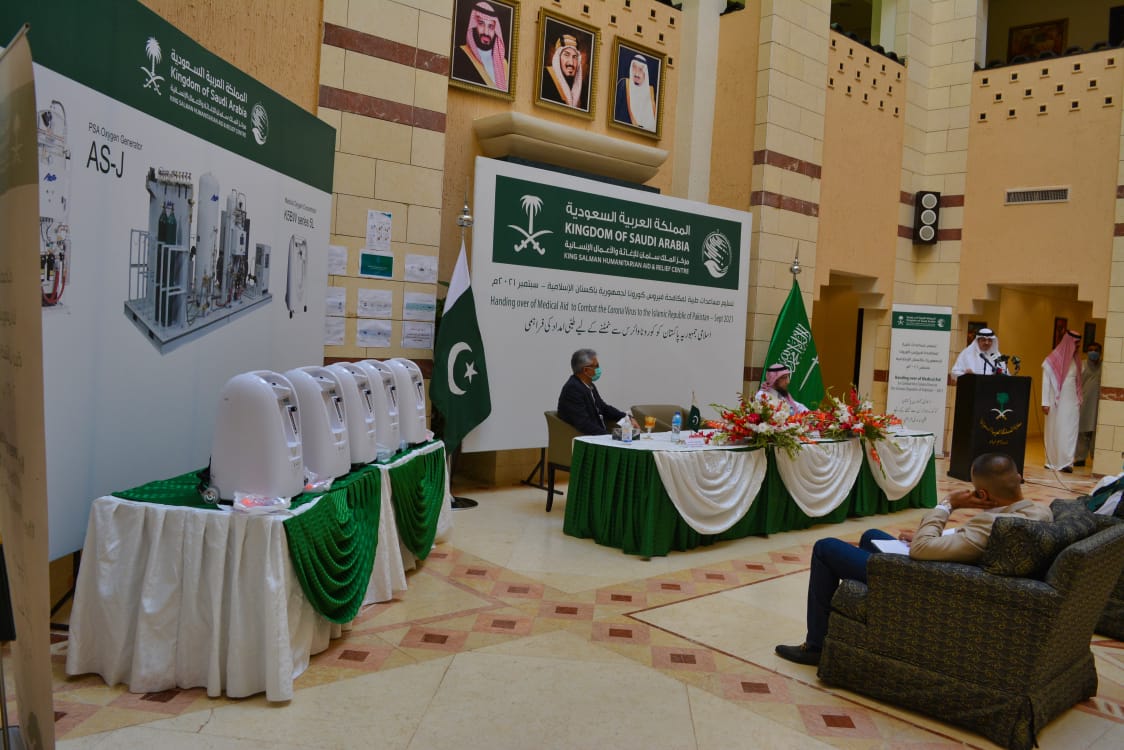
Saudi ambassador to Pakistan Nawaf bin Said Al-Malki is addressing a ceremony after handing over medical equipment to Pakistani health officials in Islamabad, Pakistan, on September 24, 2021. (Photo courtesy: Saudi embassy, Islamabad)
The Saudi envoy continued that the equipment would help Pakistan combat health care challenges posed by the coronavirus pandemic.
Addressing the gathering, the prime minister’s adviser on public health, Dr. Faisal Sultan, thanked the kingdom for its timely supply of equipment.
“This is a very worthy gift since it will help us tackle the coronavirus pandemic and its ravaging effects on human body,” he said.
Sultan also praised the spirit of cooperation, trust and closeness between Pakistan and Saudi Arabia during his speech.
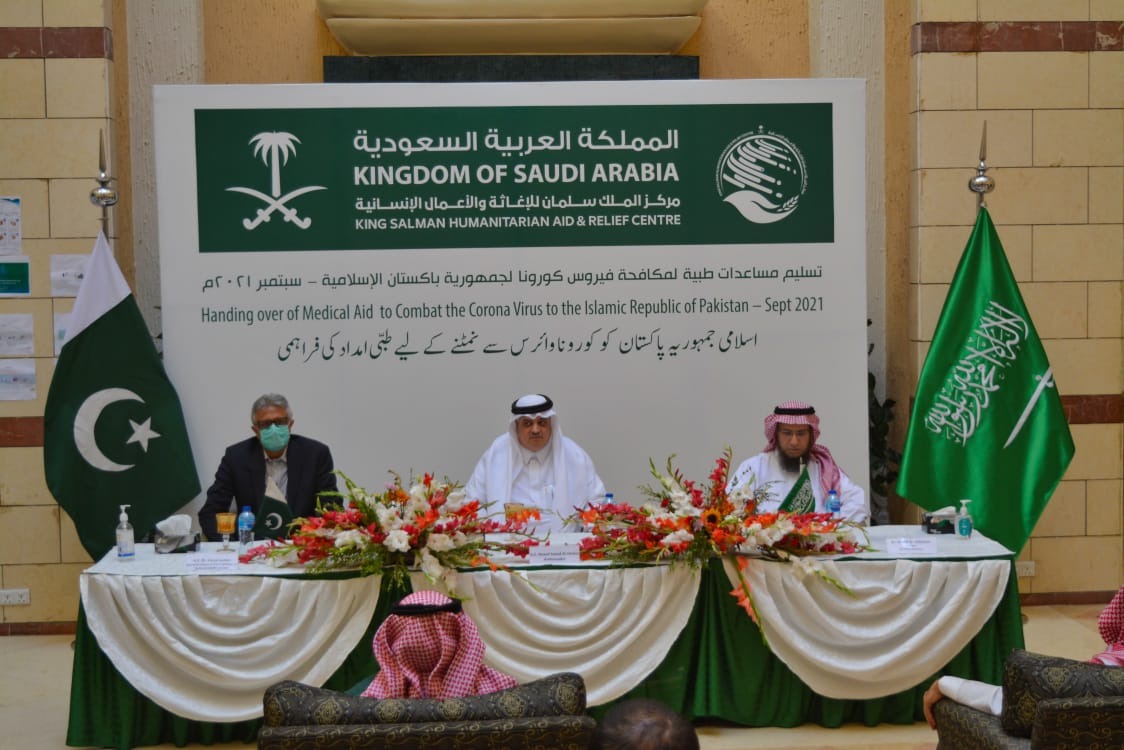
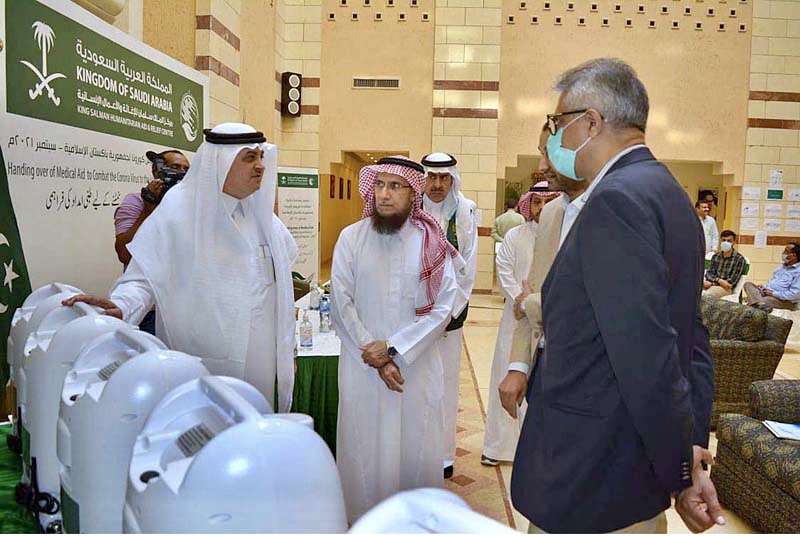
Saudi ambassador to Pakistan Nawaf bin Said Al-Malki (C) is attending a ceremony for handing over medical equipment to Pakistani health officials in Islamabad, Pakistan, on September 24, 2021. (Photo courtesy: Saudi embassy, Islamabad)
Director general of Pakistan’s health department Dr. Rana Muhammad Safdar said the medical support from the Saudi government would help his country save several precious lives.
“During these four waves of COVID-19, Pakistan almost reached the saturation point of its oxygen capacity,” he told Arab News.
Safdar added the oxygen plants donated by the Saudi humanitarian agency would be installed in remote districts to facilitate people who found it difficult to travel to larger urban centers for medical treatment.


