

Arab journalists’ body, Facebook, media groups join forces to empower women writers

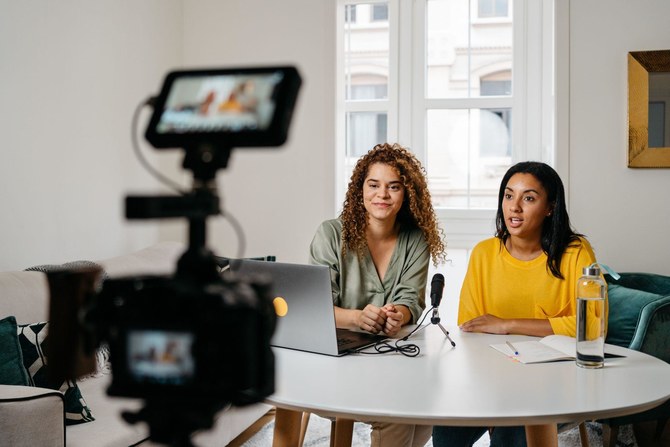
Female journalists were discovered to be among those who faced the most online abuse, including intimidation and threats. (Supplied)
Short Url
Updated 21 September 2021
Follow

Arab journalists’ body, Facebook, media groups join forces to empower women writers

  • Year-long campaign to end online harassment against women journalists proves major success

DUBAI:Women have long faced discrimination in the workplace with issues ranging from unfair pay gaps to unconscious biases.

And the switch to remote working due to the coronavirus disease (COVID-19) pandemic has brought its own set of challenges, especially for women as they struggle juggling home and work responsibilities.

In addition, women working online have also had to contend with sexual harassment, misogyny, hate speech, trolls, and other forms of abuse.

According to a study by the International Center for Journalists and the Tow Center for Digital Journalism at Columbia University, 20 percent of participants said their experience of online abuse, harassment, threats, or attacks had been “much worse than usual” after the COVID-19 outbreak.

In the region, a 2020 study by Arab Barometer found that there was a 56 percent decrease in the odds of being an internet user for women as opposed to men. Women faced “immense barriers to full participation in the digital sphere” reflective of issues in real life, the survey reported.

“Cultural norms, gender roles, biases, and stereotypes often dissuade and even prevent women from accessing the internet, gaining digital literacy, and participating in the digital economy or society,” the report added.

While the online environment was precarious for all women, female journalists were discovered to be among those who faced the most online abuse, including intimidation and threats.

In response to the trends and to protect female journalists from online abuse, Arab Reporters for Investigative Journalism in partnership with the Facebook Journalism Project, WAN-IFRA’s Women in News, the International Women’s Media Foundation, and the International Research and Exchanges Board, along with the support of the German Federal Foreign Office, last year launched a 12-month project, titled “I Will Not Stay Silent,” targeting the Arab journalistic community.

The IWNSS multidisciplinary project, was set up to create an inclusive digital public space free of exclusion, sexism, discrimination, and all other forms of injustice, for women and men in the Middle East and North Africa region.

Mohammed Omar, Facebook’s MENA news partnerships manager, said: “Attacks such as online bullying, doxing, threats, and sexual harassment are serious problems that have only become more prominent and coordinated in recent years.

“By taking part in the online webinars, journalists, especially women journalists, are empowered to come forward and speak in a safe space about the problems they have faced at work,” he added.

As part of the program, 13 webinars were held addressing topics such as how to deal with privacy issues, gender terms in media, gender balance in media coverage, and sexual harassment in the newsroom and on the internet.

The webinars reached 1.3 million people on Facebook with more than 2,000 journalists joining in via video conferencing. The 13th webinar, which was an open discussion for all participants, reached 92,000 people and had 953 participants on the platform.

Rawan Damen, director general of ARIJ, said: “With such a knowledgeable, supportive consortium, we were able to launch and execute IWNSS, which is much needed to protect the ecosystem of investigative journalism in particular and journalism in MENA as a whole.”

In addition to the webinars, IWNSS held live training, one-on-one clinics, and offered extra resources and tools to help journalists.

The ARIJ academy and Facebook also held a free online diploma program between June and September for 20 trainees, targeting media professionals, especially female journalists and HR professionals, and, said the ARIJ, “anyone professionally interested to have the tools to deal with various forms of misuse of authority in the work environment and beyond.”

Damen added: “The uniqueness of this project is not only in its regional focus but in its use of five different methods to achieve a comprehensive result; wide awareness, in-depth, focused live training, one-to-one clinics, self-based tools, and digital campaigns.”

Moving forward, IWNSS has launched 200 digital one-to-one clinics to provide the necessary tools to help journalists project themselves in the digital world. The clinics are free of charge and those interested can apply through ARIJ.


Gems of Arabia magazine launched to spotlight talents shaping Saudi Arabia’s evolving cultural landscape

Updated 15 January 2026
Follow

Gems of Arabia magazine launched to spotlight talents shaping Saudi Arabia’s evolving cultural landscape

  • The publication features established and emerging talents elevating the region across design, fashion, art, tech, music, architecture and media
  • Saudi fashion designer Hatem Alakeel seeks to highlight the richness of the Kingdom, and wider modern Arab culture to global audiences

DUBAI: When Saudi fashion designer Hatem Alakeel interviewed Princess Reema bint Bandar Al-Saud before her appointment as Saudi ambassador to the US, the longtime advocate of women’s empowerment made a powerful prediction: “I look forward to the day that the Saudi woman is no longer the story but rather a phenomenal achievement.”

That moment would become the foundation for Gems of Arabia, an arts and culture audio-visual podcast that spotlights the creative talents shaping the landscape of Saudi Arabia and the broader region.

Over six years, Gems of Arabia has documented the sweeping transformation of the Kingdom’s art and culture scene, and is now evolving into a full-fledged magazine.

Hatem Alakeel is a Saudi fashion designer. (Supplied)

“It started off as a column I used to write, and from there, it turned into a podcast. Now it is growing into a magazine,” Dubai-based Alakeel, the magazine’s founder and editor-in-chief, told Arab News ahead of the launch of the digital publication on Thursday.

Besides spotlighting celebrated regional artists, Alakeel said Gems of Arabia is in search of the “hidden gems” elevating the region across design, fashion, art, tech, music, architecture and media.

The magazine serves as a platform for talented, authentic creatives and tech entrepreneurs unable to articulate their work “because they don’t have the public relations or capacity to promote themselves even through social media.”

Alakeel added: “Our job is to identify all these authentic people; you don’t have to be famous, you just have to be authentic, and have a great story to tell.”

The digital publication offers a dynamic blend of short-form podcasts, coverage of regional cultural events, in-depth features and editorials, long-form interviews and artist profiles — spotlighting both celebrated and emerging talents. This is complemented by social media vox pops and bite-sized coverage of art events across the region.

Alakeel, who also runs Authenticite, a consulting and creative production agency connecting creators and brands who want to understand Saudi culture, said the magazine content is “carefully curated” to feature topics and personalities that resonate in the region.

What differentiates Gems of Arabia, he said, is its story of continuity and substance amassed over the years that has captured the evolution of the wider regional landscape.

“The website represents an archive of nearly 150 articles compiled through years of podcasts and long-form conversations that show continuity and depth changes,” he said.

“So, it’s an evolution and it’s another home for all our content and our community.”

Growing up in France, Alakeel said his mission started early on when he felt the need to represent his Saudi culture “in a way where it can hold its own internationally.”

Through his first brand, Toby, he sought to bring the traditional thobe into modern designs and introduce it to the luxury fashion world. This mission was accomplished when his thobe designs were placed alongside global labels such as Harvey Nichols, Dolce & Gabbana and Prada.

What began as a personal design mission would soon expand into a broader platform to champion Saudi talent. 

“I was articulating my culture through fashion and it just felt natural to do that through the incredible people that the region has,” Alakeel said, adding that the magazine aims to highlight the richness of the Kingdom, and wider modern Arab culture to global audiences.

“Art is such a great way of learning about a culture and a country,” he said. 

On the ground in Saudi Arabia, the publication hosts GEMS Forum, a series of live cultural gatherings that bring together prominent artistic figures for in-depth conversations later transformed into podcast episodes recorded with a live audience.

Alakeel said the print edition of Gems of Arabia will debut in March, designed as a collectible coffee-table quarterly distributed across the Gulf.

He envisions the platform growing into a long-term cultural record.

“It's a Saudi-centric magazine, but the idea is to make it inclusive to the region and everyone authentic has a seat at the table,” said Alakeel.