

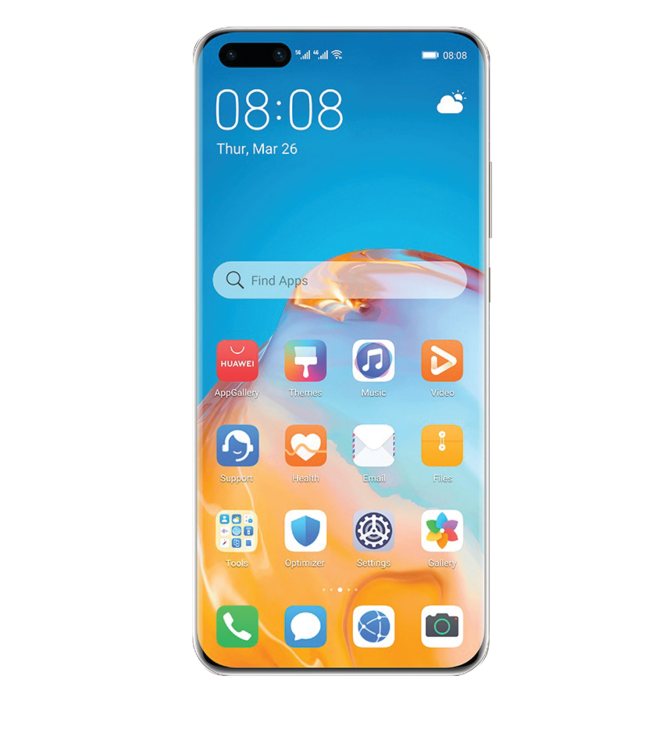
Huawei’s Petal Search among top 2 search engines in KSA

Petal Search is highly localized, providing users with information on nearby services, shopping deals, hotels, flights, local, regional and international news.
Short Url
Updated 15 September 2021
Follow

Huawei’s Petal Search among top 2 search engines in KSA

Petal Search, an innovative application and search engine preinstalled on new Huawei smartphones, has emerged as the second most frequently used search engine in Egypt, Iraq, Jordan and Saudi Arabia, according to Statcounter — a web traffic analysis website.
Petal Search is available on Huawei smartphones as well as on Android devices. Launched in 2020 and inspired by Huawei’s logo, the search engine is highly localized, providing users with information on nearby services, shopping deals, hotels, flights, local, regional and international news, and curated content that is personalized using local data.
“Petal Search is an intuitive, results-oriented, and user-friendly search tool, providing users with a wealth of real-time information directly relevant to them, when they need it,” said Adam Xiao, managing director, HMS and consumer cloud service for Huawei Consumer Business Group MEA. “By becoming the second most-used search engine in key MENA markets following its launch just last year, we are on the right track with the development and evolution of Petal Search. To address the growing user demand, we will continue to improve the search engine with new features and local partners that generate results which are directly relevant to our users.”

By becoming the second most-used search engine in key MENA markets following its launch just last year, we are on the right track with the development and evolution of Petal Search.

Adam Xiao, Managing Director, Huawei Consumer Business Group MEA

Among the innovations in Petal Search is a visual search feature that can search for and detect multiple objects in an image simultaneously. To enhance ease of use and accessibility, integrated voice search functionality has been expanded to include Arabic and Turkish, in addition to English, Spanish and French.
The search engine’s integrated App Search feature allows users to search directly on Huawei AppGallery, the default application marketplace for Huawei devices, and other third-party app sources. With Shopping Search, consumers can search for favorite products they want to buy and then directly follow a link to make a purchase. Travel Search enables users to reserve flights from within Petal Search, book hotels around the world, and search for information such as flight arrival times, local shopping destinations, retail outlets for electronics, games and much more, providing a wholly reimagined search experience for users.
Petal Search’s innovation-driven strategy will continue to leverage Huawei’s cutting-edge technology and cloud synergy capabilities, allowing users to achieve a one-stop-shop experience from information acquisition to service acquisition. The search engine’s key driver is to focus on overseas markets and collaborate with local partners to build a new global mobile search ecosystem.


Jeeny launches First–Last Mile Access in partnership with Medina Bus

Updated 19 December 2025
Follow

Jeeny launches First–Last Mile Access in partnership with Medina Bus

Jeeny has announced the introduction of its First-Last Mile Access Program in collaboration with Medina Bus, marking a significant step forward in Saudi Arabia's transportation reform. 

Passengers who buy a Medina Bus ticket can now get discounted Jeeny rides to and from key bus stops, making public transportation more accessible for both residents and pilgrims.

While the initiative appears modest, it represents a far wider vision: the first operational phase of Jeeny's goal to develop Saudi Arabia's next-generation Integrated Mobility Platform, an integrated framework that will eventually connect numerous modes of transportation under one seamless consumer experience.

Medina was chosen as the launch location because of its national importance and growing demand for efficient transportation. 

In 2024, the city's bus network handled 1.72 million people, and demand is predicted to increase further in 2025. 

Medina, being one of the Kingdom's most popular destinations, provides a real-world setting for evaluating concepts that can then be scaled across the country.

“This marks the beginning of a mobility shift in Saudi Arabia, where public transport and private operators can work together to offer a seamless journey,” said Hammad Ehtesham, CEO of Jeeny. “Making it easier for people to reach public transport is the foundation of a future where every mode of mobility in the Kingdom connects effortlessly.”

With millions of rides every year in Saudi Arabia and Jordan, Jeeny has developed into one of the top mobility platforms in the area. 

The company, which employs over 400 people and has one of the biggest active driver networks in the Kingdom, is currently getting ready for its next stage: a nationwide mobility ecosystem that will support buses, ride-hailing, micro-mobility, pilgrim mobility services, and end-to-end travel solutions, including direct flight booking through Jeeny.  

Despite the fact that Medina's First-Last Mile initiative is relatively new, early feedback shows that users are really interested in more accessible transportation options. 

Similar First-Last Mile initiatives can increase public transportation usage by 15 to 25 percent, according to international research, underscoring the wider potential impact as Jeeny considers expanding to more Saudi cities.

“What begins in Medina will become a blueprint for the Kingdom’s connected mobility future,” Ehtesham added. “This is the first step toward a nationwide ecosystem that will make movement simpler, smarter, and more accessible for everyone.”

Passengers on Medina Bus are now able to make use of the Jeeny First-Last Mile Access Program, which supports Saudi Arabia's vision for contemporary, sustainable, and inclusive mobility while providing a new, more convenient means of accessing public transportation.