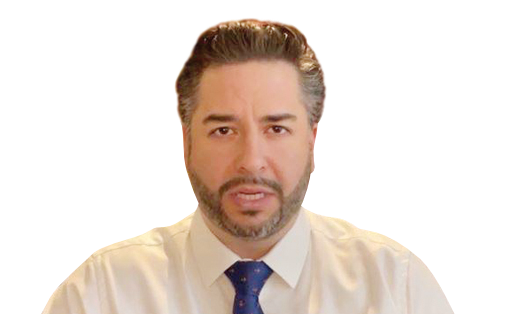

BEIRUT: The good looks of Lebanon’s new Economy Minister Amin Salam and Energy Minister Walid Fayad have caught the eye of many on social media, especially Lebanese women. After the ministers’ biographies and pictures were published, they went viral.
Lebanese singer Nawal Al-Zoghbi admired Salam’s handsomeness and hoped that he would be “up to the task.”
The admiring comments disregarded the ministers’ political affiliations, all the debate about their supposed independence from the ruling authority, and the observations about their ability to carry out reforms and gain the confidence of the international community.
Some said that, should Salam or Fayad commit any mistakes in light of the stifling economic crisis, they would be forgiven. “He can do whatever he wants to the price of a bundle of bread,” one woman commented on a picture of Salam.
Another woman commented: “How can we insult these two handsome men whenever the electricity goes out and the price of a bundle of bread rises?” A third complimented Fayad’s blue eyes, saying: “Your beautiful eyes are enough for us, we don’t need electricity. I am warning everyone; from now on no one can insult this minister.”
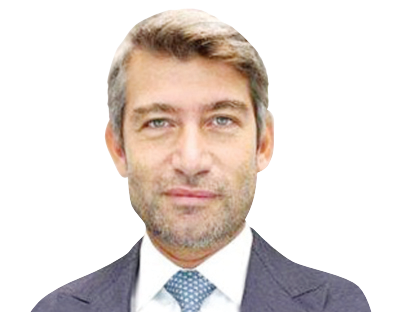
Walid Fayad
Some shared Fayad’s picture with the caption: “For a second there I thought Minister Fayad was James Bond.”
An Egyptian woman posted: “Why do our ministers come with big bellies, while Lebanon’s are so handsome?”
Some very sarcastic comments were also made. “They can always apply to Mr. Lebanon,” one man wrote under a picture of four good-looking ministers.
Amid the ongoing economic, living standards and security crises, the Lebanese seemed to find refuge in using irony to alleviate the tragic reality they live in. “No need to apply for immigration anymore; we have ministers who are nice to look at,” one man mockingly said.
HIGHLIGHT
Amid the ongoing economic, living standards and security crises, irony is being used to alleviate the tragic reality of life in Lebanon.
Media academic Dr. Ragheb Jaber said: “Social media provided an expressive space for a people whose opinion the ruling authority never cared about. Although these platforms do not make a fundamental change in the governance, sarcasm allows people to say their piece through hidden messages.”
Prominent TV presenter George Kordahi, who was assigned the Ministry of Information brief, also got his share of sarcastic comments. Kordahi is known for hosting the Arabic version of the TV show “Who Wants To Be A Millionaire?” and some people wrote that it would now be called “Who Will Steal A Million?” in reference to the ruling authority’s corruption.
Some criticized the digitally edited photographs of the ministers, saying: “Altering pictures on Photoshop will soon turn into fraud in political action.”
Meanwhile, an interview with Minister of Social Affairs Hector Hajjar raised controversy, ridicule and resentment at what the new government might do. Hajjar, who is affiliated with the Free Patriotic Movement, stated that “the crisis as a whole is a foreign economic conspiracy against Lebanon.”
He explained: “So what if people cannot find diapers in stores, they can replace them with pieces of cloth. I just got back from China, where the people use neither diapers nor tissues; they replaced everything with washable pieces of cloth. Why don’t we follow the Chinese model?”
Hajjar’s interview sparked a storm of angry comments, with singer Elissa tweeting: “A sample of our new government.”
MP Wehbe Katicha tweeted: “After hearing the statement of the ‘Minister of Diapers,’ I knew he was going to take us to hell and beyond. Is this guy serious?”
The government is expected to draw up its ministerial statement — based on which it will hope to gain a vote of confidence in parliament — once the new ministers return from abroad.
Meanwhile, the never-ending queues in front of gas stations continue. Georges Brax, a member of the gas station owners’ syndicate, warned: “Stocks will soon run out. Many gas stations will close in the next few days and the country will be paralyzed by midweek.”
Prime Minister Najib Mikati had warned, minutes after the formation of his government, that fuel subsidies “will be completely lifted because our money has dried up.”