

Indian government in cross-party talks over ‘critical’ Afghanistan situation

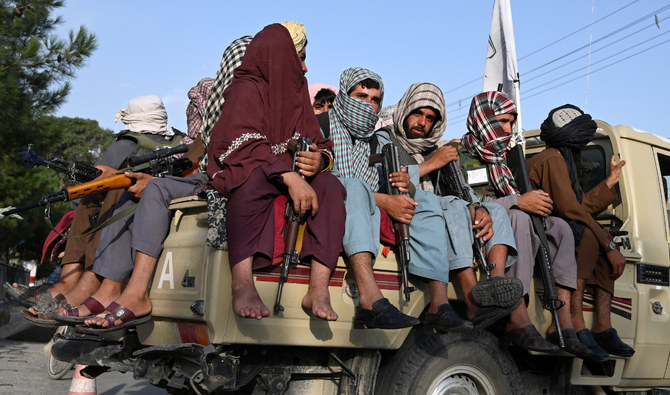
In the past 20 years, India has spent about $3 billion on development projects in different parts of the neighboring landlocked country. (AFP)
Short Url
Updated 28 August 2021
Follow

Indian government in cross-party talks over ‘critical’ Afghanistan situation

  • In the past 20 years, India has spent about $3 billion on development projects in different parts of Afghanistan

NEW DELHI: The Indian government on Thursday held a meeting with all political parties, including the opposition, over what it said was a “critical” situation in Afghanistan following the Taliban takeover.
The militant group earlier this month seized most of the country and on Aug. 15 entered Kabul as the Afghan government collapsed and began promoting foreign missions to evacuate its staff and nationals.
New Delhi has since operated six flights and evacuated about 800 Indian nationals and some Afghan Sikhs and Hindus from the country.
“The situation in Afghanistan is critical and our immediate concern and task is evacuation,” Indian Foreign Minister S. Jaishankar said during the meeting with government ministers and leaders of 31 opposition parties.
He did not give details, but said that “a few Indian nationals” still remain in Afghanistan.
Later, he took to Twitter to say that New Delhi’s long-term interest is “friendship with the people of Afghanistan.”
He added: “Our strong friendship with the people of Afghanistan is reflected in the more than 500 projects we have there.”
In the past 20 years, India has spent about $3 billion on development projects in different parts of the neighboring landlocked country.
As other powers look to cement their grip on the region, the government has faced criticism for allowing India to be sidelined in Afghanistan while other players such as Pakistan, Russia and China sweep in.
During Thursday’s meeting, the government denied the accusations, an opposition leader who was present in the conference told reporters.
“In the meeting on Afghanistan, the government denied reports it has been isolated and told us efforts are being intensified to rescue the trapped Indian nationals,” said Prasanna Acharya, leader of Biju Janata Dal, a regional political party in the Indian state of Odisha.
Foreign policy experts, however, have warned that India has paid the price for its dependence on the US, whose troops are completing their withdrawal from the war-torn country.
“The Indian government crafted its Afghan policy around the US presence in Afghanistan. All its investments were driven on this assumption that the US presence will protect it,” said Sanjay Kapoor, editor of Delhi-based magazine Hardnews.


He welcomed the government’s move to reach out to the opposition, saying that it would help formulate a “more nuanced position” on Afghanistan.
“It came as a surprise that the government is speaking to the opposition,” he said, “but it’s a welcome move.”


Voting passes peacefully in Nepal’s first election since September youth-led protests

Updated 6 sec ago
Follow

Voting passes peacefully in Nepal’s first election since September youth-led protests

KARMANDU: Voting was peaceful in Nepal’s first nationwide election Thursday since a violent, youth-led uprising forced the government from power in September.
Turnout was about 60 percent and only a few minor incidents were reported, according to Nepal’s acting Chief Election Commissioner Ram Prasad Bhandari.
Vote counting would begin immediately after the ballot boxes are collected and transported to counting centers across the Himalayan nation, which could be as early as Thursday night. Results were expected by the weekend. Helicopters will be used to ferry the boxes from polling stations in remote mountain villages in the northern region by Friday morning, Bhandari said.
The next administration is expected to inherit daunting challenges. It must deliver on changes demanded by last year’s protests, tackle entrenched corruption and carefully manage ties with its powerful neighbors, India and China.
“I came to vote mainly because of the protest and so many people gave their lives in the hope of a change, in hope of seeing better Nepal,” said Luniva, a first-time voter. “Hopefully, I want to see my country become better by all the sacrifices that have been made.”
Others shared similar hopes that the election could usher in positive change after months of political unrest.
Voters are directly electing 165 members to the House of Representatives, the lower chamber of Parliament. The remaining 110 seats in the 275-member body will be allocated through a proportional representation system, under which political parties nominate lawmakers based on their share of the vote.
The election is widely seen as a three-way contest, shaped by voter frustration over widespread corruption and demands for greater government accountability.
The National Independent Party, founded in 2022, is considered the front-runner, posing a strong challenge to two long-dominant parties: the Nepali Congress and the Communist Party of Nepal (Unified Marxist–Leninist).
The new party’s prime ministerial candidate is rapper-turned-politician Balendra Shah, who won the 2022 Katmandu mayoral race and emerged as a leading figure in the 2025 uprising that ousted former Prime Minister Khadga Prasad Oli.
Shah, 35, has rode a wave of public anger toward traditional political parties. He highlighted health and education for poor Nepalis as a key focus of his campaign.
The protests against corruption and poor governance were triggered by a social media ban before snowballing into a popular revolt against the government. Dozens were killed and hundreds injured when protesters attacked government buildings and police opened fire on them.
While the Congress and the Communists retain loyal voter bases, Shah’s party has drawn larger crowds on the campaign trail, highlighting its growing appeal among younger voters seeking an alternative.
There are about 19 million registered voters among the country’s nearly 30 million people, according to the Election Commission of Nepal.
Millions of Nepalis living overseas are unable to take part in the vote. An estimated 3 million citizens work abroad — largely in the Middle East, Southeast Asia and neighboring India — and cannot cast ballots because the country does not yet have a system allowing voting from abroad.