Fighting in Syria’s Daraa displaces 38,000

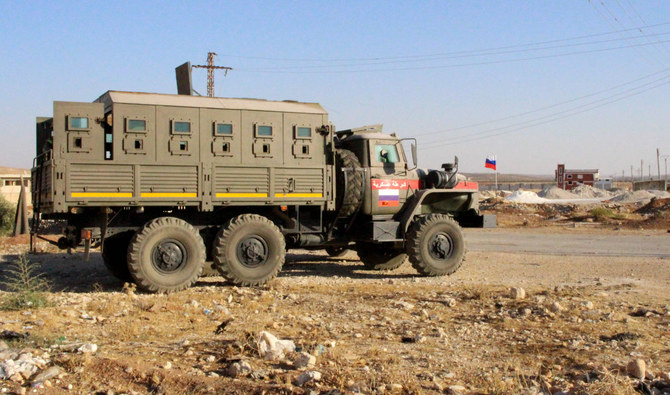
The Britain-based Syrian Observatory for Human Rights said that government forces are restricting the entry of goods into Daraa Al-Balad, where it says 40,000 people still live. (AFP)
Short Url
Updated 25 August 2021
Follow

Fighting in Syria’s Daraa displaces 38,000

  • Russian-sponsored truce talks launched in the wake of the latest fighting have made little headway

BEIRUT: Fighting between government forces and former rebels in the Syrian province of Daraa has displaced more than 38,000 people over the past month, the UN said on Tuesday, as truce talks falter.
Daraa, retaken by government forces in 2018, has emerged as a new flashpoint in recent weeks as government forces tightened control over Daraa Al-Balad, a southern district of the provincial capital, a hub for former rebel fighters. Clashes, including artillery exchanges, between the two sides since late July have marked the biggest challenge yet to the Russian-brokered deal that returned the southern province to government control but allowed rebels to stay on in some areas.
Russian-sponsored truce talks launched in the wake of the latest fighting have made little headway as the government has stepped up its campaign to root out remaining rebel fighters from Daraa Al-Balad.
The UN Office for the Coordination of Humanitarian Affairs (OCHA) said that 38,600 internally displaced persons are registered in and around Daraa, with most having fled from Daraa Al-Balad. “This includes almost 15,000 women, over 3,200 men and elderly and over 20,400 children,” OCHA said.
It warned of a critical situation in the volatile district, saying that access to goods and services, including food and power, is “extremely challenging.”
The Britain-based Syrian Observatory for Human Rights said that government forces are restricting the entry of goods into Daraa Al-Balad, where it says 40,000 people still live.
“They are living under siege with families facing shortages of food, medical services, potable water, power and internet,” said the monitor, which relies on a network of sources inside Syria.
The Observatory said that many in Daraa Al-Balad reject the truce terms being set by the government and its Russian ally.


UN, aid groups warn Gaza operations at risk from Israel impediments

Updated 18 December 2025
Follow

UN, aid groups warn Gaza operations at risk from Israel impediments

  • Dozens of international aid groups face de-registration by December 31, which then means they have to close operations within 60 days

UNITED NATIONS: The United Nations and aid groups warned on Wednesday that humanitarian operations in the Palestinian territories, particularly Gaza, were at risk of collapse if Israel does not lift impediments that include a “vague, arbitrary, and highly politicized” registration process.
Dozens of international aid groups face de-registration by December 31, which then means they have to close operations within 60 days, said the UN and more than 200 local and international aid groups in a joint statement.
“The deregistration of INGOs (international aid groups) in Gaza will have a catastrophic impact on access to essential and basic services,” the statement read.
“INGOs run or support the majority of field hospitals, primary health care centers, emergency shelter responses, water and sanitation services, nutrition stabilization centers for children with acute malnutrition, and critical mine action activities,” it said.

SUPPLIES LEFT OUT OF REACH: GROUPS
While some international aid groups have been registered under the system that was introduced in March, “the ongoing re-registration process and other arbitrary hindrances to humanitarian operations have left millions of dollars’ worth of essential supplies — including food, medical items, hygiene materials, and shelter assistance — stuck outside of Gaza and unable to reach people in need,” the statement read.
Israel’s mission to the United Nations in New York did not immediately respond to a request for comment on the statement. Under the first phase of US President Donald Trump’s Gaza plan, a fragile ceasefire in the two-year-old war between Israel and Palestinian militants Hamas began on October 10. Hamas released hostages, Israel freed detained Palestinians and more aid began flowing into the enclave where a global hunger monitor said in August famine had taken hold.
However, Hamas says fewer aid trucks are entering Gaza than was agreed. Aid agencies say there is far less aid than required, and that Israel is blocking many necessary items from coming in. Israel denies that and says it is abiding by its obligations under the truce.
“The UN will not be able to compensate for the collapse of INGOs’ operations if they are de-registered, and the humanitarian response cannot be replaced by alternative actors operating outside established humanitarian principles,” the statement by the UN and aid groups said.
The statement stressed “humanitarian access is not optional, conditional or political,” adding: “Lifesaving assistance must be allowed to reach Palestinians without further delay.”