LONDON: Iran restarted exports of gasoline and gasoil to Afghanistan a few days ago, following a request from the Taliban, Iran’s Oil, Gas and Petrochemical Products Exporters’ Union said on Monday.
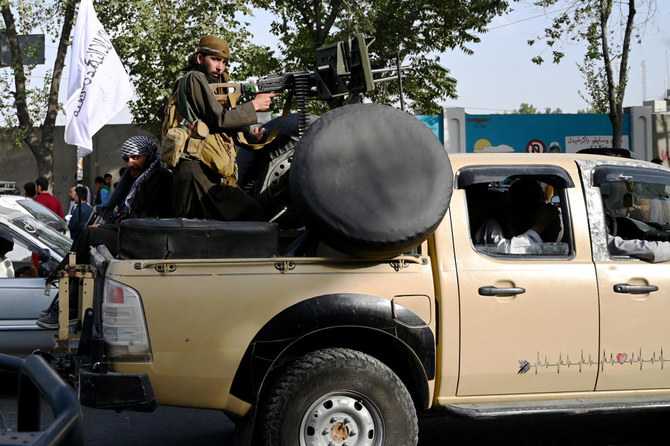
The Sunni Muslim group seized power in Afghanistan last week as the United States and its allies withdrew troops after a 20-year war.
The price of gasoline in Afghanistan reached $900 per ton last week as many panicked Afghans drove out of cities, fearing reprisals and a return to a harsh version of Islamic law the Taliban imposed when in power two decades ago.
To counter the price spike, the new Taliban government asked Shiite Iran to keep the borders open for traders.
“The Taliban sent messages to Iran saying ‘you can continue the exports of petroleum products’,” Hamid Hosseini, board member and spokesperson at the Iranian union in Tehran, told Reuters, adding that some Iranian traders had been cautious due to security concerns.
Iranian exports began a few days ago, after the Taliban cut tariffs on imports of fuel from Iran up to 70 percent, Hosseini added, showing an official document from Afghan Customs organization.
The main Iranian exports to Afghanistan are gasoline and gasoil. Iran exported about 400,000 tons of fuel to its neighbor from May 2020 to May 2021, according to a report published by PetroView, an Iranian oil and gas research and consultancy platform.

Iran resumes fuel exports to Afghanistan after Taliban request, union says
Short Url
https://arab.news/my2wa
Iran resumes fuel exports to Afghanistan after Taliban request, union says
- The price of gasoline in Afghanistan reached $900 per ton last week as many panicked Afghans drove out of cities
January settler attacks cause record West Bank displacement since Oct 2023: UN
RAMALLAH: Israeli settler violence and harassment in the occupied West Bank displaced nearly 700 Palestinians in January, the United Nations said Thursday, the highest rate since the Gaza war erupted in October 2023.
At least 694 Palestinians were forcefully driven from their homes last month, according to figures from the UN’s humanitarian agency OCHA, which compiles data from various United Nations agencies.
The UN Human Rights Office (OHCHR) said in late January that settler violence has become a key driver of forced displacement in the West Bank.
January’s displacement numbers were particularly high in part due to the displacement of an entire herding community in the Jordan Valley, Ras Ein Al-Auja, whose 130 families left after months of harassment.
“What is happening today is the complete collapse of the community as a result of the settlers’ continuous and repeated attacks, day and night, for the past two years,” Farhan Jahaleen, a Bedouin resident, told AFP at the time.
Settlers in the West Bank, which Israel has occupied since 1967, use herding to establish a presence on agricultural lands used by Palestinian communities and gradually deny them access to these areas, according to a 2025 report by Israeli NGO Peace Now.
To force Palestinians out, settlers resort to harassment, intimidation and violence, “with the backing of the Israeli government and military,” the settlement watchdog said.
“No one is putting the pressure on Israel or on the Israeli authorities to stop this and so the settlers feel it, they feel the complete impunity that they’re just free to continue to do this,” said Allegra Pacheco, director of the West Bank Protection Consortium, a group of NGOS working to support Palestinian communities against displacement.
She pointed to a lack of attention on the West Bank as another driving factor.
“All eyes are focused on Gaza when it comes to Palestine, while we have an ongoing ethnic cleansing in the West Bank and nobody’s paying attention,” she told AFP.
West Bank Palestinians are also displaced when Israel’s military destroys structures and dwellings it says are built without permits.
In January, 182 more Palestinians were displaced due to home demolitions, according to OCHA.
Excluding Israeli-annexed east Jerusalem, the West Bank is home to more than 500,000 Israelis living in settlements and outposts considered illegal under international law.
Around three million Palestinians live in the West Bank.
At least 694 Palestinians were forcefully driven from their homes last month, according to figures from the UN’s humanitarian agency OCHA, which compiles data from various United Nations agencies.
The UN Human Rights Office (OHCHR) said in late January that settler violence has become a key driver of forced displacement in the West Bank.
January’s displacement numbers were particularly high in part due to the displacement of an entire herding community in the Jordan Valley, Ras Ein Al-Auja, whose 130 families left after months of harassment.
“What is happening today is the complete collapse of the community as a result of the settlers’ continuous and repeated attacks, day and night, for the past two years,” Farhan Jahaleen, a Bedouin resident, told AFP at the time.
Settlers in the West Bank, which Israel has occupied since 1967, use herding to establish a presence on agricultural lands used by Palestinian communities and gradually deny them access to these areas, according to a 2025 report by Israeli NGO Peace Now.
To force Palestinians out, settlers resort to harassment, intimidation and violence, “with the backing of the Israeli government and military,” the settlement watchdog said.
“No one is putting the pressure on Israel or on the Israeli authorities to stop this and so the settlers feel it, they feel the complete impunity that they’re just free to continue to do this,” said Allegra Pacheco, director of the West Bank Protection Consortium, a group of NGOS working to support Palestinian communities against displacement.
She pointed to a lack of attention on the West Bank as another driving factor.
“All eyes are focused on Gaza when it comes to Palestine, while we have an ongoing ethnic cleansing in the West Bank and nobody’s paying attention,” she told AFP.
West Bank Palestinians are also displaced when Israel’s military destroys structures and dwellings it says are built without permits.
In January, 182 more Palestinians were displaced due to home demolitions, according to OCHA.
Excluding Israeli-annexed east Jerusalem, the West Bank is home to more than 500,000 Israelis living in settlements and outposts considered illegal under international law.
Around three million Palestinians live in the West Bank.
© 2026 SAUDI RESEARCH & PUBLISHING COMPANY, All Rights Reserved And subject to Terms of Use Agreement.


