
ALEXANDRIA: Yemen reported 39 new coronavirus infections on Tuesday, the highest single-day number of confirmed cases recorded in months, as the health minister announced that the country had entered the third wave.
The Aden-based National Coronavirus Committee also reported two deaths from 4,016 tested samples.
The total number of confirmed cases is 7,347. There have been 1,407 deaths and 4,543 recoveries.
On Monday, there were 15 new cases, two deaths and 27 recoveries reported. On Sunday there were 20 new cases, 15 recoveries and two deaths.
“We have seen an increase in the cases throughout the past week and some quarantines are overwhelmed with cases. We think we entered the third wave,” Health Minister Dr. Qasem Buhaibeh told state TV, adding that healthcare facilities had been put on high alert to handle the rising number of patients.
He said that, due to poor testing and surveillance, the number of confirmed cases constituted roughly 10 percent of the actual transmitted cases.
He urged people to adhere to health guidelines concerning the virus and to take vaccines when they were available.
“Unlike many countries that have extensive testing, we do not record all cases of coronavirus. We only discover severe cases with severe symptoms or those cases that go to isolation centers or laboratories.”
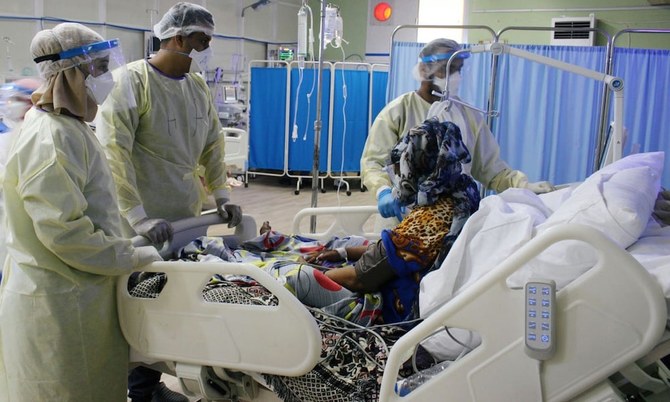
Local health workers in provinces not under Houthi control said they were not ready to handle the sudden influx of new cases and that some quarantine centers had reached their maximum capacity amid a shortage of medical supplies.
In Aden, the 30 beds at the only functioning quarantine center at Al-Sadaqa hospital were occupied and people were being redirected.
“The center is full of patients. We referred four patients to Lahj province,” a local health official told Arab News. He added that two other quarantine centers in Aden had been closed due to a funding shortage.
Yemen officially announced the first case of COVID-19 on April 10 last year and cases increased rapidly in the following two months.
The second wave peaked in February and March of this year, with health facilities reporting dozens of deaths and new cases.
Since the beginning of the pandemic in Yemen, the Iran-backed militia has applied a secretive policy about death tolls and cases in heavily populated areas under their control.
It has banned health facilities from reporting cases and denying healthcare workers vaccines.
Buhaibeh said the Houthi clampdown on information had undermined the country’s health strategies to confront the spread of the virus.
“The Houthis adopt a policy dating back to ancient times. They refuse to disclose the actual number of cases or to vaccinate people. This (policy) undermined the health system.”
He urged the global COVAX initiative and international donors to swiftly supply the country with new vaccine shipments as thousands of Yemeni travelers were stuck at home due to the shortage of shots.
“We are in need of the vaccines more than many other countries as we cannot impose health guidelines.”