Saudi Arabia’s daily COVID-19 cases continue to decline

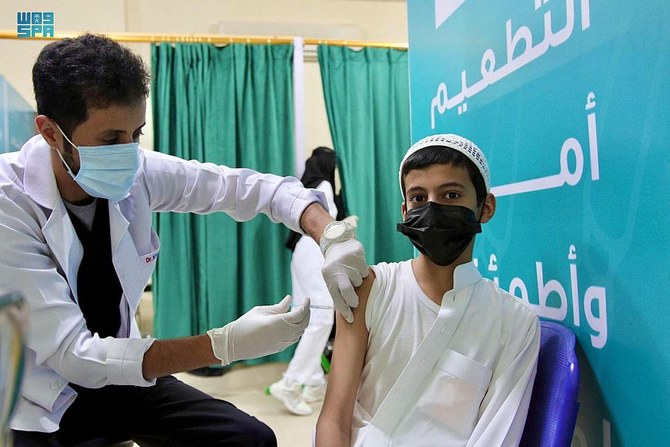
The coronavirus pandemic has affected over 208 million people globally and the death toll has reached around 4.38 million. (File/SPA)
Short Url
Updated 16 August 2021
Follow

Saudi Arabia’s daily COVID-19 cases continue to decline

  • 71 people were arrested by Makkah police for violating quarantine measures
  • Jazan police arrested 81 women in a village in the Samtah governorate during a gathering

JEDDAH: Saudi Arabia’s daily confirmed cases continue to drop as more regions are recording numbers below the 100 case mark. 
604 new cases were reported on Monday with only one region topping the list, Riyadh reported 170 cases, Makkah with 97 cases, the Eastern Province with 67 and Jazan 59. The Northern Borders reported only 5 cases, the lowest of all 13 regions.
The last time the Kingdom recorded numbers near the 600 mark were last September.
With today’s numbers, 539,129 cases have been recorded so far in Saudi Arabia since the beginning of the pandemic. 
1,011 recoveries were reported, raising the total number of those recovered from COVID-19 to 524,061. The Kingdom’s recovery rate is currently at 97.2 percent. 
With the rise in the number of recoveries, the number of active cases have also seen a decline as there are currently 6,649 active cases, 1,332 of which are in critical care. It’s important to highlight that there has been a decline of 24 ICU cases in the past 24 hours.
Seven new deaths due to complications from the infection have been reported, raising the death tally to 8,419.
More than 32.1 vaccine doses have been administered so far at a rate of 272,224 each day, that’s about 92.3 doses per hundred people. So far, 59.94 percent of the Kingdom’s 34.8 million have been vaccinated, 11.3 million of which were vaccinated with both doses and making up 32.3 percent of those vaccinated. 


With the news of the cases infected by the Delta variant in the Kingdom, authorities are warning residents to adhere to precautionary and health measures. Any and all violations will be dealt with accordingly. 
71 people were arrested by the Makkah Police for violating quarantine measures after discovering they were infected by COVID-19 putting people at risk. Quarantine violators could face up to two years in prison and fines of SR200,000 ($53,330) and expats will be deported and permanently banned from returning to the Kingdom. 
The country’s Bureau of Investigation and Public Prosecution said the penalties would apply to those violating regulations whether they were infected with COVID-19, had come into contact with someone having the virus, or were suspected of being a carrier.
Jazan police arrested 81 women in a village in the Samtah governorate during a gathering that violated precautionary regulations. Legal measures and penalties have been imposed on the organizer, the owner of the facility and everyone who attended the event.
The municipality of Hail carried out 2,206 inspection tours of commercial centers and facilities in the past week, and closed 110 facilities for violating preventive measures.
The education and health departments in Hail inaugurated a vaccine center to help increase the number of students inoculated before the start of the academic year and has vaccinated 550 in the first day.
The coronavirus pandemic has affected over 208 million people globally and the death toll has reached around 4.38 million.


Saudi Arabia has told Iran not to attack it, warns of possible retaliation, sources say

Updated 08 March 2026
Follow

Saudi Arabia has told Iran not to attack it, warns of possible retaliation, sources say

Saudi Arabia has told Tehran that while it favors a diplomatic settlement to Iran’s conflict with the United States, continued attacks on the kingdom and ​its energy sector could push Riyadh to respond in kind, four sources familiar with the matter told Reuters.

The message was conveyed before a speech on ‌Saturday in which Iranian President Masoud Pezeshkian apologized to neighboring Gulf states for Tehran’s actions – an apparent attempt to defuse regional anger over Iranian strikes that hit civilian targets.

Two days earlier, Saudi Foreign Minister Prince Faisal bin Farhan spoke to Iranian Foreign Minister Abbas Araghchi and set out Riyadh’s position with clarity, the sources said.

Saudi Arabia is open to any form of mediation aimed at de‑escalation and a negotiated settlement, the sources quoted ​the minister as saying, underlining that neither Riyadh nor other Gulf states had let the US use their airspace or territory to launch airstrikes on Iran.

But Prince ​Faisal was also quoted by the sources as saying that if Iranian attacks persisted against Saudi territory or energy infrastructure, Saudi Arabia would ⁠be forced to permit US forces to use their bases there for military operations. Riyadh would retaliate if attacks on the kingdom’s critical energy facilities continued, he said.

The sources said ​the kingdom had remained in regular contact with Tehran through its ambassador since the US and Israeli military campaign against Iran began on February 28 following the collapse of talks on ​Iran’s nuclear program.

The Saudi and Iranian foreign ministries did not respond to requests for comment.

Drone and missile attacks on Gulf states

The United Arab Emirates, Kuwait, Qatar, Bahrain and Saudi Arabia have all come under heavy drone and missile fire from Iran over the past week.

Iran’s Supreme Leader, Ayatollah Ali Khamenei, was killed on the first day of the war. Tehran responded by hitting Israel and Gulf Arab states hosting US military installations, ​and Israel has attacked Lebanon’s Iran-backed Hezbollah armed group.

Araghchi said in an interview on Saturday that he remained in constant contact with his Saudi counterpart and other Saudi officials, adding ​that Riyadh had assured Tehran it was fully committed to not allowing its territory, waters or airspace to be used for attacks against Iran.

Pezeshkian said Iran’s temporary leadership council had approved suspending attacks on ‌nearby countries – unless ⁠an attack on Iran came from those nations.

“I personally apologize to neighboring countries that were affected by Iran’s actions,” he said.

To what extent Pezeshkian’s remarks signal a change is unclear. There were further reports of strikes directed at Gulf states on Saturday.

Also, in a sign of possible divisions within Iran’s leadership, Khatam Al-Anbiya Central Headquarters – the unified combatant command of the Iranian armed forces – said in a statement afterwards that US and Israeli bases and interests across the region would remain targets.

The command said Iran’s armed forces respected the sovereignty and interests of ​neighboring states and had not taken action against ​them so far. But it said US ⁠and Israeli military bases and assets on land, at sea and in the air across the region would be treated as primary targets and face “powerful and heavy” strikes by Iran’s forces.

US President Donald Trump said in a social media post that Iran had “apologized and surrendered to its Middle ​East neighbors, and promised that it will not shoot at them anymore. This promise was only made because of the relentless US ​and Israeli attack.”

Two Iranian ⁠sources confirmed that a call had taken place in which Riyadh warned Tehran to halt attacks on Saudi Arabia and neighboring Gulf states. Iran, they said, reiterated its position that the strikes were not aimed at Gulf countries themselves but at US interests and military bases hosted on their territory.

One Iranian source said that Tehran had in response demanded that US bases in the region be ⁠closed and ​some Gulf states stop sharing intelligence with Washington that Iran believes is being used to carry out attacks against it.

Another ​Iranian source said some military commanders were pressing to continue the strikes, accusing the US of using bases in Gulf states and these countries’ airspace to conduct operations against Iran.

Iran had in recent years mended fences with its ​Gulf neighbors, including former regional archrival Saudi Arabia. The diplomatic campaign imploded in the blitz of drones and missiles launched by Iran’s Revolutionary Guards in the past week.