

Coronavirus restrictions decreased Independence Day sales by 40 percent in Karachi — traders

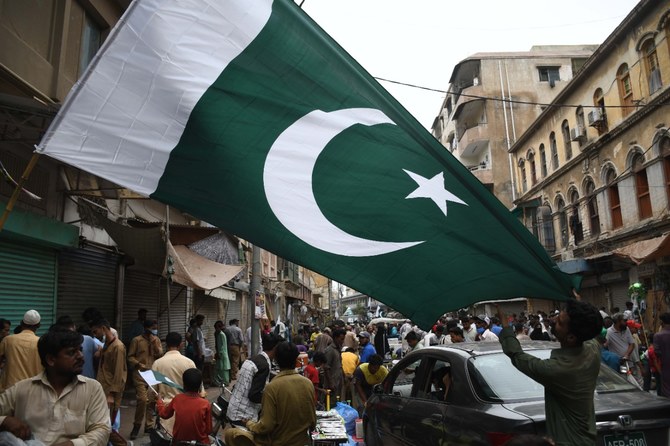
A vendor is selling a Pakistan flag at the paper market in Karachi on August 13, 2021, ahead of the country’s Independence Day on August 14. (AN Photo)
Short Url
Updated 14 August 2021
Follow

Coronavirus restrictions decreased Independence Day sales by 40 percent in Karachi — traders

  • People in Pakistan traditionally purchase flags, buntings, badges, caps and other decorative items in large quantities to celebrate August 14
  • Independence Day sales only took place for four days in Karachi during the ongoing month due to a lockdown imposed by the provincial authorities

KARACHI: Pakistani traders in this seaside metropolis on Friday complained of 40 percent reduction in Independence Day sales of national flags, badges and other decorative items due to a coronavirus lockdown imposed by the provincial administration of Sindh.
People in Pakistan traditionally purchase flags, buntings, badges and other decorative items in large quantities to celebrate August 14.
Thousands of people start visiting Karachi’s paper market on MA Jinnah Road from the beginning of August to buy Independence Day products to prepare for the celebrations.
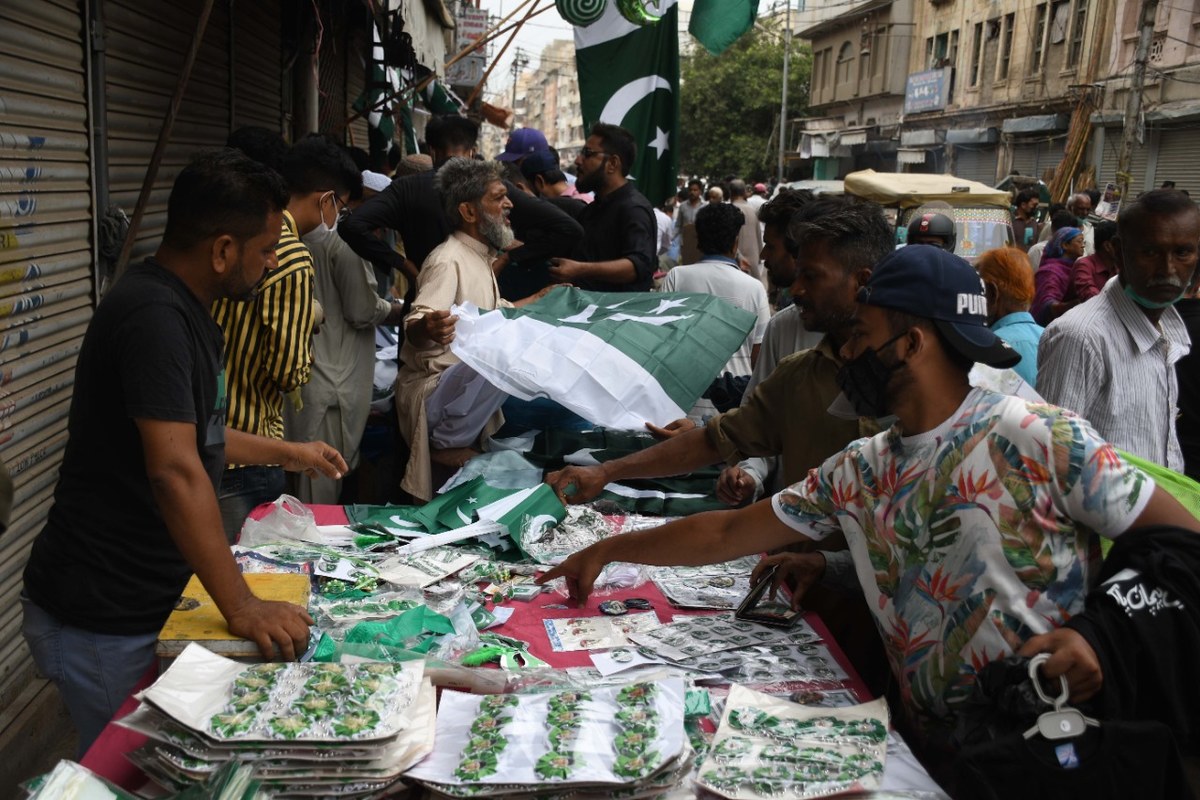


A large number of people are buying flags, badges, buntings, stickers, caps and other decorative items from a stall in Karachi’s paper market on August 13, 2021, to prepare for Pakistan's Independence Day. (AN Photo)

However, the market has only carried out its business activities for four days during the ongoing month since the Sindh government imposed a 10-day lockdown to prevent the coronavirus spread in the country’s most densely populated city.
“We have estimated that our sales of flags and other Independence Day items went down by about 30 to 40 percent this year due to the recent lockdown,” Atiq Mir, who heads a merchants’ association in the city, told Arab News on Friday.
“Last year, the sales were much better since market activities could be carried out until late at night,” he added.
In keeping with the directives of the Sindh administration, markets in Karachi also remain closed on Fridays and Sundays to contain the spread of coronavirus infections.
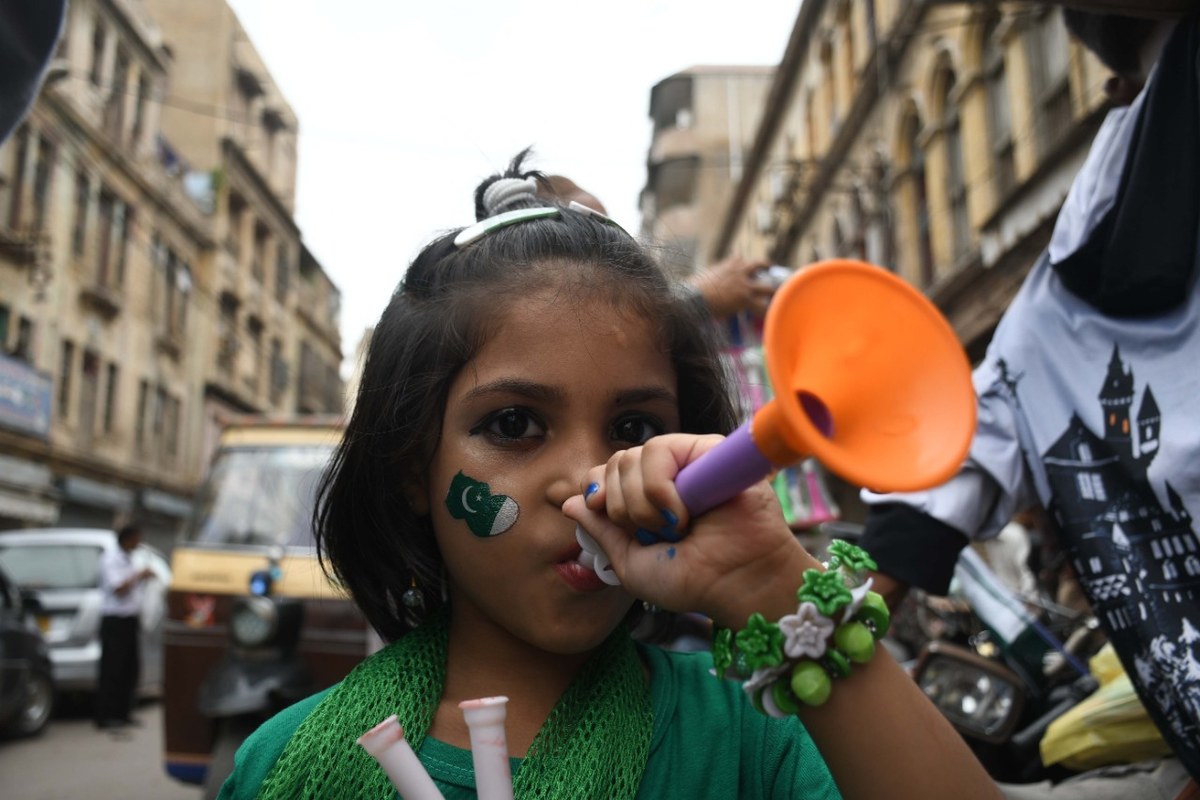


A girl is blowing a trumpet after buying it from a street vendor in Karachi on August 13, 2021. (AN Photo)

People directly dealing with the sales of Independence Day items complained about the strict imposition of virus restrictions while speaking to Arab News on Friday.
“It was like a curfew had been imposed in the market,” Shaikh Nisar Ahmed Perchamwala, who runs a major flag manufacturing and distribution outlet, said. “The lockdown completely ruined our business.”
Street vendors also maintained that much of their merchandize had been unsold.
“I set up a stall on Thursday to sell Pakistani flags along with green bangles and other stuff, but I was asked to wrap it up by police officials today [Friday],” Sabihuddin, a vendor who only mentioned his first name, said. “I still have about Rs20,000 of products left.”
Some traders in Karachi noted the Independence Day sales remained normal in other parts of the country where buying activities complemented the traditional celebratory mood ahead of the major national occasion.
Many Pakistani buyers also purchased flags of Kashmir to express solidarity with the residents of the disputed territory under Indian rule who lost the special constitutional status of their territory a little more than two years ago.


Pakistan urges developed nations, global institutions to expand role in climate financing

Updated 4 sec ago
Follow

Pakistan urges developed nations, global institutions to expand role in climate financing

  • Pakistan is recognized among countries worldwide most affected by climate-induced disasters
  • Planning minister stresses redesigning global financial system on principles of responsibility, equity

ISLAMABAD: Pakistan’s Planning Minister Ahsan Iqbal this week called on developed nations and international financial institutions to play a greater role in helping developing countries adopt green technologies at lower costs, state-run media reported. 

Pakistan has suffered frequent climate change-induced disasters over the past couple of years, ranging from floods, droughts, heatwaves, cyclones and other irregular weather patterns. 

This year the South Asian country reported over 1,000 deaths from floods and landslides triggered by heavy rains and the melting of glaciers. 

“He [Iqbal] said Pakistan has urged developed countries and international financial institutions to expand their role in climate financing to enable developing nations to adopt green technologies at lower costs,” state-run Associated Press of Pakistan (APP) reported on Saturday. 

The minister was speaking at the Second Asia Energy Transition Summit held at Pakistani university LUMS on Saturday. 

Iqbal warned that climate change is intensifying emergencies and increasing economic burdens on vulnerable countries, adding that financial incentives and concessional financing have become indispensable for sustainable climate action.

“He further emphasized the need to redesign the global financial system based on the principles of collective responsibility and equity,” APP said. 

The minister noted that Pakistan has been introducing comprehensive reforms in its development agenda to promote renewable energy, solar power and green technological solutions. 

The country, he said, possesses “strong solar potential,” a robust renewable energy market, a wide talent pool in engineering and science and an enabling environment for green innovation.

Pakistan has regularly urged developed countries to fulfill past pledges and provide easy access to climate funding without attaching conditions, especially at Conference of Parties (COP30) climate summits. 

Islamabad was instrumental in getting the Fund for Responding to Loss and Damage (FRLD) established at the COP27 climate summit in Egypt in 2022. The Loss and Damage Fund aims to help developing and least developed countries cope with both economic and non-economic impacts of climate change, such as extreme weather events and slow-onset crises like sea-level rise and droughts.