

Saudi Aramco leads Big Oil in profits, beats expectations

1 / 2
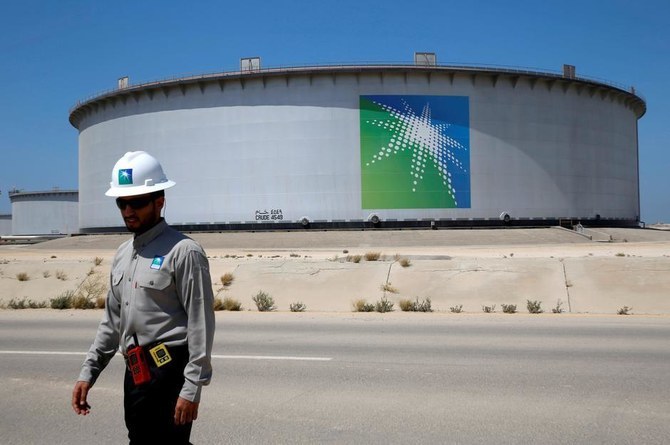
Saudi Aramco profits rose from a year earlier to SR95.47 billion ($25.46 billion) in the second quarter as a recovering global economy pushed up oil prices and allowed the Kingdom to pump more crude. (Supplied)
2 / 2
The oil giant also benefitted from its strategy to optimize its portfolio, announcing billion dollar deals in recent months. (Supplied)
Short Url
Updated 09 August 2021
Follow

Saudi Aramco leads Big Oil in profits, beats expectations

  • The company declared a dividend of SR70.33 billion ($25.5bn), highest since 2018
  • Energy giant’s second quarter profits for 2021 nearly quadruple compared to 2020

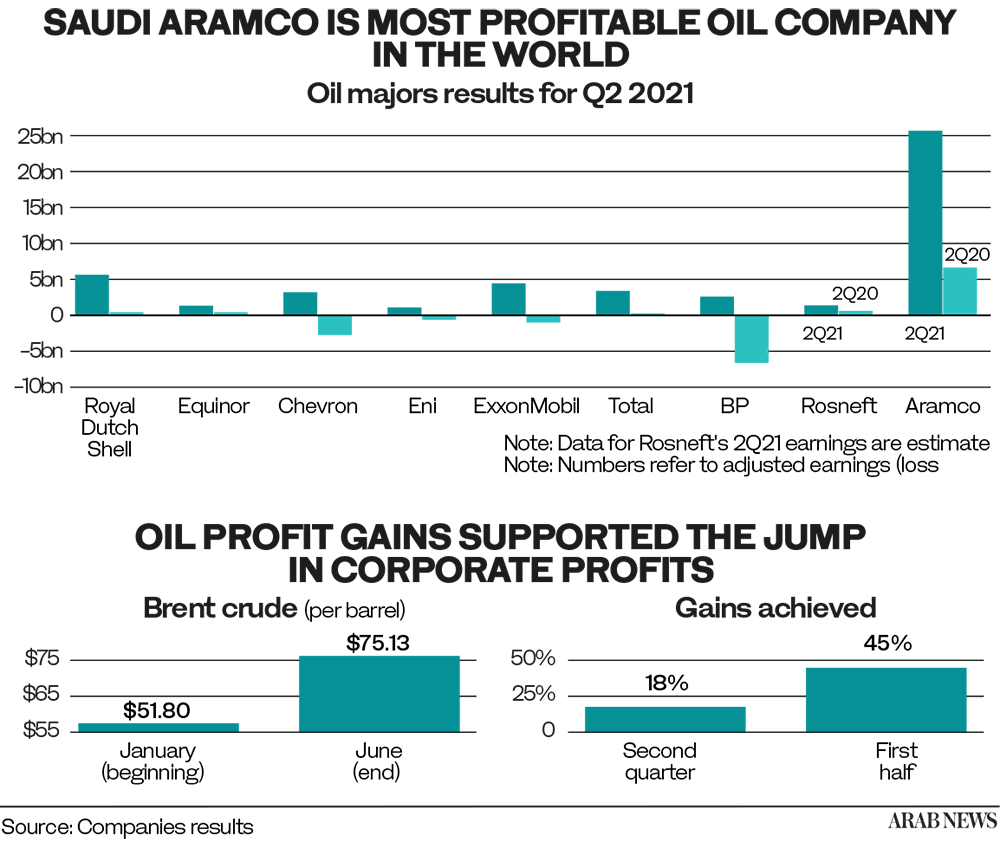
DUBAI/RIYADH: Saudi Aramco is the most profitable oil company in the world with net profit towering above all other Big Oil companies and exceeding all analysts’ expectations from Al-Rajhi Capital to JPMorgan.

Saudi Aramco profits rose from a year earlier to SR95.47 billion ($25.46 billion) in the second quarter as a recovering global economy pushed up oil prices and allowed the Kingdom to pump more crude.

It represents a 288 percent increase, and was affiliated with higher oil prices and a recovery in global demand, supported by the easing of COVID-19 restrictions, vaccination campaigns, stimulus measures, and accelerating activity in key markets, the oil giant said in a Tadawul filing.

This was slightly above the median of economists' estimate of $24.7 billion — Bank of America predicted $24 billion; JPMorgan estimated $23.7 billion, while Al-Rajhi Capital had the highest forecast of $25.3 billion.

“The oil giant has achieved results beyond Al-Rajhi Capital’s expectations,” said Mazen Al-Sudairi, head of research.

“Our second quarter results reflect a strong rebound in worldwide energy demand and we are heading into the second half of 2021 more resilient and more flexible, as the global recovery gains momentum,” Aramco CEO Amin Nasser said. 
“While there is still some uncertainty around the challenges posed by COVID-19 variants, we have shown that we can adapt swiftly and effectively to changing market conditions,” he added.

Oil demand is improving with the reopening of major economies and more vaccines roll out, with crude up around 40 percent this year. In the past two weeks, oil companies such as BP PLC, Chevron Corp. and Royal Dutch Shell PLC have said they will increase share buybacks and payouts, confident the worst of the pandemic is over. Still, the pandemic is “clearly far from over,” Nasser said later on a call with reporters. 

Oil prices witnessed its worst week since October last year as the spread of the delta variant, especially in China, added downside risk to short-term demand outlook. Brent crude fell 7 percent to $70.70 a barrel. Global oil demand remains below pre-COVID levels, but should reach near-record levels of 100 million barrels a day next year, Nasser told reporters. 

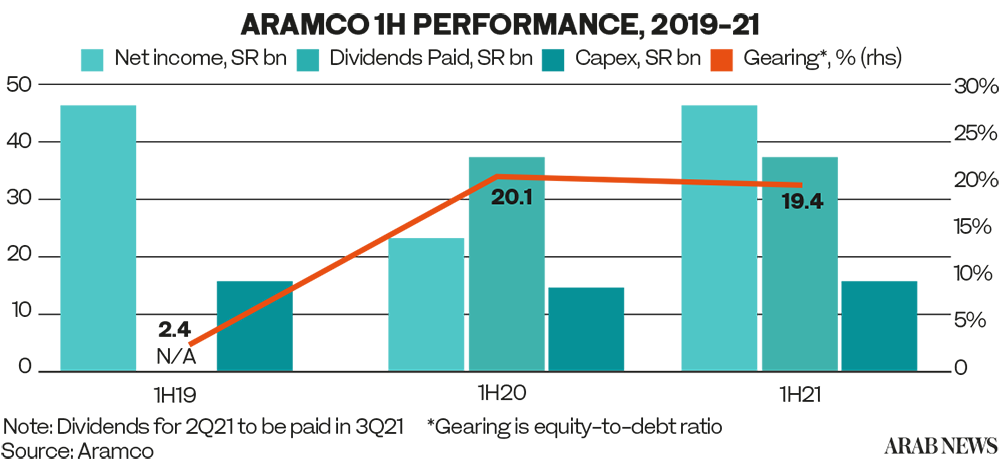
Despite the sound profitability and cash position, the company trails other Big Oil as it declared a dividend of SR70.33 billion. Aramco’s indicated dividend yield is roughly 4 percent, while BP, Chevron and Exxon Mobil Corp. all pay above 5 percent.
The price of a barrel of Brent crude, the international benchmark, has risen about 40 percent this year and closed at $70.70 on Friday after its biggest weekly decline in four months.

The oil giant also benefited from its strategy to optimize its portfolio, announcing billion dollar deals in recent months.

“Our historic $12.4 billion pipeline deal was an endorsement of our long-term business strategy by international investors, representing significant progress in our portfolio optimization program. Our landmark $6 billion sukuk reinforced our robust balance sheet, further diversifying our funding sources and expanding our investor base. And, once again, we delivered a dividend of $18.8 billion for our shareholders,” Nasser said.

He said the company will move forward on a number of strategic programs, particularly focusing on sustainability and low-carbon fuels.

Commenting on the company’s new strategy to sell assets and re-leasing them, Nasser told Asharq Business TV that this type of investment enhances the role that Saudi Aramco plays in attracting large foreign investments in the Kingdom. 

Nasser was referring to the sale of 49 percent of Aramco’s oil pipeline business in June to a consortium that includes Washington, DC-based EIG Global Energy Partners for $12.4 billion.

Aramco’s capital expenditure was $7.5 billion in the second quarter, an increase of 20 percent from a year earlier.


First EU–Saudi roundtable on critical raw materials reflects shared policy commitment

Updated 16 January 2026
Follow

First EU–Saudi roundtable on critical raw materials reflects shared policy commitment

RIYADH: The EU–Saudi Arabia Business and Investment Dialogue on Advancing Critical Raw Materials Value Chains, held in Riyadh as part of the Future Minerals Forum, brought together senior policymakers, industry leaders, and investors to advance strategic cooperation across critical raw materials value chains.

Organized under a Team Europe approach by the EU–GCC Cooperation on Green Transition Project, in coordination with the EU Delegation to Saudi Arabia, the European Chamber of Commerce in the Kingdom and in close cooperation with FMF, the dialogue provided a high-level platform to explore European actions under the EU Critical Raw Materials Act and ResourceEU alongside the Kingdom’s aspirations for minerals, industrial, and investment priorities.

This is in line with Saudi Vision 2030 and broader regional ambitions across the GCC, MENA, and Africa.

ResourceEU is the EU’s new strategic action plan, launched in late 2025, to secure a reliable supply of critical raw materials like lithium, rare earths, and cobalt, reducing dependency on single suppliers, such as China, by boosting domestic extraction, processing, recycling, stockpiling, and strategic partnerships with resource-rich nations.

The first ever EU–Saudi roundtable on critical raw materials was opened by the bloc’s Ambassador to the Kingdom, Christophe Farnaud, together with Saudi Deputy Minister for Mining Development Turki Al-Babtain, turning policy alignment into concrete cooperation.

Farnaud underlined the central role of international cooperation in the implementation of the EU’s critical raw materials policy framework.

“As the European Union advances the implementation of its Critical Raw Materials policy, international cooperation is indispensable to building secure, diversified, and sustainable value chains. Saudi Arabia is a key partner in this effort. This dialogue reflects our shared commitment to translate policy alignment into concrete business and investment cooperation that supports the green and digital transitions,” said the ambassador.

Discussions focused on strengthening resilient, diversified, and responsible CRM supply chains that are essential to the green and digital transitions.

Participants explored concrete opportunities for EU–Saudi cooperation across the full value chain, including exploration, mining, and processing and refining, as well as recycling, downstream manufacturing, and the mobilization of private investment and sustainable finance, underpinned by high environmental, social, and governance standards.

From the Saudi side, the dialogue was framed as a key contribution to the Kingdom’s industrial transformation and long-term economic diversification agenda under Vision 2030, with a strong focus on responsible resource development and global market integration.

“Developing globally competitive mineral hubs and sustainable value chains is a central pillar of Saudi Vision 2030 and the Kingdom’s industrial transformation. Our engagement with the European Union through this dialogue to strengthen upstream and downstream integration, attract high-quality investment, and advance responsible mining and processing. Enhanced cooperation with the EU, capitalizing on the demand dynamics of the EU Critical Raw Materials Act, will be key to delivering long-term value for both sides,” said Al-Babtain.

Valere Moutarlier, deputy director-general for European industry decarbonization, and directorate-general for the internal market, industry, entrepreneurship and SMEs at European Commission, said the EU Critical Raw Materials Act and ResourceEU provided a clear framework to strengthen Europe’s resilience while deepening its cooperation with international partners.

“Cooperation with Saudi Arabia is essential to advancing secure, sustainable, and diversified critical raw materials value chains. Dialogues such as this play a key role in translating policy ambitions into concrete industrial and investment cooperation,” she added.