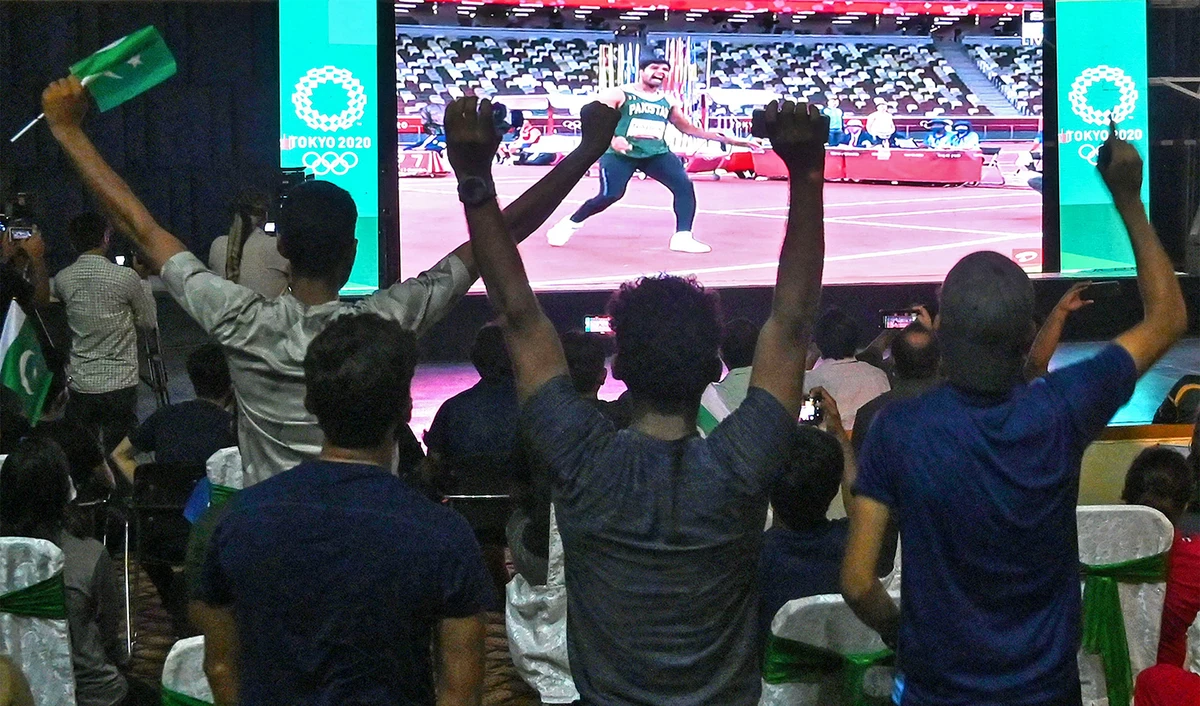
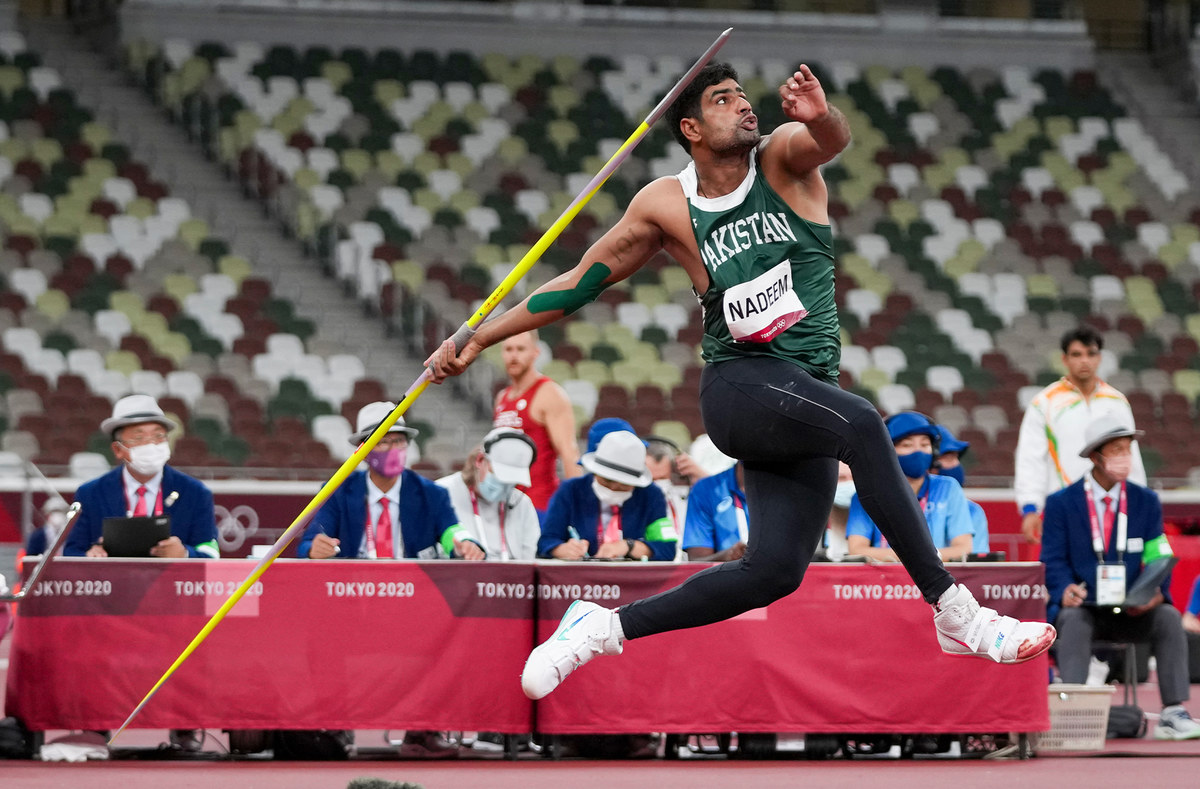
- Nadeem become first Pakistani ever to qualify for final of any Olympics track and field event, finished fifth at javelin final in Tokyo on Saturday
- In Arab News interview, says “no dearth” of talent in Pakistan but “hardly any facilities,” urges government to improve funding and invest in wellbeing of players
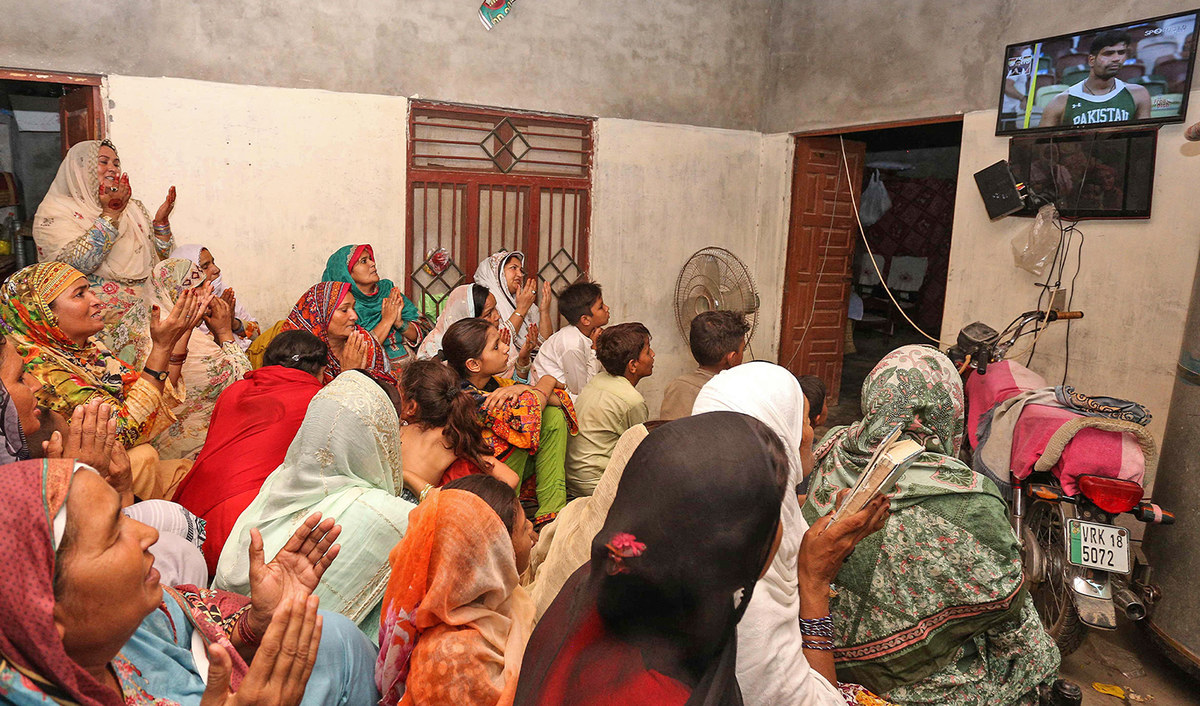
LAHORE: Pakistani athlete Arshad Nadeem, who had his dreams of javelin gold dashed on Saturday, said he felt “ashamed” that he did not win a medal for Pakistan, but lamented that it was only possible to “win hearts, not medals” given the inadequate training facilities and government support currently available for sportspersons in the country.
Nadeem, the first Pakistani in history to qualify for the final of any track and field event at the Olympics, was aiming to become the first to win an individual medal for his nation since 1988. On Wednesday, he made it through to the final with the third best throw of the day at 85.16 meters.
But on Saturday, he finished fifth while Neeraj Chopra bagged the best throw of 87.58 meters to claim a historic first Olympic athletics gold medal for India.
“I am ashamed of myself that despite prayers I didn’t live up to the nation’s expectations, I feel disheartened,” Nadeem, 24, told Arab News in a phone interview from Tokyo on Saturday evening, after his doping test. “My people and other national heroes are happy for me but I am very ashamed of myself.”
Nadeem, choking on tears, added: “With the given facilities, we can only win hearts, not medals.”
“Other sports are not on the priority list of the government. All governments have been obsessed with cricket,” he said. “We have enough talent, but hardly any facilities. It needs to be worked out. There’s no dearth of talent in Pakistan.”
Nadeem, 24, was born in Mian Channu, a small city in Khanewal District, and grew up in poverty as one of nine children of a daily wage laborer. His current and former coaches say he reached the top despite a lack of financial resources and government support.
The athlete urged the government to improve facilities, increase funding and invest in the wellbeing of players: “I came 5th this time in the Olympics. If facilities are improved, I can perform well in the 2024 Olympics.”
Nadeem’s physiotherapist agreed, saying “those who end up at number four or five are the ones who need to be invested upon.”
“Arshad Nadeem was suffering from anxiety in the final and such things do happen when someone is from a very humble background,” Dr. Asad Abbas Shah, secretary of the Medical Commission of the Pakistan Olympic Association, told Arab News.
“Did you see the Indian contingent? They had brought with them an osteopath, physiotherapist, sports psychologist, doctor, orthopedic surgeon and even neurologist. They have an orchestra. What do we have? Nothing,” Shah said.
The doctor said the government had gotten “two awakenings” in the form of Nadeem and weightlifter Talha Tayyab, who finished fifth in the men’s 67 kg event.
“Both opportunities were near misses, we can say the medal slipped from our hands,” Shah said. “They can perform well and bring medals if they are facilitated with good coaches, planned nutritious diets and good training sessions.”
Nadeem’s coach Fayyaz Bukhari also complained about poor facilities.
“Very few of our players qualify, so there’s a need to promote sports,” he told Arab News. “Sports facilities are next to nothing in our country,” he added, stressing the need for better grounds, training centers, trainers and mentors. “If you want a healthy body and mind, and to improve your education, you need to upgrade your sports.”
Before Tokyo, in May 2017, Nadeem won a bronze medal with a best throw of 76.33 meters at the Islamic Solidarity Games in Baku. In April 2018, he set a new personal best of 80.45 meters in the qualification round of the javelin throw event at the Commonwealth Games held on the Gold Coast, Australia. In August 2018, he won a bronze medal at the Asian Games in Jakarta, Indonesia, where he set a new personal best and national record of 80.75 meters.
As the only Pakistani athlete at the 2019 World Athletics Championships in Doha, Nadeem achieved a new personal best and national record of 81.52 meters. In November 2019, Nadeem set a national record when he recorded 83.65 meters throw to win gold for WAPDA at the 33rd National Games in Peshawar. In December 2019, he won a gold medal with an 86.29 meters games record throw at the 13th South Asian Games in Nepal.