

Following outcry, Pakistan releases top journalists detained on cybercrime charges

Pakistani journalists and civil society activists protest in Karachi on October 28, 2017, against an attack on Ahmed Noorani, a senior journalist of a local newspaper who was beaten by unknown attackers on motorbikes two days earlier. (AFP/File)
Short Url
Updated 08 August 2021
Follow

Following outcry, Pakistan releases top journalists detained on cybercrime charges

  • Amir Mir and Shafqat Imran were detained in Lahore by the FIA's cybercrime wing on Saturday morning
  • They were released on bail later in the day, after an outcry from opposition leaders, activists, and the media

ISLAMABAD: Pakistan's Federal Investigation Agency (FIA) has released two journalists it took into custody on Saturday morning, the Lahore Press Club confirmed.

Amir Mir and Shafqat Imran were detained in Lahore by the FIA's cybercrime wing, which has registered cases against them under the 2016 Prevention of Electronic Crimes Act (PECA).
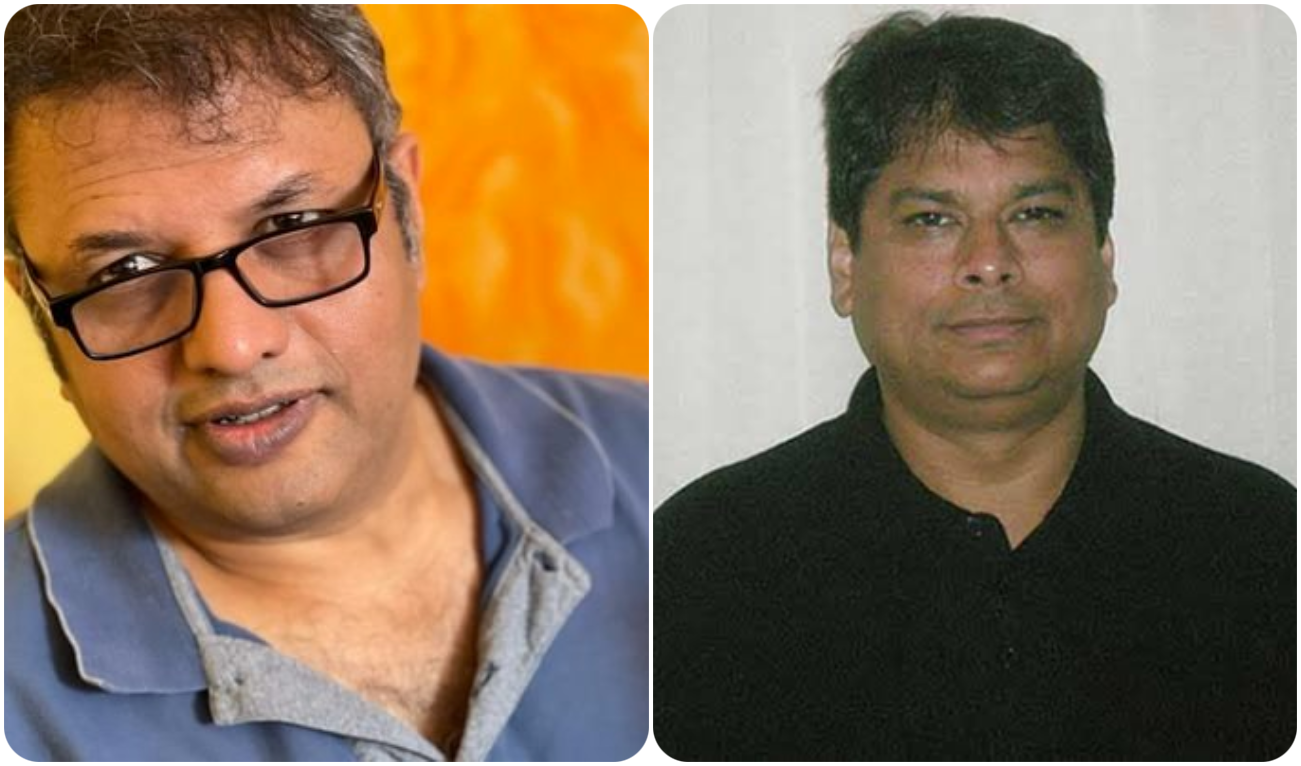


The combination of photos show journalists Shafqat Imran, left, and Amir Mir. (Photo courtesy: social media)

Imran runs a YouTube channel critical of both the Pakistani government and military, while Mir runs a digital news outlet and is the brother of Geo TV anchor Hamid Mir.

The journalists were released on bail later in the day after an outcry from opposition leaders, activists, and the media.

"The FIA is releasing both of them on a personal surety, but separate cases are registered against them,” Arshad Ansari, president of the Lahore Press Club, told Arab News on Saturday.

He said the FIA had booked Mir and Imran on cybercrime charges over videos on YouTube that allegedly targeted national institutions, hurt national interest and the country’s image.

"Both of them will now have to face the charges in the court of law," Ansari said.

The news about the arrest was reported in the afternoon by Mir's brother.

"FIA Cyber Crimes Wing Lahore kidnapped journalist Amir Mir in Lahore this morning, snatched his phone and laptop," Mir said in a tweet. "We came to know about his location after 5 hours. FIA also arrested another journalist Syed Shafqat Imran this morning from Lahore."


Mir declined comment about the arrest. "Please contact FIA," he told Arab News.

In a later Twitter post, he shared a screenshot of the FIA charges, which included alleged contempt against the army, judiciary, and “women,” without mentioning the names of the latter.


Babur Bakht Qureshi, director of the FIA's cybercrime wing in Lahore, did not immediately respond to phone calls and messages seeking information on the case, which has since drawn wide condemnation. 

"Strongly condemn the arrest of journalists #AmirMir and #ImranShafqat. Imran Khan continues victimization of political opponents and media critics to hide his incompetence and failures," opposition leader and Pakistan Peoples Party (PPP) chairman Bilawal Bhutto Zardari said in a tweet, as he demanded the journalists' immediate release.


PPP Senator Sherry Rehman demanded "clarity in law on why Amir Mir and Imran Shafqat have been summarily arrested."


Pakistani journalists, meanwhile, took to the social media with the hashtag #JournalismIsNotACrime.


Journalists have been complaining over curbs on freedom of press in Pakistan and say authorities are beginning to keep a close eye on social media content as well, increasingly using laws such as the PECA. 

Other complaints from range from direct edicts to editors and producers not to air opposition voices or publish news critical of the government or the military; pulling TV stations from transmission or newspapers from circulation; and targeting the advertising revenue of dissenting media.

The Pakistani government vehemently denies censoring the media.

In an interview to Arab News in April then Information Minister Shibli Faraz said there was no censorship in in Pakistan.

“There is no concept of media censorship in the country, whatsoever,” he told Arab News. “Media in Pakistan enjoys complete independence and freedom to report, be it politics, economy or any other sphere.”


IMF warns against policy slippage amid weak recovery as it clears $1.2 billion for Pakistan

Updated 11 December 2025
Follow

IMF warns against policy slippage amid weak recovery as it clears $1.2 billion for Pakistan

  • Pakistan rebuilt reserves, cut its deficit and slowed inflation sharply over the past one year
  • Fund says climate shocks, energy debt, stalled reforms threaten stability despite recent gains

ISLAMABAD: Pakistan’s economic recovery remains fragile despite a year of painful stabilization measures that helped pull the country back from the brink of default, the International Monetary Fund (IMF) warned on Thursday, after it approved a fresh $1.2 billion disbursement under its ongoing loan program.

The approval covers the second review of Pakistan’s Extended Fund Facility (EFF) and the first review of its climate-focused Resilience and Sustainability Facility (RSF), bringing total disbursements since last year to about $3.3 billion.

Pakistan entered the IMF program in September 2024 after years of weak revenues, soaring fiscal deficits, import controls, currency depletion and repeated climate shocks left the economy close to external default. A smaller stopgap arrangement earlier that year helped avert immediate default, but the current 37-month program was designed to restore macroeconomic stability through strict monetary tightening, currency adjustments, subsidy rationalization and aggressive revenue measures.

The IMF’s new review shows that Pakistan has delivered significant gains since then. Growth recovered to 3 percent last year after shrinking the year before. Inflation fell from over 23 percent to low single digits before rising again after this year’s floods. The current account posted its first surplus in 14 years, helped by stronger remittances and a sharp reduction in imports. And the government delivered a primary budget surplus of 1.3 percent of GDP, a key program requirement. Foreign exchange reserves, which had dropped dangerously low in 2023, rose from US$9.4 billion to US$14.5 billion by June.

“Pakistan’s reform implementation under the EFF arrangement has helped preserve macroeconomic stability in the face of several recent shocks,” IMF Deputy Managing Director Nigel Clarke said in a statement after the Board meeting.

But he warned that Islamabad must “maintain prudent policies” and accelerate reforms needed for private-sector-led and sustainable growth.

The Fund noted that the 2025 monsoon floods, affecting nearly seven million people, damaging housing, livestock and key crops, and displacing more than four million, have set back the recovery. The IMF now expects GDP growth in FY26 to be slightly lower and forecasts inflation to rise to 8–10 percent in the coming months as food prices adjust.

The review warns Pakistan against relaxing monetary or fiscal discipline prematurely. It urges the State Bank to keep policy “appropriately tight,” allow exchange-rate flexibility and improve communication. Islamabad must also continue raising revenues, broadening the tax base and protecting social spending, the Fund said.

Despite the progress, Pakistan’s structural weaknesses remain severe.

Power-sector circular debt stands at about $5.7 billion, and gas-sector arrears have climbed to $11.3 billion despite tariff adjustments. Reform of state-owned enterprises has slowed, including delays in privatizing loss-making electricity distributors and Pakistan International Airlines. Key governance and anti-corruption reforms have also been pushed back.

The IMF welcomed Pakistan’s expansion of its flagship Benazir Income Support Program, which raises cash transfers for low-income families and expands coverage, saying social protection is essential as climate shocks intensify. But it warned that high public debt, about 72 percent of GDP, thin external buffers and climate exposure leave the country vulnerable if reform momentum weakens.

The Fund said Pakistan’s challenge now is to convert short-term stabilization into sustained recovery after years of economic volatility, with its ability to maintain discipline, rather than the size of external financing alone, determining the durability of its gains.