

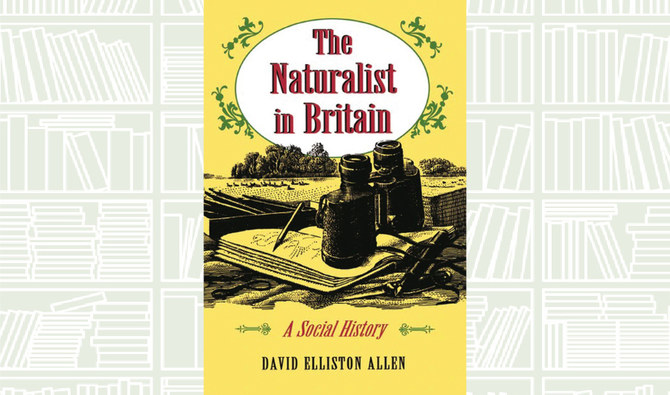
What We Are Reading Today: The Naturalist in Britain by David Elliston Allen

Short Url
Updated 07 August 2021
Follow

What We Are Reading Today: The Naturalist in Britain by David Elliston Allen

At once a major resource for historians of science and an excellent introduction to natural history for the general reader, David Allen’s The Naturalist in Britain established a precedent for investigating natural history
as a social phenomenon.

Here the author traces the evolution of natural history from the seventeenth to the early twentieth centuries, from the “herbalizings” of apprentice apothecaries to the establishment of national reserves and international societies to the emergence of natural history as an organized discipline.

Along the way he describes the role of scientific ideas, popular fashion, religious motivations, literary influences, the increase of leisure time and disposable income, and the tendency of like-minded persons to form clubs. His comprehensive and entertaining discussion creates a vibrant portrait of a scientific movement inextricably woven into a particular culture.


What We Are Reading Today: The Power of Hope by Carol Graham

Updated 25 February 2026
Follow

What We Are Reading Today: The Power of Hope by Carol Graham

In a society marked by extreme inequality of income and opportunity, why should economists care about how people feel? The truth is that feelings of well-being are critical metrics that predict future life outcomes.

In this timely and innovative account, economist Carol Graham argues for the importance of hope—little studied in economics at present—as an independent dimension of well-being.

Given America’s current mental health crisis, thrown into stark relief by COVID, hope may be the most important measure of well-being, and researchers are tracking trends in hope as a key factor in understanding the rising numbers of “deaths of despair” and premature mortality.

Graham, an authority on the study of well-being, points to empirical evidence demonstrating that hope can improve people’s life outcomes and that despair can destroy them. These findings, she argues, merit deeper exploration.