

Apple update will check iPhones for images of child abuse

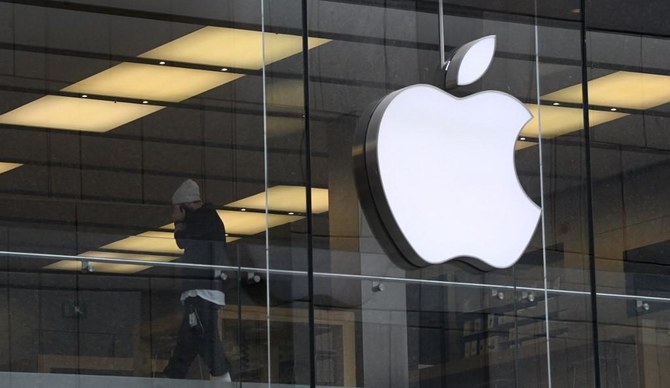
The new image-monitoring feature is part of a series of tools heading to Apple mobile devices. (File/AFP)
Short Url
Updated 06 August 2021
Follow

Apple update will check iPhones for images of child abuse

  • Apple announces new update will start detecting images containing child sexual abuse and reporting them as they are uploaded to its online storage
  • The new image-monitoring feature is part of a series of tools heading to Apple mobile devices

SAN FRANCISCO: Apple Thursday said iPhones and iPads will soon start detecting images containing child sexual abuse and reporting them as they are uploaded to its online storage in the United States, a move privacy advocates say raises concerns.
“We want to help protect children from predators who use communication tools to recruit and exploit them, and limit the spread of child sexual abuse material (CSAM),” Apple said in an online post.
New technology will allow software powering Apple mobile devices to match abusive photos on a user’s phone against a database of known CSAM images provided by child safety organizations, then flag the images as they are uploaded to Apple’s online iCloud storage, according to the company.
However, several digital rights organizations say the tweaks to Apple’s operating systems create a potential “backdoor” into gadgets that could be exploited by governments or other groups.
Apple counters that it will not have direct access to the images and stressed steps it’s taken to protect privacy and security.
The Silicon Valley-based tech giant said the matching of photos would be “powered by a cryptographic technology” to determine “if there is a match without revealing the result,” unless the image was found to contain depictions of child sexual abuse.
Apple will report such images to the National Center for Missing and Exploited Children, which works with police, according to a statement by the company.
India McKinney and Erica Portnoy of the digital rights group Electronic Frontier Foundation said in a post that “Apple’s compromise on end-to-end encryption may appease government agencies in the United States and abroad, but it is a shocking about-face for users who have relied on the company’s leadership in privacy and security.”

The new image-monitoring feature is part of a series of tools heading to Apple mobile devices, according to the company.
Apple’s texting app, Messages, will use machine learning to recognize and warn children and their parents when receiving or sending sexually explicit photos, the company said in the statement.
“When receiving this type of content, the photo will be blurred and the child will be warned,” Apple said.
“As an additional precaution, the child can also be told that, to make sure they are safe, their parents will get a message if they do view it.”
Similar precautions are triggered if a child tries to send a sexually explicit photo, according to Apple.
Messages will use machine learning power on devices to analyze images attached to missives to determine whether they are sexually explicit, according to Apple.
The feature is headed to the latest Macintosh computer operating system, as well as iOS.
Personal assistant Siri, meanwhile, will be taught to “intervene” when users try to search topics related to child sexual abuse, according to Apple.
Greg Nojeim of the Center for Democracy and Technology in Washington, DC said that “Apple is replacing its industry-standard end-to-end encrypted messaging system with an infrastructure for surveillance and censorship.”
This, he said, would make users “vulnerable to abuse and scope-creep not only in the United States, but around the world.”
“Apple should abandon these changes and restore its users’ faith in the security and integrity of their data on Apple devices and services.”
Apple has built its reputation on defending privacy on its devices and services despite pressure from politicians and police to gain access to people’s data in the name of fighting crime or terrorism.
“Child exploitation is a serious problem and Apple isn’t the first tech company to bend its privacy-protective stance in an attempt to combat it,” McKinney and Portnoy of the EFF said.
“At the end of the day, even a thoroughly documented, carefully thought-out, and narrowly-scoped backdoor is still a backdoor,” they added.


TikTok finalizes a deal to form a new American entity

Updated 38 sec ago
Follow

TikTok finalizes a deal to form a new American entity

  • The social video platform company signed agreements with major investors including Oracle, Silver Lake and MGX to form the joint venture
  • The company said in a statement that the new version will operate under “defined safeguards” with an emphasis on data protections and software assurances for US users
TikTok has finalized a deal to create a new American entity, avoiding the looming threat of a ban in the United States that has been in discussion for years on the platform now used by more than 200 million Americans.
The social video platform company signed agreements with major investors including Oracle, Silver Lake and the Emirati investment firm MGX to form the new TikTok US joint venture. The new version will operate under “defined safeguards that protect national security through comprehensive data protections, algorithm security, content moderation and software assurances for US users,” the company said in a statement Thursday. American TikTok users can continue using the same app.
President Donald Trump praised the deal in a Truth Social post, thanking Chinese leader Xi Jinping specifically “for working with us and, ultimately, approving the Deal.” Trump add that he hopes “that long into the future I will be remembered by those who use and love TikTok.”
The Chinese government has not yet publicly commented on TikTok’s announcement. Earlier on Thursday and ahead of the statement, Liu Pengyu, spokesperson Chinese embassy in Washington, said “China’s position on TikTok has been consistent and clear.”
Adam Presser, who previously worked as TikTok’s head of operations and trust and safety, will lead the new venture as its CEO. He will work alongside a seven-member, majority-American board of directors that includes TikTok’s CEO Shou Chew.
The deal ends years of uncertainty about the fate of the popular video-sharing platform in the United States. After wide bipartisan majorities in Congress passed — and President Joe Biden signed — a law that would ban TikTok in the US if it did not find a new owner in the place of China’s ByteDance, the platform was set to go dark on the law’s January 2025 deadline. For a several hours, it did. But on his first day in office, President Donald Trump signed an executive order to keep it running while his administration sought an agreement for the sale of the company.
Apart from an emphasis on data protection, with US user data being stored locally in a system run by Oracle, the joint venture will also focus on TikTok’s algorithm. The content recommendation formula, which feeds users specific videos tailored to their preferences and interests, will be retrained, tested and updated on US user data, the company said in its announcement.
The algorithm has been a central issue in the security debate over TikTok. China previously maintained the algorithm must remain under Chinese control by law. But the US regulation passed with bipartisan support said any divestment of TikTok must mean the platform cuts ties — specifically the algorithm — with ByteDance. Under the terms of this deal, ByteDance would license the algorithm to the US entity for retraining.
The law prohibits “any cooperation with respect to the operation of a content recommendation algorithm” between ByteDance and a new potential American ownership group, so it is unclear how ByteDance’s continued involvement in this arrangement will play out.
“Who controls TikTok in the US has a lot of sway over what Americans see on the app,” said Anupam Chander, a professor of law and technology at Georgetown University.
Oracle, Silver Lake and MGX are the three managing investors, each holding a 15 percent share. Other investors include the investment firm of Michael Dell, the billionaire founder of Dell Technologies. ByteDance retains 19.9 percent of the joint venture.