

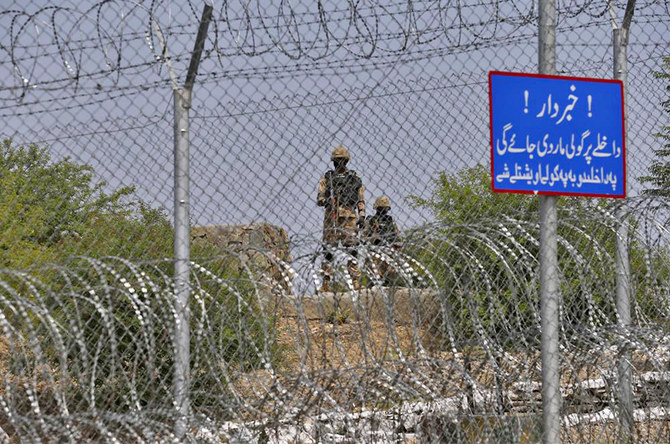

TORKHAM: The Pakistan military said on Tuesday it had fenced 90 percent of its border with Afghanistan to prevent cross-border movement that have caused security problems in the past, saying it was resolved to complete the project before winter sets in.
The military’s media wing, ISPR, took a group of journalists to the region at a time when the Taliban have stepped up their military offensive in Afghanistan ahead of a complete withdrawal of US forces from the war-battered country.
The Afghan administration in Kabul has frequently accused Pakistan of supporting the insurgent group, though Pakistani officials deny the allegation and say they will stand with an inclusive political government in the neighboring state in the aftermath of the US withdrawal.
“We have completed 90 percent of the fence on this difficult terrain,” Col. Rizwan Nazir, a Pakistani military official, said while briefing journalists at the Big Bang military post along the key Torkham border crossing.
“The remaining 10 percent of the fence at the western border, which was left due to heavy snowfall, will be completed this summer.”
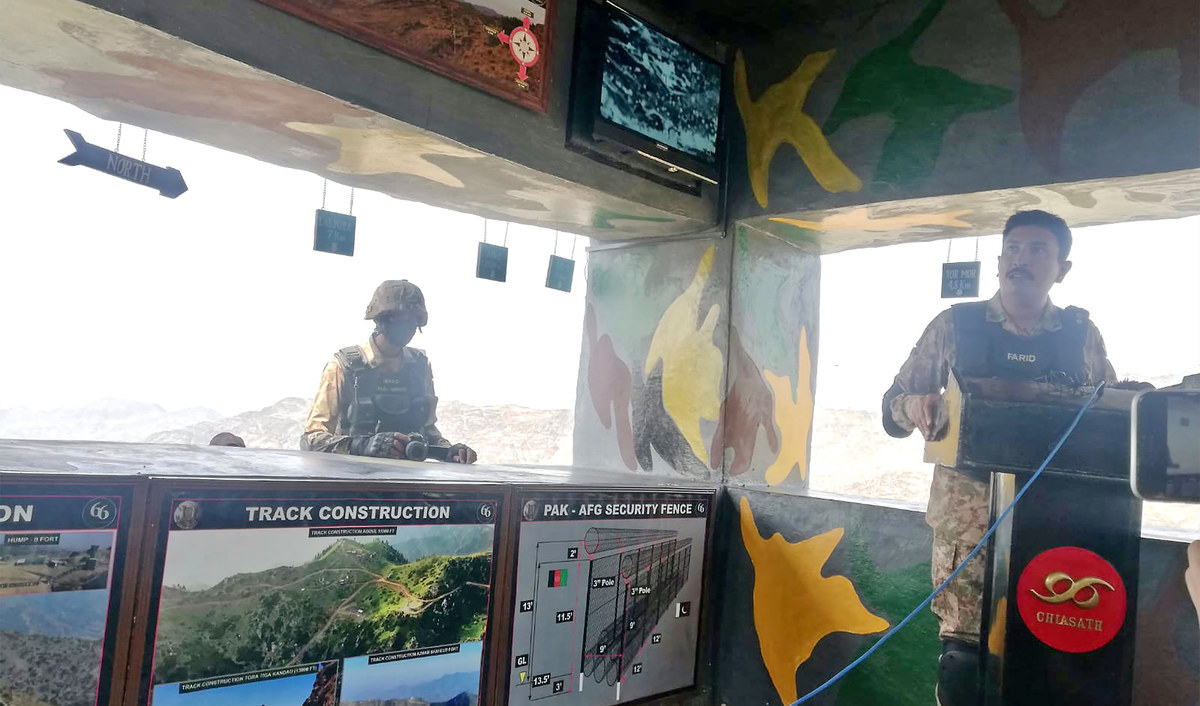
Col. Rizwan Nazir, a Pakistani military officer, briefs a group of journalists about border management at Torkham in Pakistan’s Khyber district on August 3, 2021. (AN Photo)
Pakistan started fencing 2,611 kilometers of its border with Afghanistan in 2017 when militants launched several attacks on its country’s military posts.
Nazir said the fence was erected in a diverse terrain that included lowlands, high peaks and glaciers.
“The border has also been covered by live feed of surveillance cameras,” he said, adding that the mechanism had already brought down about 80 percent of illegal cross-border movement.
“There was a total of 78 notified formal and informal crossings along the porous [Pak-Afghan] border before fencing began,” the officer. “It was a persistent threat and allowed unrestricted and unchecked movement. Now we have only five formal crossing points between the two countries due to the fence.”
The barrier which now meanders between the two countries consists of two sets of chain-linked fences separated by about two meters of distance which has been filled with concertina wire. The double fence is about 4 meters tall, and the military has installed surveillance cameras to check any movement along the border.
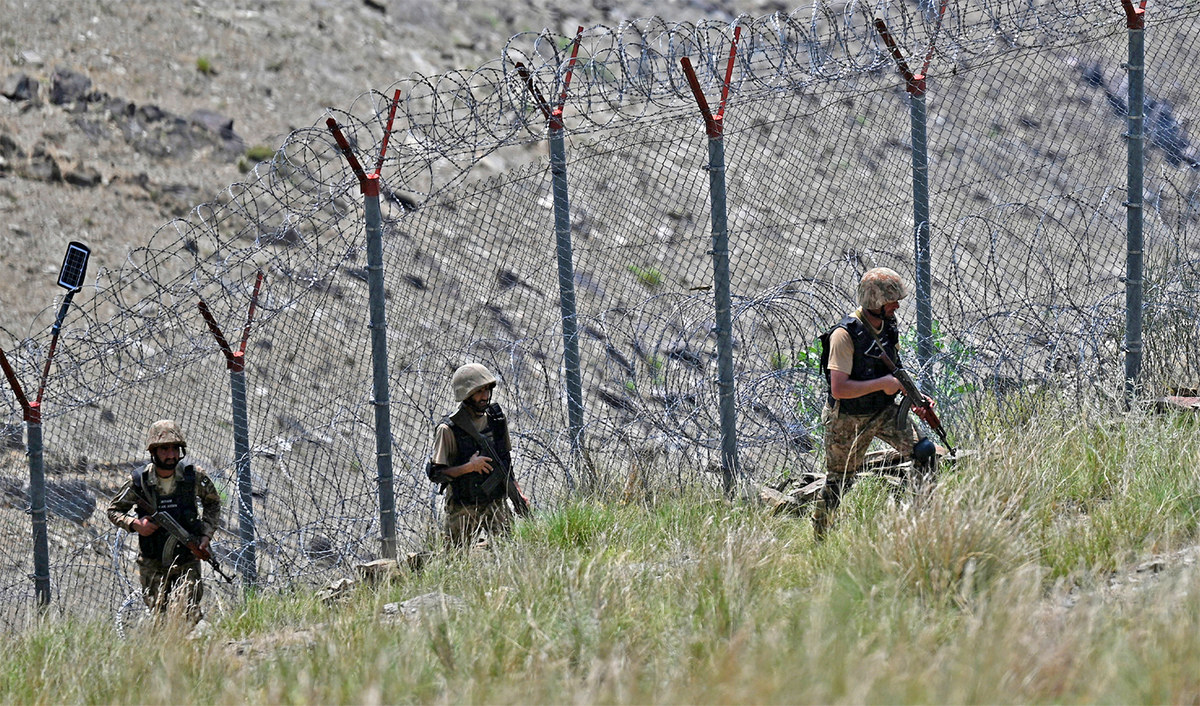
Pakistani troops patrol a fence along the Pak-Afghan border near Torkham in Khyber district on August 3, 2021. (AN Photo)
Afghanistan has never recognized the porous border that cuts through the Pashtun heartland, diluting the political influence and power of its country’s largest ethnic group that lives on its both sides.
“In 2007, a total of 72 percent area bordering Afghanistan was controlled by miscreants,” Nazir said. “After that, the country’s security forces launched 17 major operations to clear the area and re-establish the state’s writ.”
He said the government was in the process of installing an integrated transit trade management system at the border which would be firmly in place in 2023.
“There are five crossing points along the border, but Torkham is the busiest and most historic,” Nazir added. “About 65 percent of trade between two countries take place from this border crossing.”
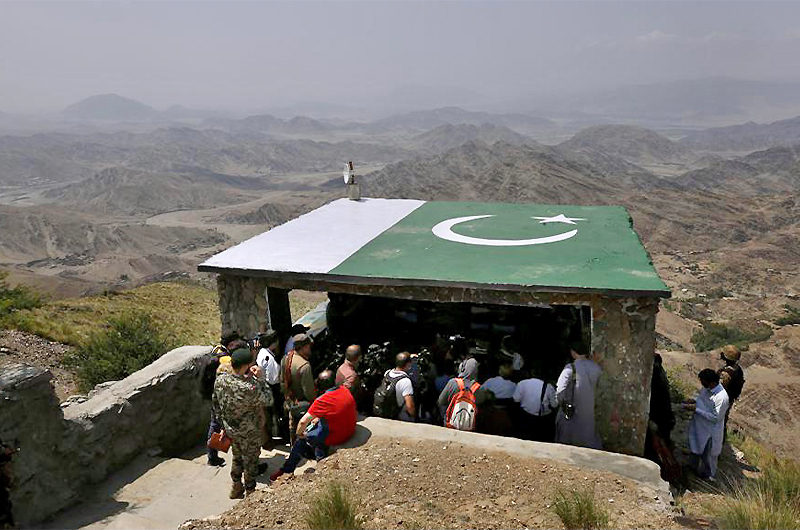
Journalists attend a media briefing during their visit to a hilltop Big Bang military post near the Torkham border crossing in Khyber district on August 3, 2021 (AN Photo)
Asked about the recent closure of the border due to the pandemic, he said it did not have much of an impact on the movement of cargo vehicles between the two countries.
“The transit trade is proceeding but with standard COVID-19 precautions,” he continued, adding that only the entry of visitors had been closed due to the rising number of coronavirus cases in Afghanistan.
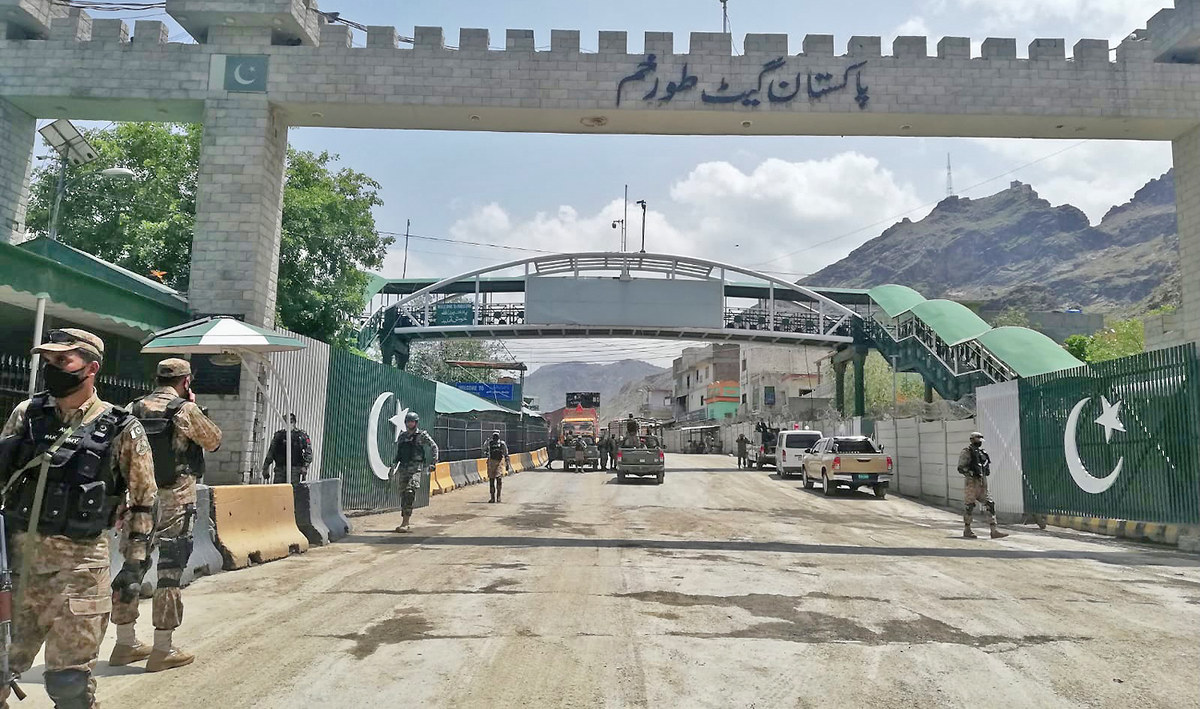
Pakistani and Afghan troops seen on their respective sides of the Torkham border between Pakistan and Afghanistan on August 3, 2021. (AN Photo)


