Viral friendship break-up meme by Pakistani youth fetches $51,530 in NFT sale

The combination shows a visual representations of the digital cryptocurrency Ethereum (ETH) and the viral meme which was sold for 20 Ethereums ($51,530) in non-fungible token (NFT) market this week. (Photos by AFP and social media)
Short Url
Updated 04 August 2021
Follow

Viral friendship break-up meme by Pakistani youth fetches $51,530 in NFT sale

  • “Friendship ended with Mudasir ”meme created in 2015 by Gujranwala boy after he fought with best buddy
  • An NFT is a crypto asset, representing an intangible digital item such as an image, video, or in-game item

RAWALPINDI: One of Pakistan’s most viral memes, “Friendship ended with Mudasir,” has been auctioned in a non-fungible token (NFT) sale for $51,530, the founder of Alter, the Lahore-based startup that conducted the sale, said.

An NFT is a crypto asset, representing an intangible digital item such as an image, video, or in-game item. Owners of NFTs are recorded on blockchain, allowing an NFT to be traded as a stand-in for the digital asset it represents.

The NFT sale in question involves a 2015 meme created by Muhammad Asif Raza, a resident of Gujranwala, to announce the "end" of his friendship with Mudasir Ismail Ahmad and the start of a new one with Salman Ahmad Naqash.

From its humble beginning on Facebook, the graphic transformed into a pop cultural artefact, edited and remixed by meme connoisseurs and social media users around the world. This World Friendship Day on July 30, it was auctioned off as one of Pakistan’s first meme NFTs for $51,530, or 20 Ether, the currency on the crypto platform Ethereum.

The sale was facilitated by Alter which seeks to enable “viral creations from emerging economies to connect with collectors and fans around the world through NFTs.”

“We reached out to a lot of meme makers, artists, musicians and celebrities,” Alter founder Zain Naqvi told Arab News over the phone. “Yet, this ended up becoming our first product for sale since the timing coincided with World Friendship Day.”

“Non-Fungible Tokens or NFTs are making it easier for people to sell their digital assets,” he added. “Memes such as ‘Friendship Ended’ have been popular for years, but creators have barely been able to monetize them.”

Though the sale of the meme has gotten other Pakistani meme makers excited, Naqvi said not all memes were likely to fetch such a high price.

“The value does not directly exist in the meme but resides in its context,” he said. “Owning a meme like this means owning a part of internet history from 2015 Pakistan.”

However, he added “all kinds of creatives in Pakistan and South Asia should start looking at their options in this realm.”

The creators of the meme did a Facebook live following the sale, revealing that Ahmad and Raza were still best friends and had embraced Naqash as their third bestie.

Raza also created a friendship reconciliation meme in the same photoshopped format which is coming up for sale next.

“I can’t even remember what we fought about,” Ahmed said in an interview with the international press. “At that time, we were so focused on each other. If either of us met other friends, we would get hurt. We used to share all of our deepest secrets with each other.”

He said he had no idea why the meme had gone viral and dominated social media platforms for so long.

“I would never have known that [the post] would go so viral and that it would spread all over the world. So many news agencies interviewed us. We’ve even had a cartoon made about us,” Raza said.

The friendship break-up meme was bought by Andrew Kang, the co-founder of crypto investment firm, Mechanism Capital.

Speaking to international media, Kang said he bought the meme to “represent important pockets of internet culture and history,” saying:

“The Mudasir meme can probably be recognized by at least tens of millions of people and is also just legitimately funny to me.”

He announced his purchase on his social media handles, writing, “Proud to announce that I am now best friends with Muhammad.”

Kang also owns three other memes: Harambe, Dust Storm Dog, and Suh Dude.


Against all odds, Pakistani youth with cerebral palsy bags gold medal in master’s program

Updated 6 sec ago
Follow

Against all odds, Pakistani youth with cerebral palsy bags gold medal in master’s program

  • Pakistan has a population of 7.4 million persons with disabilities, official data states, who face barriers to economic and social opportunities
  • An overwhelming majority of special education institutes are critically understaffed, lack non-teaching support personnel and essential specialists

TALAGANG: Maaz bin Majid walked toward his laptop in his bedroom in the eastern city of Talagang, moving slowly as he navigated the usual stiffness in his muscles. He turned it on and began surfing websites for scholarship opportunities to continue his studies.

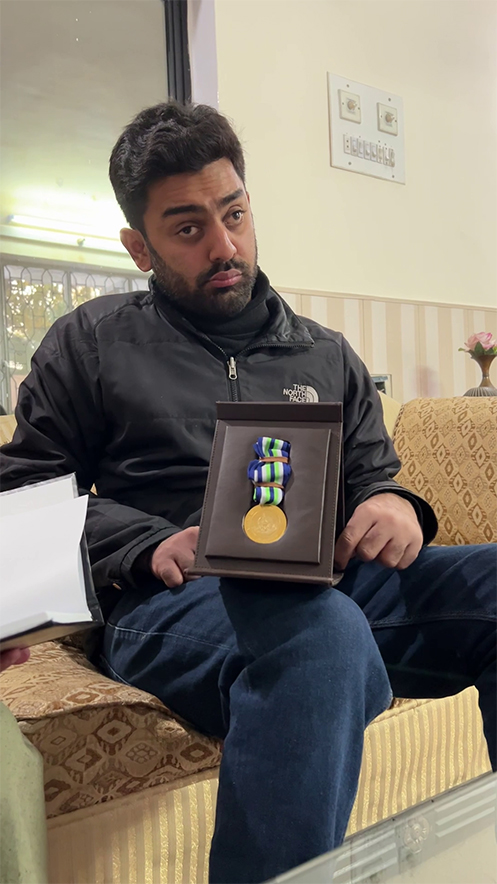
Born with cerebral palsy, a neurological condition affecting muscle coordination and movement, the 25-year-old earned the gold medal in his master’s degree in Special Education from Allama Iqbal Open University (AIOU).

The news of his winning the gold medal came as a “shock” to both Majid and his mother, Nighat Malik, after the university informed them of his achievement.

“For three days, I was in complete shock,” Majid told Arab News. “When a person has a problem and he suddenly finds out that he is getting a gold medal.”

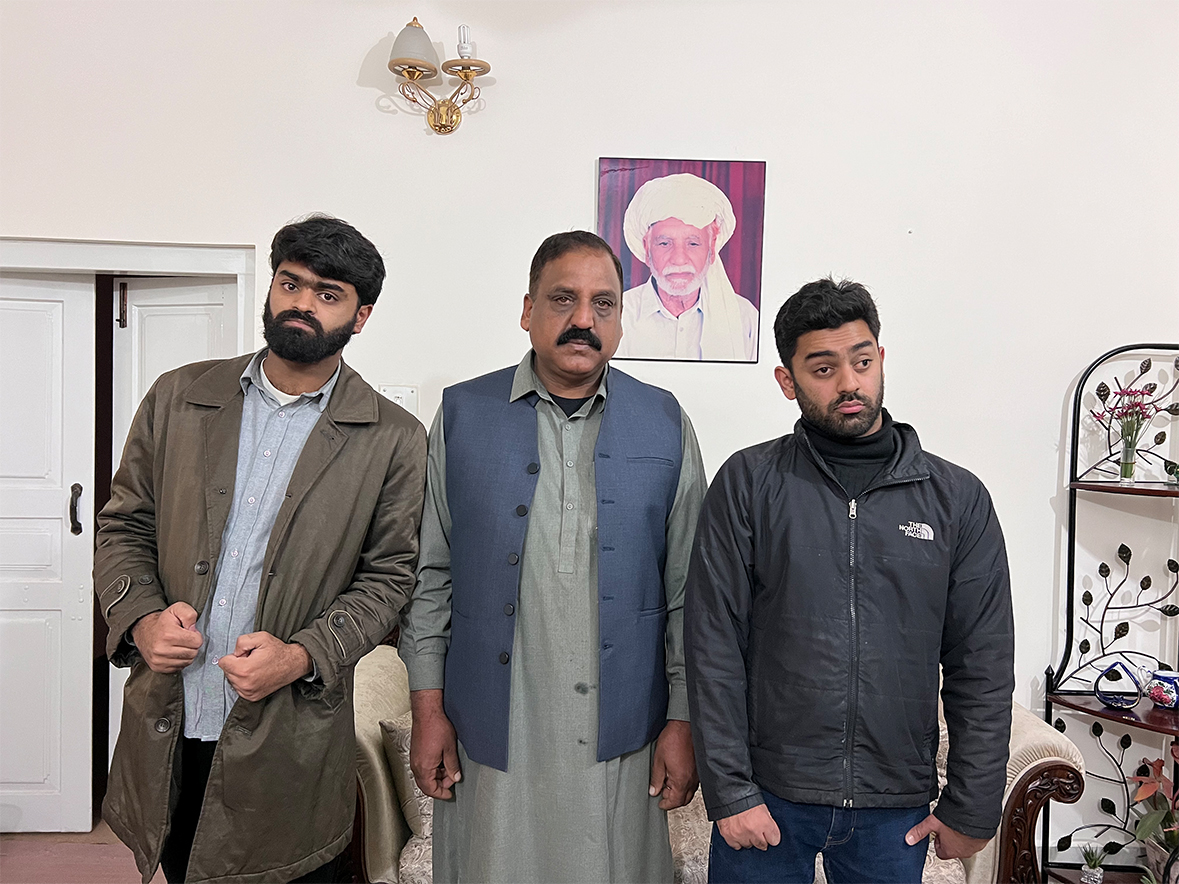
Maaz Majid, Gold Medalist in Master's in Special Education (right) poses for a group photo with his father Malik Majid Jahangir (center) at his home in Talagang, Pakistan, on December 10, 2025. (AN)

According to the 2023 census, Pakistan has 7.4 million persons with disabilities, though independent organizations say the number is likely higher. They often face barriers in education, economic participation, legal recognition, and access to clinical resources.

In Islamabad, there are 73,022 persons with disabilities, including 6,304 school-age children. Yet only 1,900 students are enrolled across five public-sector special education institutes, a mere 30 percent.

The education ministry, which took charge of these institutes from the Ministry of Human Rights in June 2024, reports that 85.7 percent are critically understaffed, 100 percent lack non-teaching support personnel, and 85.7 percent lack essential specialists such as psychologists, speech therapists, and audiologists.

The federal government claims it is addressing these gaps. Contracts have been awarded for upgrades to special education institutions in Islamabad. A project to equip university students with special needs has been added to the Public Sector Development Programme (PSDP) for 2025-26.

“It’s a Rs1.8 billion [$6.4 million] project where electric wheelchairs, computers with braille technology, and other assistive devices will be provided to students in various universities across Pakistan,” Federal Secretary of Education Nadeem Mahbub told Arab News.

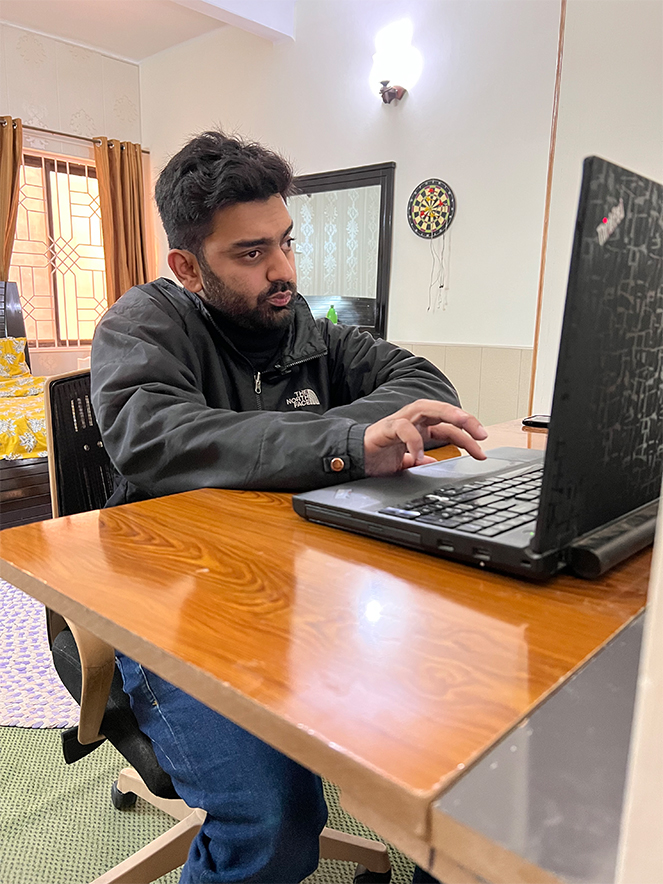
Maaz Majid, Gold Medalist in Master's in Special Education, works on his laptop at his home in Talagang, Pakistan, on December 10, 2025. (AN photo)

Punjab, Pakistan’s most populous province, is home to 1.73 million children with disabilities, aged 5 to 17. According to “Pakistan Education Statistics,” a 2023-24 report by the federal education ministry, Punjab operates 293 special education institutes serving 38,478 students. In contrast, Sindh enrolls 4,283 students across 65 institutes, Khyber Pakhtunkhwa (KP) serves 432 students in three institutes, and Balochistan has 891 students across 16 facilities.

Dr. Hina Noor, head of AIOU’s Special Education Department, acknowledged Punjab’s relative progress compared to other provinces.

“They (KP, Sindh and Balochistan) have not been able to do as much progress as Punjab has done,” she said.

In its 2021-22 report, the federal education ministry noted that Punjab allocates the highest budget and share for special education, followed by other provinces.

While it indicates recognition of the importance of special education in the country’s most populous province, the infrastructure gap extends beyond the school level.

A recent survey by Dr. Noor’s department found that across all of Punjab, only a little over 100 students with special needs are enrolled in higher education programs.

In 2021, Pakistan’s Higher Education Commission introduced a policy requiring universities to reserve at least one seat for students with disabilities.

“With these directives, accessibility and enrollment will increase in the future,” Dr. Noor said, stressing that teachers need training to educate students with disabilities, using adapted methods rather than the same curriculum applied to all students.

‘PROBLEM WITH MYSELF’

Malik knows the stigma attached to her son’s condition. When she first took Majid to a private hospital in Islamabad, a doctor said he would “never be able to do anything,” suggesting that at best he might learn to care for himself. The mother paused treatment for six months but later sought a second opinion in Lahore, where doctors reassured her that physiotherapy could help him improve significantly.

Watching her son navigate a system not designed for him, Malik pursued a master’s degree in Special Education and is now a principal at a government-run school in Chakwal where she applies those lessons to help other families.

“I wanted to tell [others] how difficult it is for parents to have a special child,” she said.

Maaz Majid, Gold Medalist in Master's in Special Education (right) poses for a group photo with his father Malik Majid Jahangir (center) at his home in Talagang, Pakistan, on December 10, 2025. (AN)

Majid was first enrolled in a mainstream school in Talagang, where the administration and fellow students facilitated his early education. But during 10th grade, a medical treatment intended to improve his condition backfired dramatically, according to his mother.

He spent weeks recovering, struggling to speak or perform basic daily activities. The medical treatment eventually restored his mobility and speech, but the aftermath left his facial muscles weakened and his writing ability severely compromised.

Malik said her son, who required scribes to write in examinations and relied on the AIOU’s distance learning program to avoid the challenges of regular travel after intermediate, had a relentless study routine: waking up early, studying throughout the day, with no time for entertainment.

For Majid, choosing the same field as his mother came from first-hand experience of the challenges.

“Because I have a problem with myself, I thought that I should do something for other special kids as well,” he added.