
DUBAI: Those unfamiliar with the concept of World Expos may have the misguided impression they are excruciatingly dull, corporate affairs. But the chronicle of such events, and the Arab world’s participation in them, tell a very different story.
For a host nation, a World Expo can be a rare occasion to stand front and center on the world stage. Participating countries can cultivate their national image and vie for acclaim, while visitors can feel as though the whole world has been put on display.
Part museum, part theme park and part political theater, World Expos are a kind of window on the collective global consciousness.
The earliest events, in the mid- to late-19th century, were a celebration of the Industrial Revolution, featuring mechanical wonders and architectural marvels such as the Crystal Palace in London and the Eiffel Tower in Paris.
These events of mass spectacle brought together crowds of all nationalities and social class, accelerating globalization at a time when few had the luxury of world travel.
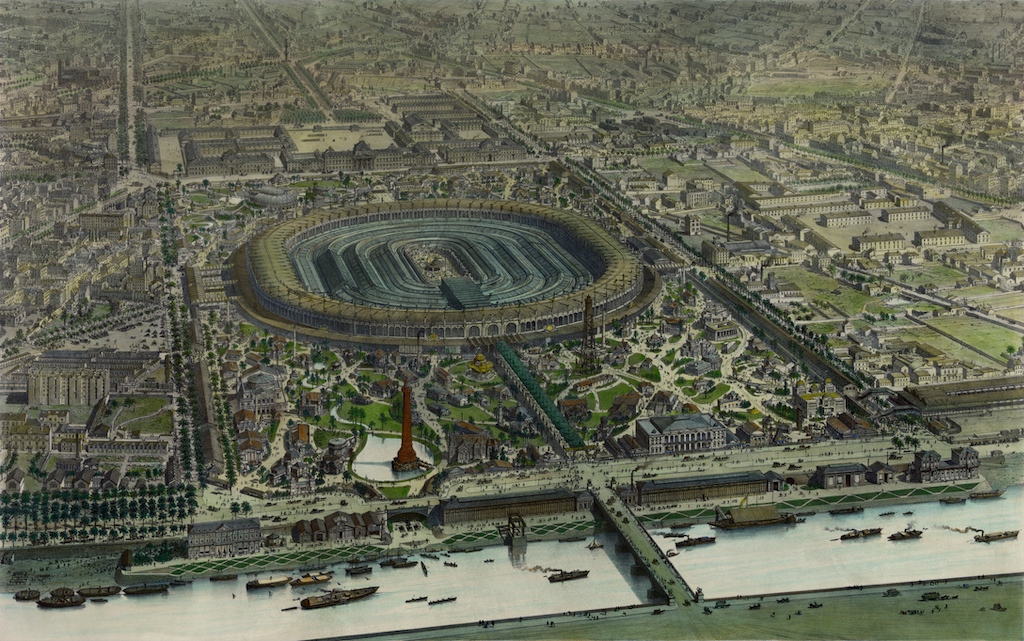
The Eiffel Tower in Paris was among the first world expos and celebrated the industrial revolution. (Public Domain)
As mass production accelerated, consumerism began to feature more prominently. In the 20th century, world expos became a launchpad for all kinds of new products: The ice cream cone (1904), nylon stockings (1939), live television (1939), the mobile phone (1970), and touchscreens (1982), to name a few.
More recently, the gatherings have sought to address collective global challenges. In 2010, Shanghai focused on making cities more livable. In 2015, Milan addressed the issue of sustainable agriculture.
Likewise, Dubai’s forthcoming Expo Live program is taking a grassroots approach, funding more than 140 global innovators tackling world problems.
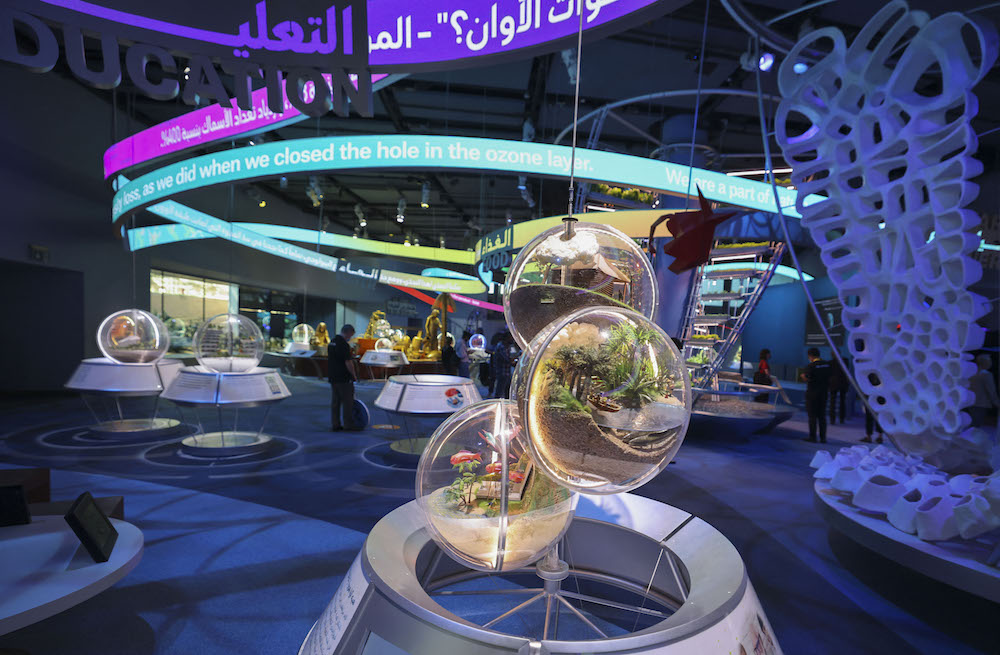
Journalists visit the Sustainability Pavilion during a media tour at the Dubai Expo 2020, a week ahead of its public opening, in the United Arab Emirates, on January 16, 2021. (AFP/File Photo)
For Arab states, as for all participating countries, a World Expo is a chance to showcase their achievements in architecture, food, agriculture, industry, the arts and intellectual pursuits.
Egypt, Tunisia, and Morocco participated in the earliest expos. The first ever, the 1851 Great Exhibition in London, featured around 400 artefacts from Egypt and 103 from Tunisia. Egypt’s contributions included minerals, agricultural products, textiles, and leather goods, as well as 165 books from its oldest printing house, the Bulaq Press.
Tunisia was represented through textiles sent by a single exhibitor, “His Highness Mushir Basha, Bey of Tunis.” In a style ahead of its time, the Tunisian display was truly experiential. The center of the exhibit featured a recreated Tunisian street market, including a tent lined with furs, textiles, and perfumes.
The 1867 Exposition Universelle de Paris marked the unveiling of the Eiffel Tower. It was also Morocco’s first World Expo, in which it offered visitors a rich, memorable, sensory experience.

From Queen Victoria opening the 1851 London exhibition (top left) to Seville 1992 (bottom right), Arab nations have participated since the earliest expos. (AFP/Public Domain)
Omitting anything related to commerce, industry or agriculture, Morocco and Tunisia’s neighboring pavilions were ornate tents, displaying a genteel, regal way of life. The tents featured soft couches, thick carpets, and a white marble fountain, with colorful inlaid Moroccan tiles.
Levantine countries made their expo debuts in the early to mid-20th century. At the 1939 New York World’s Fair, Lebanon made its first appearance independent from France.
Al-Hoda, the leading Lebanese newspaper in the US, ascribed great significance to Lebanon’s participation in the fair, saying it put Lebanon “among the free and independent nations of the world for the first time in modern history.”
Cedar branches were brought into the pavilion, filling it with the fragrance of Lebanon. Some Lebanese Americans were so overcome with emotion they kneeled to kiss the branches, tears running down their faces.
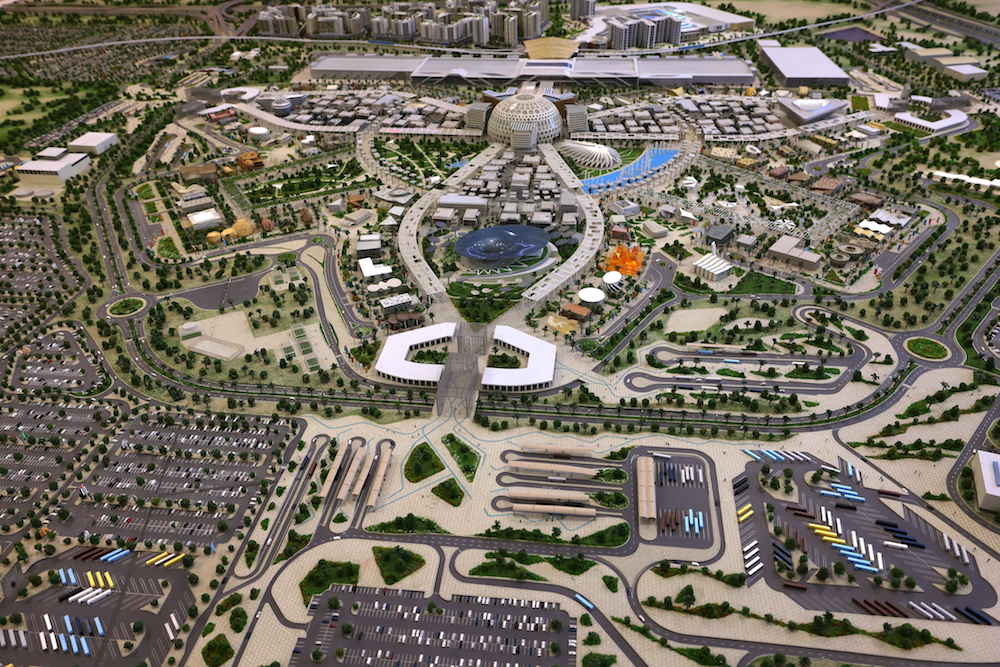
The six-month Dubai Expo world fair is a milestone for the emirate, which has invested $8.2 billion on the event. (AFP/File Photo)
Four months into the fair, however, the Second World War broke out, and the event’s initial theme, “The World of Tomorrow,” was changed to “For Peace and Freedom.”
Expo ’58 took place in Brussels at the start of a historic era of peace and prosperity in Western Europe. Organizers were resolutely focused on telling a story of progress, both past and future.
That year, five Arab states — Saudi Arabia, Egypt, Jordan, Syria, and Iraq — occupied one pavilion. At its center was a ceramic mural depicting the Arab world as “the cradle of civilization.” The pavilion’s theme was focused on the rising standard of living in the Arab world.
The 1967 Montreal Expo was the centerpiece of Canada’s centennial celebrations. It was originally intended to be held in Moscow to mark the 50th anniversary of the Russian Revolution, but owing to high costs and other issues, the USSR cancelled the event and Canada was awarded the expo instead in late 1962.
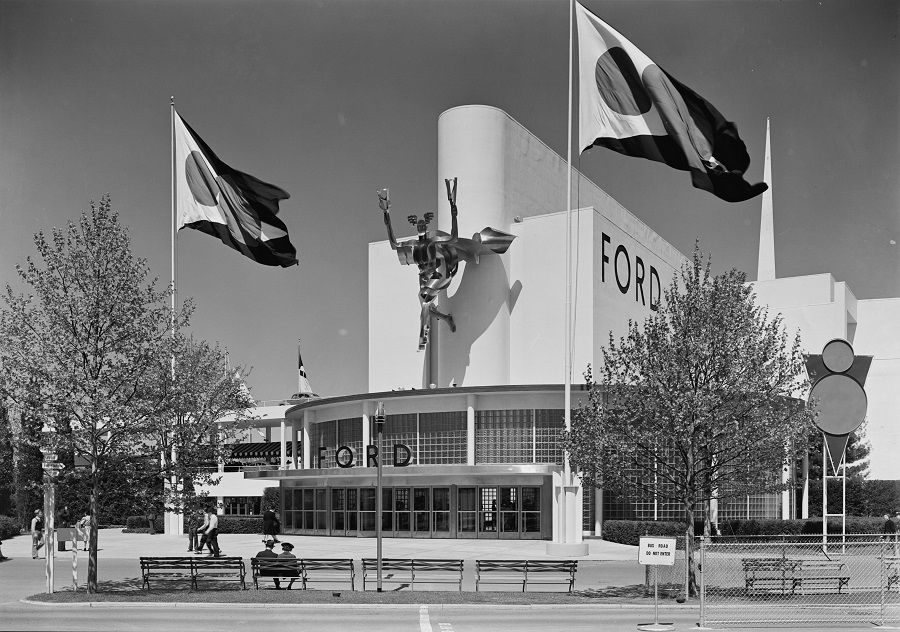
Lebanon made its first independent from France appearance at the 1939 New York World’s Fair, at the Ford Motor Building. (Public Domain)
Despite this late change of venue, the 1967 event became one of the most successful to date, with more than 50 million visitors — more than twice the population of Canada at the time — and a record 62 participating countries.
In Montreal, as part of the Arab pavilions complex, Kuwait and Algeria both participated for the first time. Algeria’s pavilion was a serene, simple design of marble and tile. It focused on Algerian history and culture, with films about its history and development of agriculture, technology, and art.
Kuwait’s pavilion illustrated the nation’s relationship with oil and featured a model desalination plant. However, owing to rising tensions in the Arab region, the pavilion was closed just one month into the six-month expo.

The first ever, the 1851 Great Exhibition in London, featured around 400 artefacts from Egypt and 103 from Tunisia. (Public Domain)
Most GCC nations first participated in a World Expo in 1970 or later. In its inaugural World Expo at Osaka in 1970, Abu Dhabi — which became the capital of the UAE within a year — created a replica Arabian fort. The structure was designed by an Egyptian city planner, Abdulrahman Makhlouf, who also worked on the city plan for Abu Dhabi.
The pavilion featured two minarets, one cylindrical and the other square. It was not elaborate. Aramco World reported Abu Dhabi’s contribution was, “simple … a memorable display … a symbol of the bright future awaiting Islam and the Arab world.”
At the 1992 Seville Expo in Spain, Oman made its first World Expo appearance. The Sultanate set a traditional tone with a large, heavy cedar door, steeped in the scent of frankincense. The pavilion focused on Oman’s history as a seafaring nation (and its most famous sailor, Sinbad), and highlighted traditional industries such as woodcraft and pottery.
A renaissance dome told visitors the story of how Oman had evolved from an ancient sultanate into a modern one.
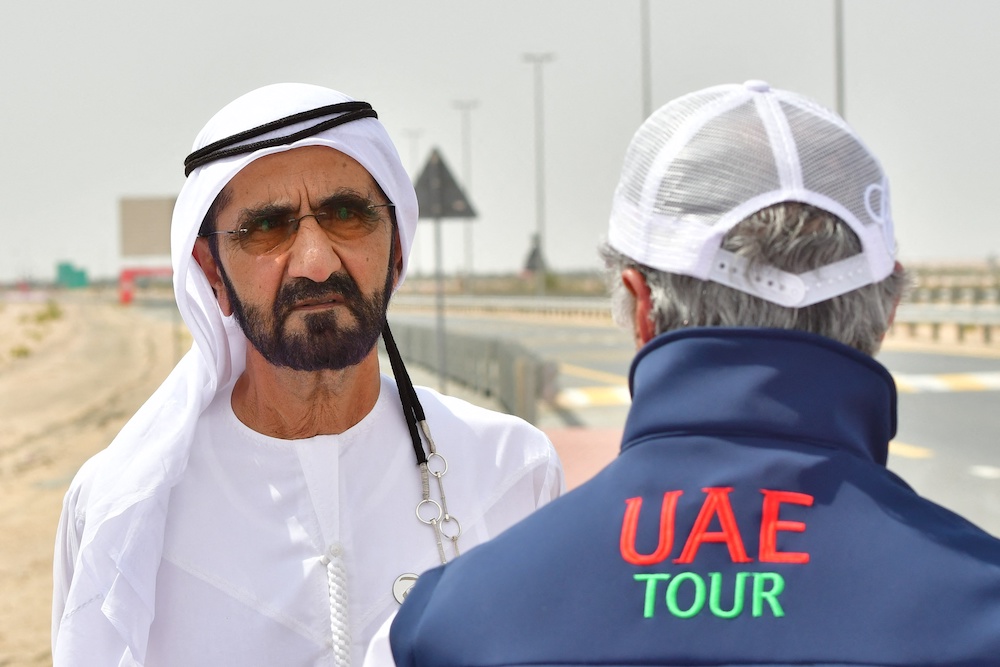
Sheikh Mohammed bin Rashid Al Maktoum, Vice President and Prime Minister of UAE and Ruler of Dubai has promised that Expo 2020 Dubai will be the best World Expo ever. (AFP/File Photo)
The 2010 event in Shanghai breathed new life into the institution of World Expos. The Chinese government’s support for the Shanghai Expo netted a staggering 73 million visitors. Arab pavilions, including those of Saudi Arabia and the UAE, were among the most popular, with long lines of visitors snaking around them.
Shanghai 2010 was Bahrain’s inaugural World Expo. Its pavilion was compact and took visitors on a journey from the past to the present and into the future, with a focus on Bahraini craftsmanship. As with many national pavilions at the event, Bahrain showcased an interactive story through touchscreen technology.
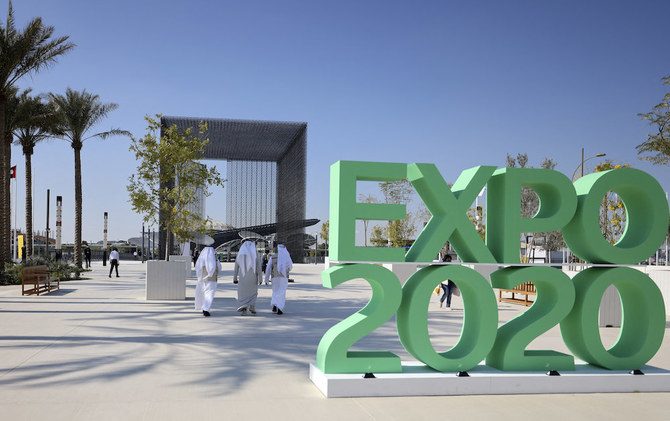
After delays brought on by the COVID-19 pandemic, the first World Expo to be hosted in the Middle East opens in Dubai in October, with tickets now on sale.
Expo Dubai 2020 promises to celebrate humanity’s successes, relish its present and set a course for its future. One thing is certain — the next chapter in the story of World Expos will mark a historic moment for the Arab world.