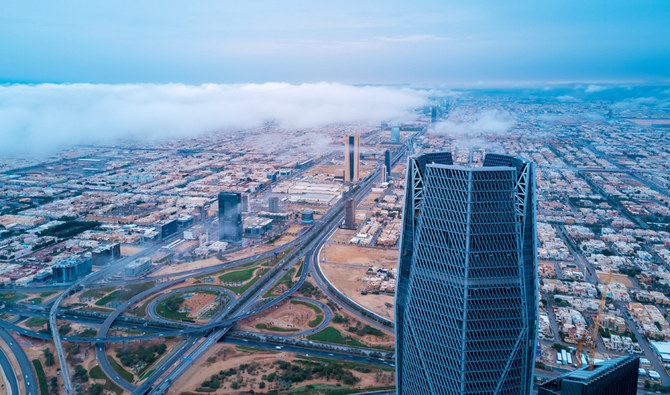

DUBAI: Saudi Arabia could become a global center for new drone technology under plans being advanced by the Center for the Fourth Industrial Revolution (4IR) recently inaugurated in Riyadh in partnership with the World Economic Forum (WEF).
Mansour Alsaleh, director of the center, told Arab News that heavy lift drone technology had been prioritized by the Kingdom as one of its 4IR projects. “Saudi Arabia can be a leading country in developing the regulatory framework for heavy-lift drones. It can be ahead of the world,” he said.
Heavy lift drone technology has advanced to a stage where it requires a more sophisticated regulatory framework, he said, not just in the Kingdom but globally, and these are being developed in partnership with the Saudi General Authority of Civil Aviation, the Ministry of Transport and Saudi Aramco. “The applications are endless,” Alsaleh said.
Advanced drones have been used to deliver vaccines in Africa in the course of the pandemic, and American drone manufacturers have also been accelerating their efforts to transport heavy loads — up to 500kg depending on the technology — to locations with poor access. Improving the Kingdom’s logistical infrastructure was identified as a priority area of the Vision 2030 strategy, and drones are seen as a key enhancer of existing transport systems.
“By integrating these two mutually supportive components of regulatory transformation and pilot tests, Saudi Arabia can be a model for the rest of the world while supporting its own industrial development and social goals,” the WEF said in a recent report of which Alsaleh was a co-author.
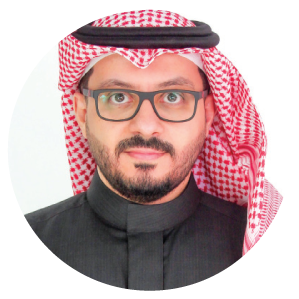
Mansour Alsaleh
Alsaleh said that the Kingdom had identified 70 opportunities to apply 4IR technologies, and was prioritizing plans in five other areas, apart from drone technology — artificial intelligence (AI), the Internet of Things (IoT), blockchain, government data systems, and “smart cities” such as NEOM.
Each potential project goes through four stages, he explained: Identifying and selection; framework development in partnership with other stakeholders; prototyping and testing; and scaling up within a regulatory framework.
At the recent two-day event run from Riyadh to celebrate the inauguration of the 4IR center, many speakers underlined the need for partnership between government and other parts of the economy and society. Alsaleh reinforced that view. “We are looking for an eco-system, involving the public and regulatory sector, along with private industry and research and academia. It is about having the right blend between those areas,” he said.
One of the challenges was to identify technology at an early stage and take it through the phases of “sandboxing” and testing to further development, even as a regulatory framework was being fully developed. “Sometimes you have just got to take the risk,” he said. Some experts have warned of the challenges associated with rapid technological development, such as vulnerability to cyberattack and concerns over data privacy, but Alsaleh was confident these issues could be met and overcome. “There is no one single recipe to solve these challenges, we need to tackle them one by one. But if we focus more on the benefits that will flow from 4IR technology, it will help you overcome the challenges. We have to minimize the risks from emerging technologies,” he said.
The impact of 4IR technologies cuts across all aspects of human social and economic activity, Alsaleh said. “You cannot limit it to one particular sector, it is everywhere. If you do not keep up with the pace and become an early adopter, you will fall behind,” he explained, underlining the need to strike a balance between the “explore” and “exploit” phases of a 4IR project. But he said that IoT and AI technologies had great market value and could be used in multiple different applications. “You never know what will be shaping the future,” he said.
There were also key areas where 4IR technology could be used in the campaign against climate change. “We have the Circular Carbon Economy initiative. To make a clean energy transition, 4IR must be at the heart of that,” Alsaleh said.
Advanced technologies have been crucial in helping confront the big issues presented by the pandemic, and some changes — such as remote working via virtual communication systems — may become a permanent feature of the post-pandemic world.
Saudi Arabia is one of 13 centers for 4IR around the world, and Alsaleh said the benefits would have global impact.
“Organizations such as the WEF and 4IR are reaching out to everybody. It is all accessible and everyone can benefit from the work,” he said.