

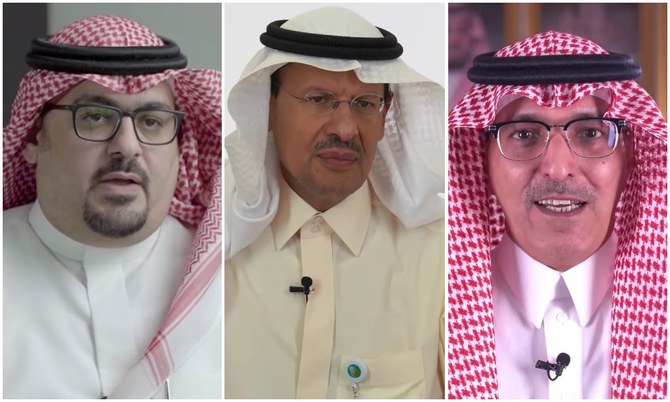

DUBAI/RIYADH/JEDDAH: Saudi Arabia is aiming to use Fourth Industrial Revolution (4IR) technology to fundamentally transform the energy sector, enhance the security of its water and food resources, and fight climate change, senior ministers announced.
“Our vision is to transform the energy sector through the application of data and technology,” Saudi Energy Minister Prince Abdul Aziz bin Salman said during the 4IR forum in Riyadh on Thursday.
“Saudi Arabia has a rich resource of youthful innovators who can be entrusted with the task of seeing this transformation through to fulfillment. The synergy between youth and technological innovation will make Saudi Arabia a dynamo for the digital transformation of the energy sector.”
4IR is a fusion of advances in artificial intelligence, robotics, the Internet of Things (IoT), genetic engineering, quantum computing, and more. It is a way of describing the blurring of boundaries between the physical, digital, and biological worlds.
The application of 4IR technology in energy will enable the Kingdom to lead the way in the battle against climate change, the Saudi energy minister said.
“Perhaps the most important area where technology and energy can combine to the benefit, not just of the Kingdom, but of all mankind, is in the search for cleaner energy,” Prince Abdul Aziz said. “Here, we can use the technology of the 4IR to accelerate the energy transition, and meet the goals for the reduction in greenhouse gas emissions.”
His view was echoed by Ahmed Al-Zahrani, assistant minister for energy, who highlighted the potential of 4IR technologies like IoT and Blockchain.
“These will help our endeavors to improve efficiency and reduce emissions,” Al Zahrani said.
The Kingdom is known for its energy security as it has been endowed with huge energy resources, but when it comes to food and water security, the country is facing challenges. Adding 4IR applications can address these challenges, Saudi Minister of Environment, Water and Agriculture Abdul Rahman Al-Fadli told the conference.
Al-Fadli also said 4IR applications such as the use of remote sensors, artificial intelligence, and robotics will help the farming sector in Saudi Arabia as the technologies will provide better data from the fields. He also mentioned that these applications will assist the Kingdom in its plan to plant billions of trees under its green initiative.
“The challenge we all face is to tackle the great issues of the world today, like post-pandemic economic recovery, energy reliability, and sustainability,” Prince Abdul Aziz said.
In other developments from the forum, Ahmed Al-Saadi, senior vice president for technical service at Saudi Aramco, said the oil company had developed its technology for many years, notably in monitoring conditions in oil reservoirs. He said Aramco had made great strides in technology and was among the “best in class” operators in the global energy peer group.
Mohammed Abunayyan, chairman of ACWA Power, the utility developer backed by Saudi Arabia’s Public Investment Fund, told the forum most of its operations were now digital and that essential maintenance was controlled and managed through digital functions.
Abunayyan also said the involvement of the private sector in the digitization of energy was crucial: “The private sector will always deliver better value than the public utility model.”
Jason Bordoff, Dean of the Columbia Climate School in New York, had a warning about the slow progress towards the Paris Agreement goal of reducing CO2 emissions.
“We are not on track to meet those goals,” he said. “We need emissions to decline faster.”
Melissa Lott, research director at Columbia’s energy policy center, said carbon capture, utilization, and storage — a big element in Saudi Arabia’s Circular Carbon Economy framework — was crucial to efforts in reducing emissions.


