

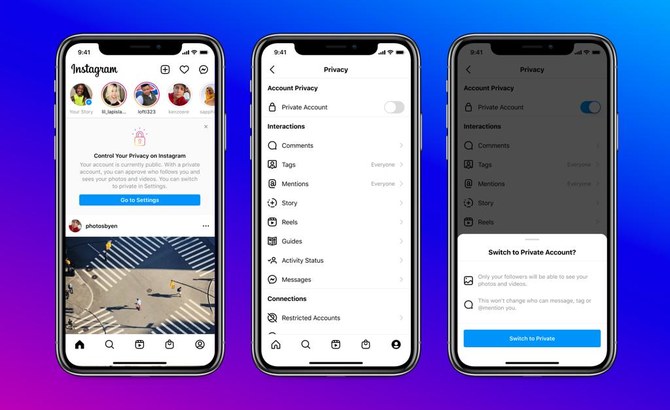

DUBAI: Instagram has announced new features to protect young adult users of its photo and video sharing platform.
Nadia Diab-Caceres, head of Instagram public policy for the Middle East and North Africa region, told Arab News that creating a secure online environment was a key priority of the social networking service.
“Especially in the Middle East, we see teens and young adults using Instagram as a conduit for self-expression and inspiration, and we want to ensure that they continue to create and collaborate on the platform while having a safe and secure experience,” she said.
New users aged under 16 – 18 in some countries – will have a private account by default, which means their content will not show up in public areas, such as Explore, and they will have to approve who follows them.
Existing users with public accounts will receive a notification highlighting the benefits of a private account and an explanation of how to change their privacy settings. However, both new and existing users can choose between a private and public account.
“We want to strike the right balance of giving young people all the things they love about Instagram – the ability to connect with friends and family, be inspired, and share the things they care about – while keeping them safe,” added Diab-Caceres.
The move comes after Instagram’s testing showed that eight out of 10 young people accepted the private default settings during sign-up.
Defaulting new accounts to private is the first step in preventing unwanted contact or potential harassment on the platform. The second step is the new technology Instagram has developed to find accounts that have shown potentially suspicious behavior and stop those accounts from interacting with young people’s accounts. These accounts are typically adult ones that may have recently been blocked or reported by a young person, for example.
Using the same technology, Instagram will not show young people’s accounts in Explore, Reels, or Accounts Suggested For You, to these adults. If they find young people’s accounts by searching for their usernames, they will not be able to follow them. They will also be unable to see comments from young people on other people’s posts or leave comments on young people’s posts.
These changes are being rolled out in the US, Australia, France, the UK, and Japan first, and will then be expanded to more countries.
Step three of the process will directly affect advertisers across Instagram, Facebook, and Messenger globally.
In the next few weeks, advertisers will not be able to target people aged under 18 (or older in certain countries) based on their age, gender, and location. That will mean that previously available targeting options, such as those based on interests or activity on other apps and websites, will no longer be available to advertisers.
When young people turn 18, they will be notified about targeting options that advertisers can use to reach them and how they can manage their ad experience.
Under-13s are not allowed on Facebook and Instagram. Although these platforms ask new users to enter their birth date when signing up, there is currently no way of verifying if the information is correct. Facebook recently announced that it was working on finding new ways of age verification to keep those under the age of 13 off its platforms.
“Artificial intelligence is the cornerstone of the approach we’re taking,” said Pavni Diwanji, vice president of youth products. Facebook has developed technology that allows it to estimate people’s ages through multiple signals. It also matches information across linked platforms.
“This technology isn’t perfect, and we’re always working to improve it, but that’s why it’s important we use it alongside many other signals to understand people’s ages,” Diwanji added.
Facebook is also working on a collaborative approach with operating system providers, internet browsers, and other providers to share information that can help understand a user’s age.
Lastly, and most importantly, Facebook is potentially working on an “Instagram experience” for those under 13. “The reality is that they’re already online, and with no foolproof way to stop people from misrepresenting their age,” said Diwanji.
Diab-Caceres said: “(Additionally) we will continue to listen to our community in the Middle East to roll out more measures to ensure that Instagram remains a platform that focuses on creativity and conversations as well as safety and security.”


