
ANKARA: Austria has rejected a formal request by Turkey to join a powerful EU security and defense cooperation program.
Ankara’s May bid to be included in the bloc’s Permanent Structured Cooperation Framework (PESCO) was given the cold shoulder by Vienna over its concerns about Turkish backsliding on democratic values and ties with Brussels.
PESCO covers 46 joint defense projects in partnership with 24 EU member states and is one of the union’s key defense and security policies.
Since autumn last year, membership has been opened up to non-EU countries that fulfilled a set of political and legal criteria such as democratization, respect of common security and defense policies, and maintaining good relations with their EU neighbors.
However, the ongoing standoff between Ankara and Athens about the situation of Greek islands, and rising tensions over Turkey’s recently announced settlement project on the divided island of Cyprus, are considered a barrier to good neighborliness.
Marc Pierini, a former EU ambassador to Turkey and now analyst at Carnegie Europe, told Arab News: “Austria’s position may be expressed in stark terms, but it probably reflects the overall EU stand on the matter of Turkey’s participation in PESCO.
“The overall reason is that Turkey’s current rule-of-law architecture has not much to do with Europe’s anymore and nobody sees much of a prospect for improvement,” he said.
On Tuesday, Turkey’s defense minister said that his country expected Greece to opt for peaceful political solutions and called for the disarmament of Greek islands that had non-military status.
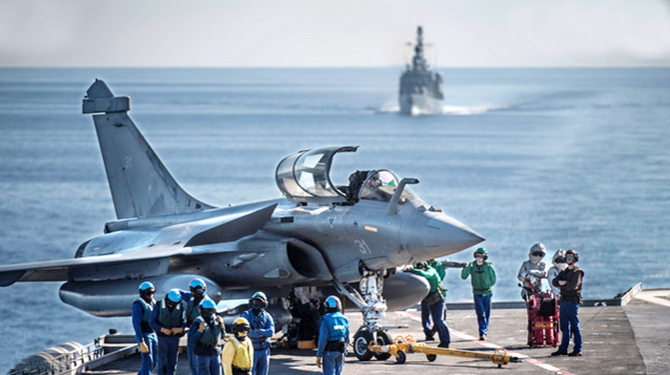
Greece’s recent purchase of Rafale fighter jets from France was criticized by Turkey as an attempt to begin an “arms race.”
But the presence of Russian S-400 missile systems on Turkish soil has been viewed as a contradictory stance with the common security and defense interests of the EU.
The admission of non-EU countries to PESCO aims at increasing cooperation between NATO partners, improving military mobility within and beyond the EU, and standardizing cross-border military procedures such as the movement of military equipment across the union in times of crisis.
Although Turkey’s application to PESCO is not seen as timely, its participation in the project would likely boost its air, land, sea, and cyber capabilities in a military sense, and would provide the country with a new avenue to improve cooperation with the EU and normalize its relations with bloc members.
Pierini pointed out that Turkey’s interest in being associated with PESCO would signal a lasting anchorage to the West. But, he added, the latest visit of Turkish President Recep Tayyip Erdogan to Northern Cyprus, and the massive geopolitical gain given to Russia through the purchase of S-400 weapon systems, all pointed to a different direction.
“So, we are clearly in a dead-end alley at the moment,” he said.
Dr. Selmin Seda Coskun, a foreign policy analyst, told Arab News that Turkey had taken important foreign policy steps, especially during June, to meet the EU’s requirements for good neighborly relations.
So far, Turkey and Greece have held three consultative rounds of talks and a number of deconfliction meetings under NATO.
“However, it is obvious that it cannot achieve the same progress at the domestic sphere,” Coskun said.
She noted that Ankara was attempting to boost military cooperation with the Western community to avoid backing itself into a corner over the S-400 impasse.
“The sale of Turkish-made unmanned aerial vehicles to Ukraine and Poland in order to consolidate its presence in the alliance, Turkey’s participation into NATO’s Black Sea ships exercise, as well as assuming a more prominent role in Afghanistan, especially as US troops gear up to exit in September, prove that Turkey is capable of doing this reconciliatory move in its foreign policy,” she added.
However, Coskun pointed out that to take part in PESCO, Turkey needed to prove a willingness to tackle its poor human rights record and convince the EU about impending domestic democratic progress.
“Either PESCO’s members would consider Turkey’s latest foreign policy moves and not expect too much from Ankara, or Turkey would understand that it would be more advantageous to follow EU values in its domestic policy preferences,” she said.