

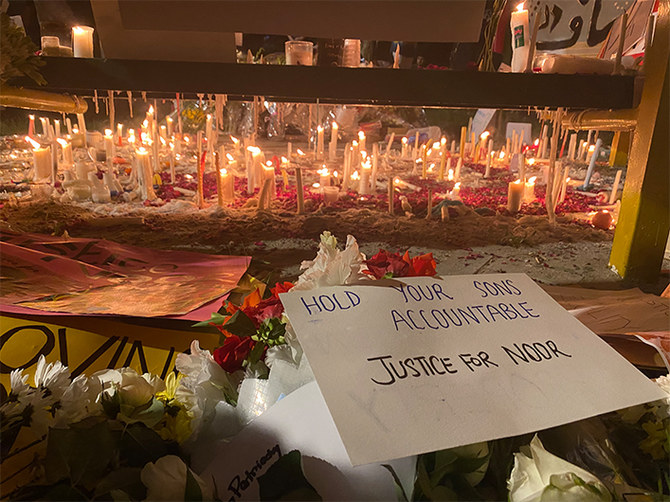

ISLAMABAD: Protests and candlelight vigils were held on Sunday in major Pakistani cities, including Islamabad, Karachi, Lahore and Multan, over last week’s killing of 27-year-old Noor Mukadam, the daughter of former Pakistani Ambassador to South Korea, Shaukat Mukadam.
Mukadam was allegedly killed and beheaded on Tuesday night, the eve of Eid Al-Adha, by suspect Zahir Jaffer at his house in Islamabad’s posh F-7/4 sector. Jaffer, his parents and two members of their household staff have been arrested in connection with the murder.
The protest in Islamabad on Sunday was organized by the Women’s Democratic Front (WDF) and the women’s rights organization, the Aurat Azadi March, with hundreds of demonstrators gathering in solidarity over violence against women in Pakistan.
“We demand an end to state impunity against patriarchal violence,” Ismat Shahjahan, WDF president, said, addressing protesters. “We want a complete overhaul in the very structures of the state and society that are contributing to femicide in Pakistan.”
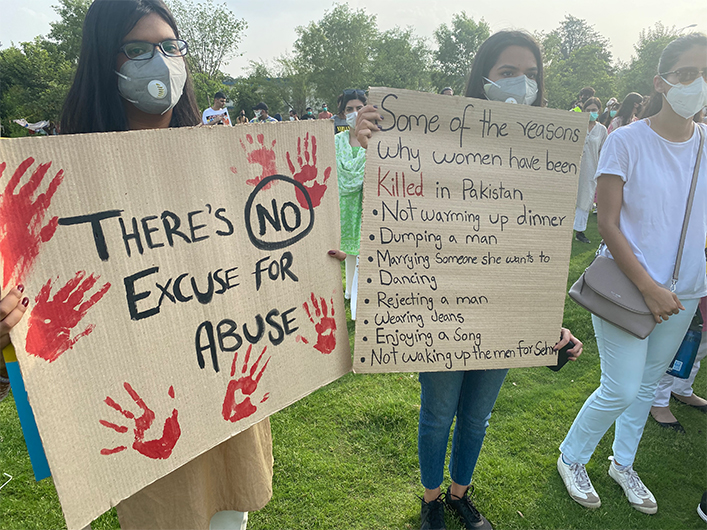
Women holding posters against brutal killing of 27-year-old Noor Mukadam, daughter of former Pakistani Ambassador to South Korea, Shaukat Mukadam, Pakistan on July 25, 2021. (AN Photo)
Last week, Pakistani foreign minister Shah Mahmood Qureshi expressed “my absolute condemnation of the recent violence and brutality against women.”
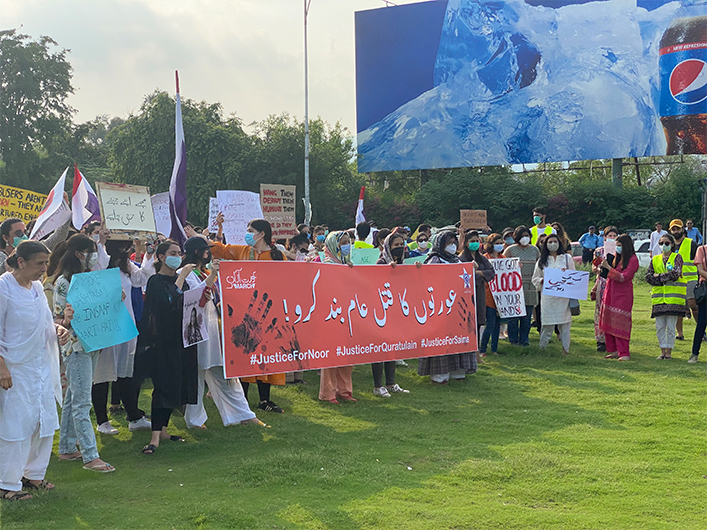
Protestors gather outside to protest brutal killing of 27-year-old Noor Mukadam, daughter of former Pakistani Ambassador to South Korea, Shaukat Mukadam at Islamabad Press Club in Islamabad, Pakistan on July 25, 2021 (AN Photo)
“This has no place in our society, lives, religion or culture,” he said. “We must work harder and do more for prevention & for justice.”
“For Saima, for Quratulain, for Noor,” he added, naming two other recent women murder victims.
I cannot express strongly enough my absolute condemnation of the recent violence and brutality against women. This has no place in our society, lives, religion or culture. We must work harder and do more for prevention & for justice.
For Saima, for Quratulain, for Noor.
— Shah Mahmood Qureshi (@SMQureshiPTI) July 23, 2021
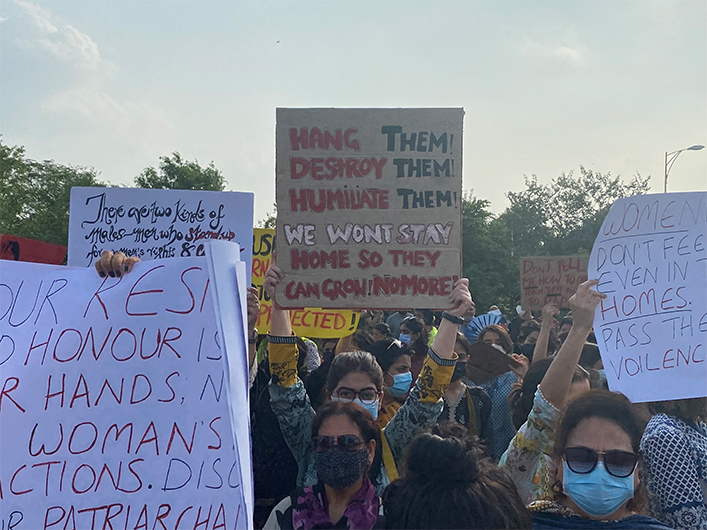
Protestors gather outside to protest brutal killing of 27-year-old Noor Mukadam, daughter of former Pakistani Ambassador to South Korea, Shaukat Mukadam at Islamabad Press Club in Islamabad, Pakistan on July 25, 2021 (AN Photo)
A candlelight vigil in Islamabad’s Swiss Avenue Park followed Sunday evening’s protest. Similar vigils have also been held in Canada and Ireland where Mukadam spent many years growing up.
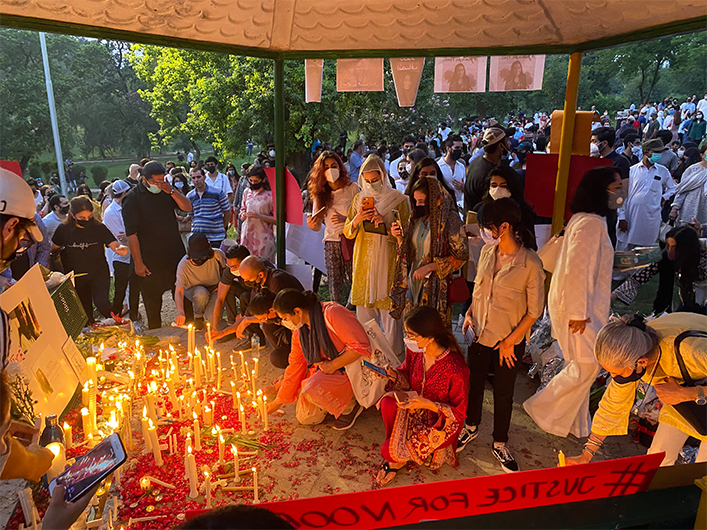
People light candles at a vigil to protest brutal killing of 27-year-old Noor Mukadam, daughter of former Pakistani Ambassador to South Korea, Shaukat Mukadam at Islamabad Press Club in Islamabad, Pakistan on July 25, 2021 (AN Photo)
Renowned rights activist Tahira Abdullah addressed the crowd at the vigil, standing beside the Mukadam family and leading chants of “Justice for Noor.”
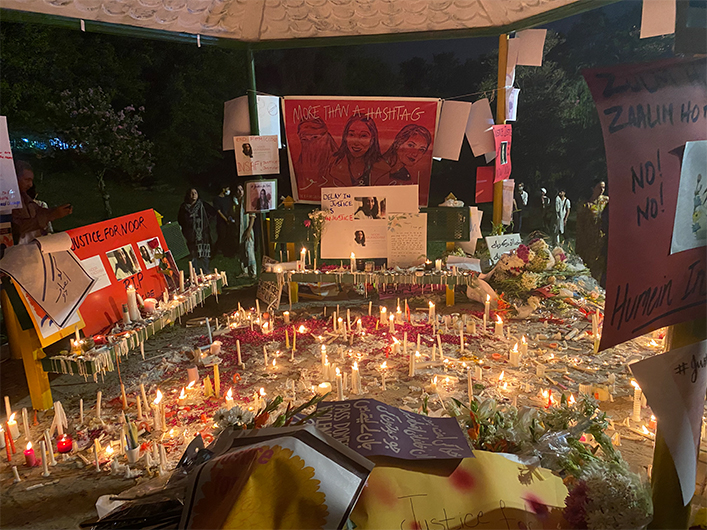
The candlelight vigil held to protest the killing of 27-year-old Noor Mukadam, daughter of former Pakistani Ambassador to South Korea, Shaukat Mukadam, Pakistan on July 25, 2021. (AN Photo)
Ali Khan, a resident of Islamabad who attended the vigil with his family, said he had come out as part of “a drive for justice.”
“We need to show our support,” he said, “and we need our numbers to show we will not rest [until justice].”


