EILAT, Israel: An Israeli-led scientific expedition sailed Tuesday from the southern city of Eilat toward Port Sudan, launching a joint project with Sudanese researchers that could help preserve the Red Sea’s unique coral reefs.
The collaboration, aided by Sudan’s normalization of ties with Israel last year, aims to create a first-ever comprehensive study of the entire Red Sea, possibly yielding precious information on the long-term viability of reefs.
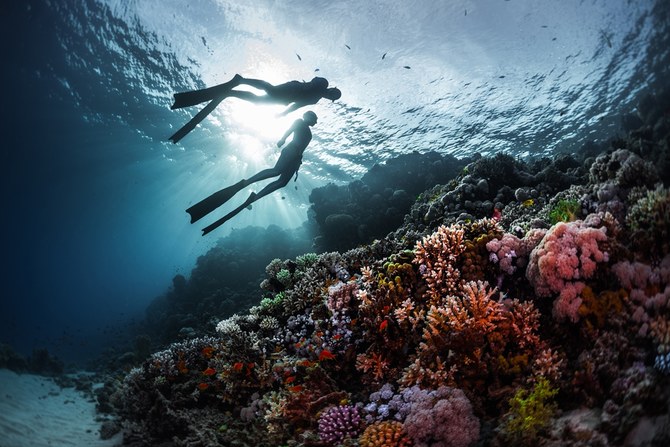
While coral populations around the world are undergoing bleaching caused by climate change, reefs in the northern Red Sea, where the Gulf of Eilat lies, have stayed stable because of their unique heat resistance.
The mission is being headed by Maoz Fine of the Interuniversity Institute for Marine Sciences in Eilat, whose groundbreaking research offered insight into the durability of the northern Red Sea reefs.
He found that the northern Red Sea corals underwent a form of “thermal selection” in their journey from the Indian Ocean through warmer water thousands of years ago.
For years Fine had said that a comprehensive study at the Red Sea reefs was necessary to fully understand the variation from north to south.
But such a study faced diplomatic hurdles, with Arab states to the Red Sea’s south reluctant to work with Israel.
Fine’s collaboration with expedition co-leader Anders Meibom of Ecole Polytechnique Federale in Lausanne (EPFL) facilitated involvement from the Swiss government, which offered financial support and diplomatic efforts to connect Israel and regional Arab states.
While planning for the mission pre-dated last year’s normalization deal, the establishment of Israeli-Sudanese diplomatic relations was “very fortunate,” Bern’s ambassador to Israel, Jean-Daniel Ruch, told AFP.
The six scientists and four crew members — all European except Fine — is set to reach Port Sudan on the Swiss-flagged Fleur de Passion in four days, where a Sudanese team of researchers will join with a ship of their own.
The two vessels will spend five to six weeks collecting coral samples and testing their heat durability as the ship heads south.
Fine told AFP that moving from the healthier northern reefs to the struggling south was like “traveling back in time,” possibly offering new insights into the disparity between the two areas.
Meibom said the mission aimed to create “a real, holistic view of what the corals are, what state are they in, and where we can expect them to survive and for how long.”
Such a “baseline” would help scientists “understand where are the corals that have the biggest potential for survival in the future,” he told AFP.
For Meibom, the Red Sea expedition was a “neutral vehicle” between Israeli and Arab scientists, ideally fostering information sharing and better regional sea management policy.
The project, which formally began last month with a short excursion in Jordan’s Gulf of Aqaba, will continue over three years, aiming to involve further Red Sea countries.


![]()

Israeli-led mission sails to Sudan for major Red Sea coral study
Short Url
https://arab.news/ycfyv
Israeli-led mission sails to Sudan for major Red Sea coral study
- The collaboration aims to create a first-ever comprehensive study of the entire Red Sea
- Reefs in the northern Red Sea have stayed stable because of their unique heat resistance


Latest updates


Recommended


© 2026 SAUDI RESEARCH & PUBLISHING COMPANY, All Rights Reserved And subject to Terms of Use Agreement.