ATLANTA: A vital border crossing between Syria and Turkey has been kept open thanks to Washington and Moscow forging an agreement to pass a resolution at the UN Security Council (UNSC), the deputy to the US ambassador to the UN told a press briefing attended by Arab News on Saturday.
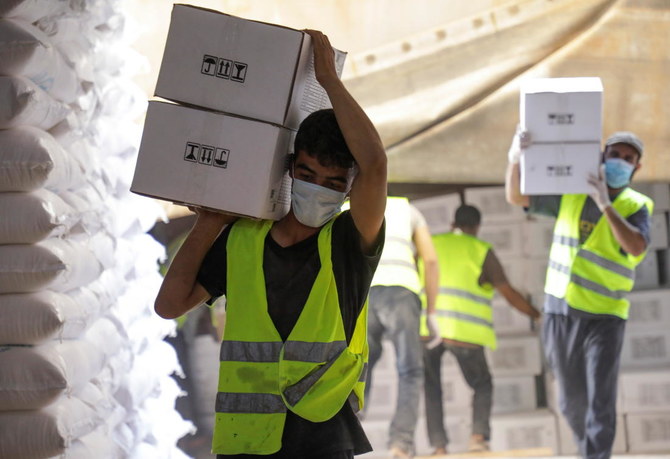
Jeffrey Prescott said keeping the border crossing open will “save lives” and deliver critical food and medicine, especially vaccines, to internally displaced Syrians. The US had initially expected Russia to veto the resolution, he added.
Prescott described the passing of the resolution as a “critical starting point” that the US and others will have to build on in the months ahead in order to expand humanitarian assistance to the Syrian people.
The UNSC voted unanimously on Friday to extend its authorization to keep the Bab Al-Hawa border crossing open for humanitarian aid to the Syrian people for another year in two six-month intervals.
The UN said the resolution applies “only to Bab Al-Hawa, not to several other crossing points whose use was previously curtailed by the council.”
It added: “The second six-month extension remains pending, subject to the issuance of a substantive report by the secretary-general on transparency in aid delivery operations and progress on cross-line access.”
Vassily A. Nebenzia, Russia’s ambassador to the UN, attributed the passing of the resolution to the “spirit of commitment” that was achieved during the recent summit between presidents Joe Biden and Vladimir Putin. “We are grateful for this,” Nebenzia added.


US-Russia cooperation ensured Syria border crossing kept open: Official
https://arab.news/52tdz
US-Russia cooperation ensured Syria border crossing kept open: Official

- Jeffrey Prescott: Passing of UN resolution will “save lives,” deliver critical aid
- Russian envoy cites “spirit of commitment” achieved during summit between Biden, Putin


Syria Kurds impose curfew in Qamishli ahead of govt forces entry
- The curfew came after Syrian security personnel entered the mixed Kurdish-Arab city of Hasakah and the countryside around the Kurdish town of Kobani on Monday
QAMISHLI: Kurdish forces imposed a curfew on Kurdish-majority Qamishli in northeastern Syria on Tuesday, ahead of the deployment of government troops to the city, an AFP team reported.
The curfew came after Syrian security personnel entered the mixed Kurdish-Arab city of Hasakah and the countryside around the Kurdish town of Kobani on Monday, as part of a comprehensive agreement to gradually integrate the Kurds’ military and civilian institutions into the state.
The Kurds had ceded territory to advancing government forces in recent weeks.
An AFP correspondent saw Kurdish security forces deployed in Qamishli and found the streets empty of civilians and shops closed after the curfew came into effect early on Tuesday.
It will remain in force until 6:00 am (0300 GMT) on Wednesday.
The government convoy is expected to enter the city later on Tuesday and will include a limited number of forces and vehicles, according to Marwan Al-Ali, the Damascus-appointed head of internal security in Hasakah province.
The integration of Kurdish security forces into the interior ministry’s ranks will follow, he added.
Friday’s deal “seeks to unify Syrian territory,” including Kurdish areas, while also maintaining an ongoing ceasefire and introducing the “gradual integration” of Kurdish forces and administrative institutions, according to the text of the agreement.
It was a blow to the Kurds, who had sought to preserve the de facto autonomy they exercised after seizing vast areas of north and northeast Syria in battles against Daesh during the civil war, backed by a US-led coalition.
Mazloum Abdi, head of the Kurdish-led Syrian Democratic Forces (SDF), had previously said the deal would be implemented on the ground from Monday, with both sides to pull forces back from frontline positions in parts of the northeast, and from Kobani in the north.
He added that a “limited internal security force” would enter parts of Hasakah and Qamishli, but that “no military forces will enter any Kurdish city or town.”


