Saudi Arabia to license 3 international logistics companies

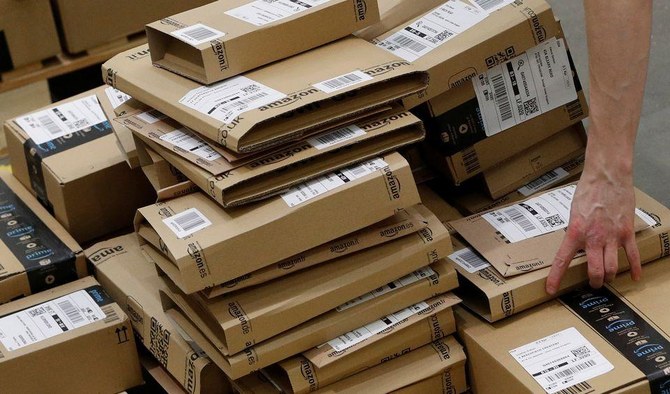
E-commerce has driven a huge pick-up in parcel deliveries during the pandemic. (Reuters)
Short Url
Updated 08 July 2021
Follow

Saudi Arabia to license 3 international logistics companies

  • Today, there are 20 international companies and 35 local licensed for parcel transportation services in the Kingdom

RIYADH: Saudi Arabia is close to granting three international companies licenses to work in the field of parcel transportation services in the Kingdom, with a potential injection of SR6 billion ($1.6 billion) into the local market, said the Communications and Information Technology Commission (CITC).
The Saudi postal sector has witnessed rapid growth in recent years with the number of parcels increasing by 160 percent since 2019, to exceed 20.3 million during the first quarter of 2021, the CITC said in a statement on Wednesday.
Today, there are 20 international companies and 35 local licensed for parcel transportation services in the Kingdom.
The investments align with the Vision 2030 objectives aimed at making the Kingdom a leading global logistics platform and a connecting hub for the three continents, the CITC said.
Transport and logistics will contribute 10 percent of Saudi GDP by 2030, up from 6 percent today, following the implementation of the Kingdom’s new strategy for the sector, Minister of Transport Saleh Aljasser said on Tuesday.


Gold slips over 1 percent on strong dollar, easing rate-cut bets

Updated 12 March 2026
Follow

Gold slips over 1 percent on strong dollar, easing rate-cut bets

  • Chile central bank issues first gold purchase in decades
  • BMI expects silver to average $93/oz in 2026

Gold prices fell more than 1 percent on Thursday, pressured by a stronger dollar and diminishing hopes for a reduction in borrowing costs as the ongoing Iran war stoked inflation concerns.
Spot gold dipped 1.1 percent at $5,118.16 per ounce by 1:31 p.m. ET (1731 GMT). US gold futures for April delivery settled 1 percent lower at $5,125.80.
The dollar gained for a third consecutive session. The greenback is a competitive ‌safe-haven asset, and ‌a stronger US currency makes gold more ​expensive ‌for ⁠holders ​of other currencies.
“The ⁠higher dollar index, rising treasury yields and lack of interest-rate cuts are the negative factors, but the conflict in the Middle East has been generating some safe-haven flows,” said Phillip Streible, chief market strategist at Blue Line Futures.
Two tankers were ablaze in Iraqi waters in an apparent escalation in Iranian attacks that have cut off ⁠Middle East energy supplies. In reaction, oil prices ‌rose sharply for the day.
Iran will avenge ‌the blood of its martyrs, keep ​the Strait of Hormuz closed and ‌attack US bases, new Supreme Leader Ayatollah Mojtaba Khamenei said.
Higher crude ‌prices feed into inflation by raising transportation and production costs. Gold is considered an inflation hedge, but high interest rates weigh on it by making yield-bearing assets more attractive.
“If they can prevent oil prices from climbing ‌further, gold should be in a good place... On the bullish side for gold, the main argument is ⁠that central ⁠bank buying and steady exchange-traded fund inflows, which have remained positive all year,” Streible added.
Chile’s central bank issued its first major gold purchase since at least 2000. In February, the bank boosted its gold reserves to $1.108 billion, up from $42 million in January, equivalent to 2.2 percent of total reserves.
Elsewhere, spot silver eased 1 percent to $84.90. Prices gained more than 146 percent last year.
Analysts at BMI wrote in a note they expect silver to average $93 per ounce in 2026, with strong investment demand consolidating the gains witnessed in 2025, and offsetting price-induced ​demand destruction in solar ​panels and jewelry.
Spot platinum lost 1.1 percent to $2,145.75, and palladium fell 1 percent to $1,620.86.