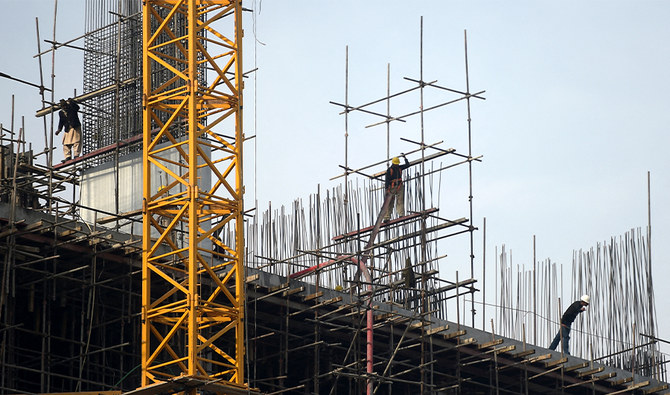
ISLAMABAD: Pakistan is set for its first real estate investment trust (REIT) in more than six years as Prime Minister Imran Khan seeks to stimulate the economy through a construction boom, Bloomberg reported on Thursday.
Arif Habib Dolmen REIT Management Pvt. plans to raise Rs8 billion ($51 million) via private placements in two REITs for a housing project in Karachi, Muhammad Ejaz, the firm’s chief executive officer, said in an interview to Bloomberg. It plans to purchase the land in about two months, partly from Silkbank Ltd.
“Arif Habib Dolmen had created Pakistan’s only REIT in 2015 and the industry, which had gone silent since then, is reviving now on Khan’s incentives and regulatory changes,” the newspaper reported. “Pakistan is willing to forgive tax evaders if they invest in construction projects, while banks have been asked to increase their outstanding mortgages by at least 5 percent by December.”
One of the new REITs will focus on villas and the other on apartment buildings and commercial developments.
This is a developmental REIT with an expected internal rate of return of more than 30 percent, according to Ejaz: “The older REIT, which holds rental assets including Karachi’s most prominent mall and an office tower, offers a dividend yield of around 12 percent a year.”
Pakistan has been revising rules to make REITs more attractive for investors and developers. Finance Minister Shaukat Tarin in his budget last month lowered the dividend payment tax on REITs to 15 percent from 25 percent.
Silk Islamic Development REIT is scheduled to be launched next week for the commercial and apartment building section. Its five equal shareholders are Yunus Brothers Group that owns Lucky Cement Ltd., Fatima Group, Arif Habib Corp., Liberty Group and Arif Habib Dolmen.
The second Silk World Development REIT includes real estate developer World Group, which will develop the villas.


Pakistan set for first real estate investment trust in over six years
https://arab.news/5ktz2
Pakistan set for first real estate investment trust in over six years

- Arif Habib Dolmen REIT Management Pvt. plans to raise $51 million via private placements in two REITs
- Pakistan has been revising rules to make REITs more attractive for investors and developers

Babar Azam dropped for scoring too slowly, says Pakistan coach Hesson
- Shaheen Shah Afridi was left out after conceding 101 runs in three matches
- Pakistan will now face New Zealand in the opening match of the second phase
COLOMBO: Batting great Babar Azam was dropped for Pakistan’s final T20 World Cup group game against Namibia for scoring too slowly, said head coach Mike Hesson on Friday.
Azam, who is the highest run-scorer in T20 international history with 4,571 runs, was left out for the must-win game against Namibia as Pakistan racked up 199-3 and secured a place in the Super Eights by 102 runs.
The 2009 champions face New Zealand in Colombo on Saturday in the opening match of the second phase.
“I think Babar is well aware that his strike rate in the power play in the World Cup is less than 100 and that’s clearly not the role we think we need,” Hesson told reporters after Pakistan’s final practice session on Friday was washed out by rain.
Pakistan left out Azam for the same reason at last year’s Asia Cup and even after dismal showing in the Big Bash League, he was still selected for the T20 World Cup.
“We brought Babar back in for a specific role post the Asia Cup,” said Hesson.
“We’ve got plenty of other options who can come in and perform that role toward the end.
“Babar is actually the first to acknowledge that.
“He knows that he’s got a certain set of skills that the team requires and there are certain times where other players can perform that role more efficiently.”
Hesson also defended dropping pace spearhead Shaheen Shah Afridi after he conceded 101 runs in three matches, including 31 in two overs against India.
“We made a call that Salman Mirza was coming in for Shaheen, and he bowled incredibly well,” said Hesson.
“To be fair, he was probably really unlucky to not be playing the second and third games.”
Hesson was wary of Pakistan’s opponents on Saturday.
“New Zealand have played a huge amount in the subcontinent in recent times so we have to play at our best.”


