RAMALLAH: Pressure is mounting on Palestinian President Mahmoud Abbas over his security forces’ handling of protesters demanding his resignation since one of his biggest critics died in custody.
The US Embassy in Jerusalem said on Tuesday it was “deeply disturbed” by reports that protesters had been intimidated and beaten by plain-clothes officers, and the United Nations condemned what it called “totally unacceptable” attacks.
The security forces have denied deploying officers in civilian clothing against protesters.
But the criticism of the Palestinian Authority (PA) by such important international backers extends the already long list of problems facing Abbas, 85, after 16 years in power.
The family of Nizar Banat, a prominent critic of the PA who died in detention on June 24, said security forces broke into his house in the occupied West Bank city of Hebron and hit him repeatedly with a metal rod before arresting him.
A Palestinian rights group said after conducting an autopsy that Banat had suffered blows to his head.
The PA has declined direct comment on the circumstances of Banat’s death but, offering his condolences, Prime Minister Mohammad Shtayyeh said on Tuesday the judiciary would “ensure application of the law against all those found guilty.”
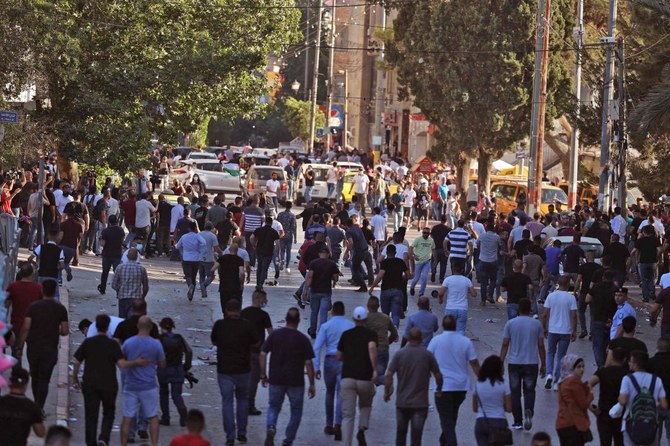
The death has led to days of protests in the West Bank and clashes between demonstrators and security forces.
“We are deeply disturbed by reports that non-uniformed members of the Palestinian Authority Security Forces (PASF) harassed and used force against protesters and journalists over the weekend,” a spokesperson for the US Embassy said.
The Office of the United Nations High Commissioner for Human Rights in the occupied Palestinian territory said one of its rights monitors covering protests in the West Bank city of Ramallah on Sunday was among dozens of people who had been attacked in a “totally unacceptable way.”
“The attack, by persons in civilian clothes, included punching, the use of pepper spray, and attempts to steal a phone being used to document events,” it said on Facebook.
Talal Dweikat, spokesperson for the Palestinian security forces, said such reports were “not true.”
“This is dishonorable talk. There were no security personnel in civilian clothes. Why would (they) wear civilian clothes?,” he told the Ramallah Mix broadcaster.
His office declined requests by Reuters for comment.
The PA says it has investigated Banat’s death, and Shtayyeh has urged Palestinians not to politicize the case.
Abbas’s popularity has plummeted since he was elected in 2005, according to opinion polls. He has ruled by decree for over a decade and the PA faces widespread allegations of corruption, which it denies.
Peace talks have been stalled since 2014, and Abbas has faced criticism for continuing to coordinate with Israel on security issues. Opponents say this enables Israel’s occupation of West Bank territory that it captured in 1967.
Anger deepened this year when Abbas canceled planned elections.
Criticism of the security forces’ methods has mounted since Banat’s death and Abbas’s Fatah party has accused Gaza’s Islamist rulers Hamas and other rival political factions of being behind them.
Aseel AlBajeh, of the rights group Al-Haq, said she was confronted by men in civilian clothing who pushed her and took her phone when she was filming Sunday’s protest in Ramallah.
“You feel completely unsafe because you don’t know if the person next to you, dressed in completely normal clothing, is going to beat you up or not,” AlBajeh, 26, said.
“It is painful. As Palestinians, we have two struggles: one against an occupying power in Israel, and the other against an authoritarian regime.”
The Palestinian Journalists Syndicate said reporters had been “prevented from covering events and threatened by plain-clothes forces.” It demanded the PA “prosecute those who assaulted journalists, and bring them to justice.”


![]()

Criticism of Palestinian security forces raises pressure on Abbas
Short Url
https://arab.news/bdqe2
Criticism of Palestinian security forces raises pressure on Abbas
- US Embassy said it was "deeply disturbed" by reports that protesters had been intimidated and beaten by plain-clothes officers
- UN condemned what it called "totally unacceptable" attacks


Latest updates



© 2026 SAUDI RESEARCH & PUBLISHING COMPANY, All Rights Reserved And subject to Terms of Use Agreement.