

GAMI presents growth strategy for Saudi military sector

1 / 2
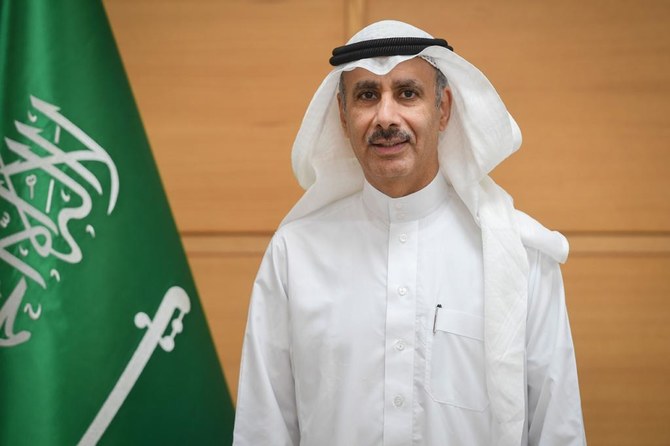
Ahmad Al-Ohali, governor of GAMI and the event’s featured speaker, highlighted the authority’s role in developing the Kingdom’s military industry sector. (Supplied)
2 / 2
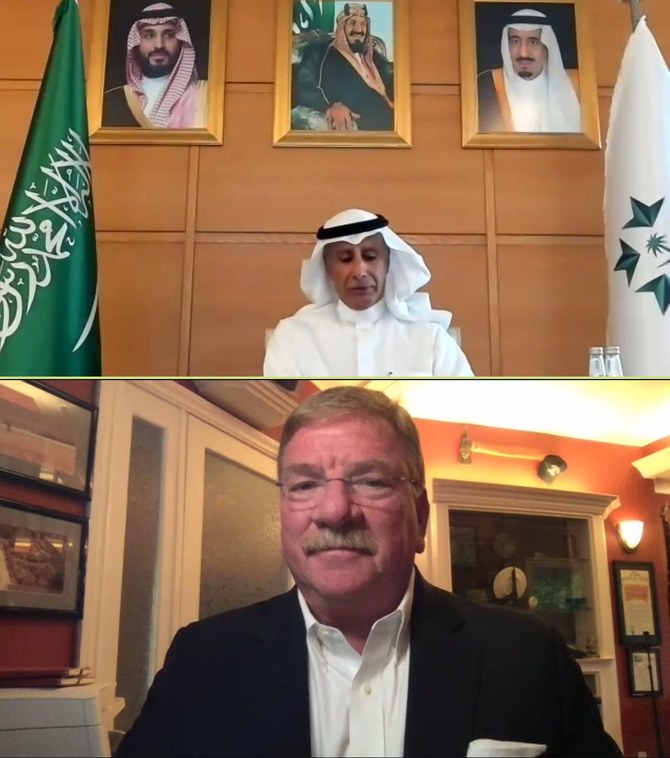
Moderated by USSBC President and CEO H. Delano Roosevelt, the webinar provided participating US company representatives with an understanding of the Kingdom’s defense and security sector. (Supplied)
Short Url
Updated 24 June 2021
Follow

GAMI presents growth strategy for Saudi military sector

  • Ahmad Al-Ohali provided an overview of the national military industry strategy, the Industrial Participation Program, and the role of research and technology in Saudi Arabia’s defense strategy
  • H. Delano Roosevelt recalled the long history of cooperation between the US and Saudi Arabia, and predicted that America will continue to play a dominant role in supporting the Kingdom

RIYADH: The US-Saudi Business Council (USSBC) and the General Authority for Military Industries (GAMI) presented an executive virtual webinar on Wednesday titled “Understanding Saudi Arabia’s Military Industry Growth Strategy.”

Moderated by USSBC President and CEO H. Delano Roosevelt, the webinar provided participating US company representatives with an understanding of the Kingdom’s blossoming defense and security sector.

Ahmad Al-Ohali, governor of GAMI and the event’s featured speaker, highlighted the authority’s role in developing the Kingdom’s military industry sector.

He also provided an overview of the national military industry strategy, the Industrial Participation Program, and the role of research and technology in Saudi Arabia’s defense strategy.

GAMI was established to grow the Kingdom’s military industries sector, in line with the Vision 2030 target of localizing more than 50 percent of defense expenditures by 2030.

GAMI is the regulator, enabler and licensor of the sector, and is responsible for its development and empowerment.

Since the launch of Vision 2030 just five years ago, Saudi Arabia has achieved significant socioeconomic milestones while showing tremendous progress in transforming many key sectors of the economy.

As a result of GAMI’s commitment to its mandate, the military industries sector has rapidly transformed and is now on a steady path to becoming a major contributor to Saudi Arabia’s non-oil gross domestic product.

Al-Ohali emphasized the breadth of opportunities that Saudi Arabia’s defense localization presents to global investors and US defense partners.

Development of the military industries sector requires a whole ecosystem of research and technology institutions, a skilled workforce and other support functions, in addition to local production capabilities, he said.

Roosevelt recalled the long history of cooperation between the US and Saudi Arabia, and predicted that America will continue to play a dominant role in supporting the Kingdom through future strategic relationships.

He said the USSBC will continue facilitating connections between US and Saudi companies, and educating American businesses about the benefits of engaging in the Saudi market.


Dubai’s real estate rental value rises 17% in 2025

Updated 7 sec ago
Follow

Dubai’s real estate rental value rises 17% in 2025

RIYADH: Rising demand drove Dubai’s real estate rental value to rise 17 percent year on year in 2025 to reach 126.4 billion Emirati dirhams ($34 billion), a sign of the market’s strength and the sustained pace of residential and commercial activity, new figures showed.

Data by the Dubai Land Department revealed that registered tenancy contracts recorded a 6 percent increase in volume during 2025, reaching 1.38 million agreements.

In addition to rising demand, the performance was also supported by a broad mix of housing options and clear regulatory frameworks that define and manage relationships between all stakeholders, according to a statement.

The rise in figures underscores the stability of Dubai’s real estate sector and its growing operational maturity.

The outlook is also consistent with projections that approximately 180,000 new units will be delivered in Dubai between 2026 and 2028. This significant rise in supply, compared with prior years, is likely to dampen demand and moderate price growth, according to a Moody’s report released in February.

The newly released statement said: “The number of new tenancy contracts rose to more than 513,000, a 10 percent increase, reflecting Dubai’s strong appeal as a destination to live and work. In parallel, renewed tenancy contracts increased by 3 percent to more than 514,000, clearly indicating higher levels of stability and customer satisfaction.”

It added: “This balanced rental performance is clearly aligned with the objectives of the Dubai Economic Agenda D33, which focuses on enhancing quality of life and reinforcing Dubai’s position as a global destination to live, work, and invest, alongside the Dubai Real Estate Sector Strategy 2033, which aims to establish a sustainable market based on a balance between ownership and renting, clear regulatory frameworks, and an enhanced customer experience.”

The statement further underlined that the steadiness of the rental market highlights its key role as a natural pathway to homeownership and a core pillar of social and economic stability. It also supports the growth of a resilient real estate ecosystem capable of sustaining Dubai’s long-term expansion.

The year 2025 also saw clear progress in project completions, with 124 developments delivered, up 7 percent, reaching a total value of 27.5 billion dirhams, a 23 percent increase.

The number of projects under construction also rose by 25 percent to 937, signaling strong developer confidence and the durability of future growth in the real estate sector.

“The number of sold units increased by 25 percent to 147,500 units, with a total value of 280 billion dirhams, reflecting a 30 percent increase in value. Meanwhile, the value of sold villas increased by 12 percent despite a decline in volume, indicating a shift in purchasing preferences toward higher-value real estate products,” the statement said.

It added: “At the regulatory level, the real estate market witnessed unprecedented expansion in licensing, with 4,122 real estate offices registered, a 102 percent increase, bringing the total number of active real estate offices in Dubai to 10,182. This reflects the expansion of the business base and the increasing demand for brokerage, property management, development, and consultancy services within a well-regulated ecosystem governed by clear standards.”