Oil prices climb as Iran nuclear talks drag on

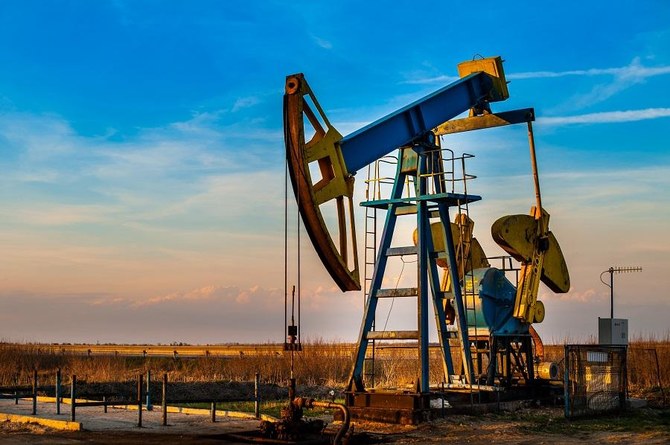
Oil prices are also drawing support from forecasts for limited US output growth. (Shutterstock)
Short Url
Updated 21 June 2021
Follow

Oil prices climb as Iran nuclear talks drag on

  • Brent crude for August gained 35 cents, or 0.5 percent, to $73.86 a barrel by 0344 GMT

SINGAPORE: Oil prices rose on Monday, underpinned by strong demand during the summer driving season and a pause in talks to revive the Iran nuclear deal that could indicate a delay in resumption of supplies from the OPEC producer.
Brent crude for August gained 35 cents, or 0.5 percent, to $73.86 a barrel by 0344 GMT. US West Texas Intermediate (WTI) crude for July was at $72.05 a barrel, up 41 cents, or 0.6 percent.
Both benchmarks have risen for the past four weeks amid optimism over the pace of global vaccinations and a pick up in summer travel. The rebound has pushed up spot premiums for crude in Asia and Europe to multi-month highs.
“The rebound in demand in the northern hemisphere summer is so strong that the market is becoming increasingly concerned about further sharp drawdowns on inventories,” ANZ analysts said in a note.
Negotiations to revive the Iran nuclear deal took a pause on Sunday after hard-line judge Ebrahim Raisi won the country’s presidential election. Two diplomats said they expected a break of around 10 days.
The election could delay the nuclear deal as Iran has insisted that US sanctions placed on Raisi be removed before an agreement is reached, analysts from ANZ, Commonwealth Bank of Australia and ING said.
However, CBA analyst Vivek Dhar said Raisi’s win is unlikely to derail efforts to revive the nuclear deal given the potential economic windfall for Iran if sanctions are lifted.
Oil prices are also drawing support from forecasts for limited US output growth.
OPEC officials have heard from industry experts that US oil output growth will likely remain limited in 2021 despite rising prices, OPEC sources said last week, giving the group more power to manage the market in the short term before a potentially strong rise in shale output in 2022.
“We expect strong demand and supplies to be tight,” Phillips Futures analyst Avtar Sandu said, adding investors were looking to the next meeting of the Organization of the Petroleum Exporting Countries with its allies for supply outlook.
Higher US refinery processing rates have narrowed front-month WTI’s discount to Brent to under $2 a barrel for the first time since November, limiting US crude exports to global markets, analysts said.
Still, US oil rig count, an early indicator of future output, rose by eight last week to 373, the highest since April 2020, data from energy services firm Baker Hughes Co. showed.


Saudi investment pipeline active as reforms advance, says Pakistan minister

Updated 19 min 33 sec ago
Follow

Saudi investment pipeline active as reforms advance, says Pakistan minister

ALULA: Pakistan’s Finance Minister Mohammed Aurangzeb described Saudi Arabia as a “longstanding partner” and emphasized the importance of sustainable, mutually beneficial cooperation, particularly in key economic sectors.

Speaking to Arab News on the sidelines of the AlUla Conference for Emerging Market Economies, Aurangzeb said the relationship between Pakistan and Saudi Arabia remains resilient despite global geopolitical tensions.

“The Kingdom has been a longstanding partner of Pakistan for the longest time, and we are very grateful for how we have been supported through thick and thin, through rough patches and, even now that we have achieved macroeconomic stability, I think we are now well positioned for growth.”

Aurangzeb said the partnership has facilitated investment across several sectors, including minerals and mining, information technology, agriculture, and tourism. He cited an active pipeline of Saudi investments, including Wafi’s entry into Pakistan’s downstream oil and gas sector.

“The Kingdom has been very public about their appetite for the country, and the sectors are minerals and mining, IT, agriculture, tourism; and there are already investments which have come in. For example, Wafi came in (in terms of downstream oil and gas stations). There’s a very active pipeline.”

He said private sector activity is driving growth in these areas, while government-to-government cooperation is focused mainly on infrastructure development.

Acknowledging longstanding investor concerns related to bureaucracy and delays, Aurangzeb said Pakistan has made progress over the past two years through structural reforms and fiscal discipline, alongside efforts to improve the business environment.

“The last two years we have worked very hard in terms of structural reforms, in terms of what I call getting the basic hygiene right, in terms of the fiscal situation, the current economic situation (…) in terms of all those areas of getting the basic hygiene in a good place.”

Aurangzeb highlighted mining and refining as key areas of engagement, including discussions around the Reko Diq project, while stressing that talks with Saudi investors extend beyond individual ventures.

“From my perspective, it’s not just about one mine, the discussions will continue with the Saudi investors on a number of these areas.”

He also pointed to growing cooperation in the IT sector, particularly in artificial intelligence, noting that several Pakistani tech firms are already in discussions with Saudi counterparts or have established offices in the Kingdom.

Referring to recent talks with Saudi Minister of Economy and Planning Faisal Alibrahim, Aurangzeb said Pakistan’s large freelance workforce presents opportunities for deeper collaboration, provided skills development keeps pace with demand.

“I was just with (Saudi) minister of economy and planning, and he was specifically referring to the Pakistani tech talent, and he is absolutely right. We have the third-largest freelancer population in the world, and what we need to do is to ensure that we upscale, rescale, upgrade them.”

Aurangzeb also cited opportunities to benefit from Saudi Arabia’s experience in the energy sector and noted continued cooperation in defense production.

Looking ahead, he said Pakistan aims to recalibrate its relationship with Saudi Arabia toward trade and investment rather than reliance on aid.

“Our prime minister has been very clear that we want to move this entire discussion as we go forward from aid and support to trade and investment.”