

Global consortium completes $12.4bn stake sale in Aramco unit

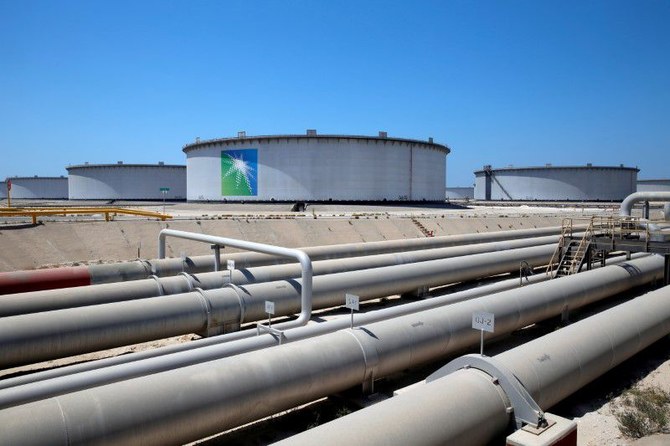
Aramco retains a 51-percent majority stake in the subsidiary. (File/Reuters)
Short Url
Updated 19 June 2021
Follow

Global consortium completes $12.4bn stake sale in Aramco unit

  • It is part of the company’s long-term strategy to maximize its profit by optimizing its portfolio as Saudi Arabia seeks to diversify its income sources

DUBAI: Saudi Aramco has completed a $12.4 billion stake sale in its natural gas pipeline network to a global consortium that includes US-based EIG and Abu Dhabi’s Mubadala.

The international consortium, which consists of broad cross-section investors from North America, Asia and the Middle East, acquired 48 percent of the Aramco Oil Pipelines Co.

It is part of the company’s long-term strategy to maximize its profit by optimizing its portfolio as Saudi Arabia seeks to diversify its income sources.

“We are pleased to conclude this transaction with the global consortium. The interest we have received from investors shows strong confidence in our operations and the long-term outlook for our business,” Aramco President Amin Nasser said.

“We plan to continue to explore opportunities to capitalize on our industry-leading capabilities and attract the right type of investment to Saudi Arabia,” he added.

As part of the transaction, Aramco and its subsidiary entered into a 25-year leaseback agreement for the company’s stabilized crude oil pipeline network.

In return, Aramco Oil Pipelines Co. will receive a tariff payable by Aramco for stabilized crude oil that flows through the network.

Aramco retains a 51-percent majority stake in the subsidiary, and the transaction does not impose any restrictions on Aramco’s crude oil production volumes.


UAE homebuilders to prioritize cash conservation amid regional conflict: Fitch

Updated 7 sec ago
Follow

UAE homebuilders to prioritize cash conservation amid regional conflict: Fitch

RIYADH: UAE homebuilders are expected to pivot toward preserving liquidity in the wake of the recent geopolitical shock in the Middle East, according to Fitch Ratings.

The credit ratings agency noted that while the immediate impact on the sector has seen a drop in on-site viewings, a substantial backlog of pre-sales and funds held in escrow should provide a cushion for rated companies in the near term.

The escalation of regional hostilities is presenting the first significant challenge to the UAE’s property boom.

Since Feb. 27, the last day of trading before the conflict began and subsequent market closure, shares of major developers have trended downward. Aldar Properties has seen its share price decline by 22.2 percent, while Emaar Properties has dropped 21.9 percent to date.

Fitch’s analysis focused on a portfolio of UAE developers clustered at the “B+” and “BB-” rating levels.

“Even before the conflict, the region was exposed to geopolitical risks. Booming housing construction was already reliant on overseas demand, which we expect to be subdued due to the conflict,” Fitch said.

Citing data from Property Monitor, the agency noted that resident demand constitutes only 40 percent of end-users in Dubai, highlighting the market’s exposure to fluctuations in global investor confidence.

“Housing demand in some cities, such as Dubai or Sharjah, partly aligns with new business infrastructure and locations, while other housing demand is more investment-focused,” the report added.

The rated homebuilders operate primarily on an off-plan sales model, where purchaser funds are held in escrow and released to developers upon achieving construction milestones. Fitch noted that projects already substantially pre-sold are likely to reach completion, even if broader supply chains face disruptions.

The agency expected the more agile construction firms to deliver these projects on time and on budget.

The feasibility of future developments is now under scrutiny as these projects typically rely on debt as seed capital and are vulnerable to potential declines in average selling prices.

“The main cash outflow and need for debt is for funding land — 20 percent of end-value — and initial infrastructure spend,” the report stated.

Developers generally require a pre-sale threshold of 60–65 percent to begin construction viably. While end-profit margins for these projects remain healthy at a minimum of 20 percent, Fitch emphasized that capturing those profits is currently secondary to ensuring group-wide liquidity.

Looking ahead, Fitch indicated that future rating actions will depend heavily on how companies manage cash conservation and the visibility they have before committing to new debt-funded investments.

The agency anticipated that UAE authorities would step in to support the crucial real estate industry, which is integral to various cities’ strategies for infrastructure growth and investment.

Potential government measures could include deferred payment plans for land purchases, greater flexibility in escrow mechanisms, or financing initiatives to attract buyers.

Fitch cautioned that in past downturns, homebuilders have resorted to providing direct financing or loosening payment plans for purchasers, measures that ultimately increased the developers’ own debt burdens.