



RIYADH: Dubai’s Majid Al Futtaim, which currently operates 21 Carrefour stores across nine cities in Saudi Arabia, plans to double its store network in the Kingdom by 2025.
Hani Weiss, CEO of Majid Al Futtaim Retail, told Arab News: “Carrefour operates different store formats, as well as multiple online offerings to meet the growing needs of its diversified customer base. It currently operates 21 stores across nine cities in Saudi Arabia. This year, Majid Al Futtaim is working toward opening six new stores in the Kingdom, including three hypermarkets and three supermarkets, and plans to double its store footprint by 2025.”
With the surge in online shopping during the coronavirus (COVID-19) pandemic, Majid Al Futtaim recorded a 285 percent rise in online sales in Saudi Arabia last year, leading the company to accelerate the expansion of its online operation in the Kingdom.
“This included opening a large online fulfilment center in Riyadh and activating nine of our customer stores to also fulfil online orders. The opening of our automated fulfilment center in Jeddah is the latest in Majid Al Futtaim’s digital transformation of its Carrefour operations,” Weiss said.
“We have accelerated our e-commerce offering as we believe this will be a key growth driver of our grocery business in Saudi as part of the complete digital and omnichannel transformation of our grocery business,” he added.
The 9,000 square meter center in Riyadh is Majid Al Futtaim’s largest for its online Carrefour business and operates 24 hours a day, seven days a week, handling up to 5,000 orders per day.
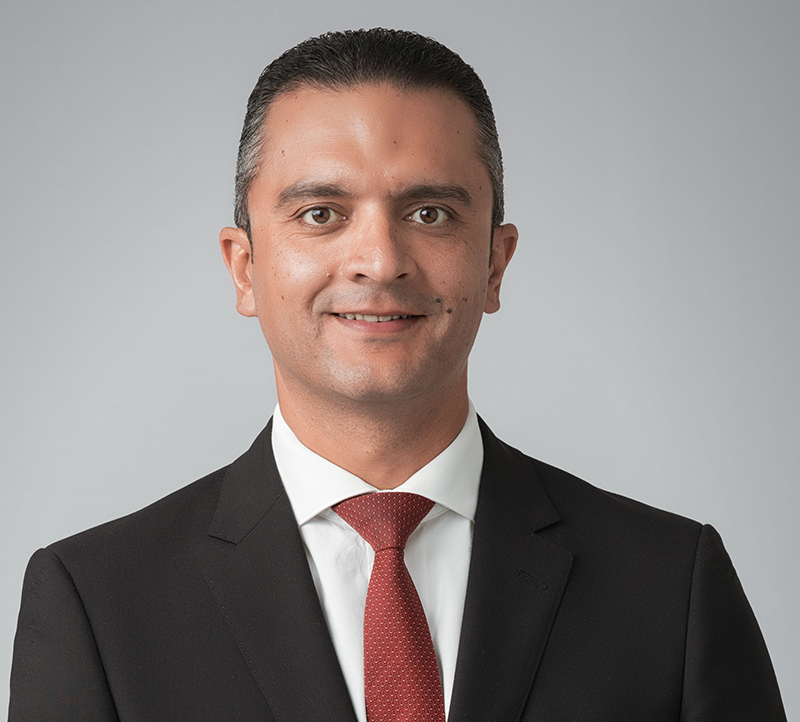
Hani Weiss, CEO of Majid Al Futtaim Retail
More than 500 workers process the orders, which are delivered by a fleet of 150 refrigerated trucks.
Majid Al Futtaim recently launched an automated fulfilment center at its Carrefour store in Jeddah’s Al-Sulaymaniyah. The digitised storage picking facility halves the time needed to process orders. “A second center is set to open in 2022 to serve Riyadh, with a further five to seven more planned to open in the Kingdom in coming years, including in the Eastern Province,” Weiss said.
Automated fulfilment centers use artificial intelligence to pick customers’ orders, while mobile robots assist the human workers to retrieve items and maintain stock levels, he said.
As part of its expansion in Saudi Arabia, Majid Al Futtaim last month signed an agreement with global infrastructure consulting firm AECOM to help plan development of the retailer’s Mall of Saudi in Riyadh, its flagship project in the Kingdom. The mall is set to break ground in the fourth quarter of this year and will include 600 stores across 300,000 square meters of gross leasable area. At present, half the space has been reserved by retailers.
Mall of Saudi will also include the largest ski slope and snow park in the Middle East, luxury hotels, branded residences, a Carrefour hypermarket and 31 VOX Cinema screens, including the world’s largest IMAX, and a Magic Planet.
Majid Al Futtaim, which employs 43,000 people in 17 markets and operates 27 shopping malls, 13 hotels and four mixed-use communities, reported a 7 percent year-on-year fall in revenues to AED32.6 billion ($8.88 billion) in 2020, resulting in a net loss of AD2.7 billion, compared with a loss of AED1.9 billion in 2019.


