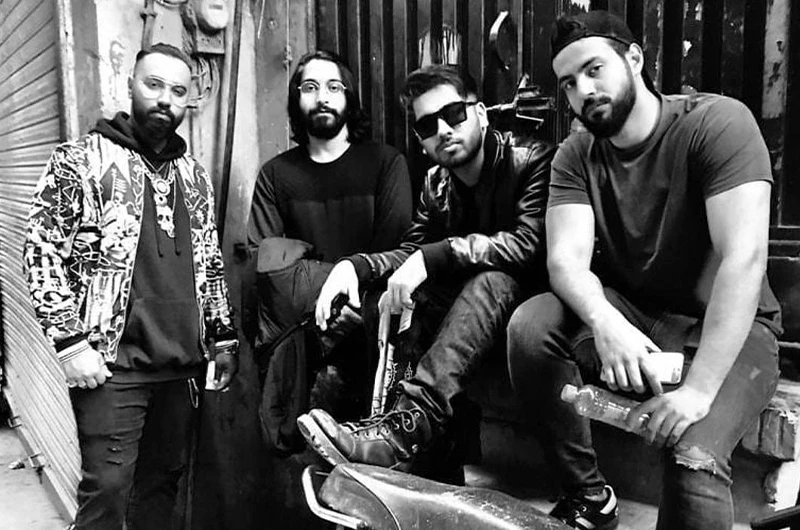
- Gawky Gang’s three members met in Riyadh and became known as the only three Pakistani rappers in the Saudi capital
- Though they are now based in Pakistan, they hope to take their music back to Saudi Arabia soon “on a bigger scale, Insha’Allah!”
RAWALPINDI: Mohad Ali, the only Pakistani in a group of Arab rappers in Riyadh, was instantly drawn to compatriots Muzammil Wahid and Raamis Ali when he met them in 2009 at a time the hip-hop and rap music scene was evolving among locals and expatriates alike in the Kingdom’s small but talent-packed community.
Thus was born Gawky Gang, a rap band that was initially influenced by the members’ experience of growing up as Pakistanis in Saudi Arabia but whose repertoire has since expanded to include much broader themes like social justice and women empowerment.
“Luckily, M.ZHE [Muzammil’s stage name] and I were living in the same neighborhood and started to meet more regularly after realizing we were the only three Pakistani rappers in Riyadh,” Mohad, 23, told Arab News.
“We’d see people rapping in the streets [of Riyadh] and making graffiti art on random walls [as a way to express themselves],” M.ZHE, 24, who hails from the Pakistani city of Faisalabad, said.
Inspired, the group launched the Riyadh City Cypher Series on YouTube, garnering “thousands of likes” for their online videos.
“The Riyadh City Cypher series ... became well known among Riyadh’s Pakistani community... and received love from Pakistan, India and Bangladesh too,” M.ZHE said.
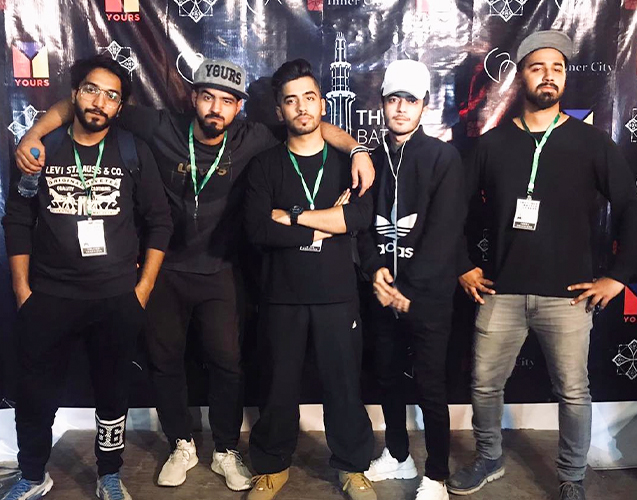
But the initial years were not easy, especially when it came to holding live performances in Saudi Arabia.
But Mohad said the “struggles and difficulties” the rappers faced “influenced us to do more in terms of our music and write about our different experiences growing up in Saudi Arabia.” It also brought the band a loyal fan following among Arab musicians.
“We’ve been appreciated by many Arab rappers, including Faris Albalad … we still receive appreciation messages from him,” Mohad added, saying that support was priceless since it was a response to music produced in a language many Arabs did not understand.
While living in the kingdom, the band members said they mostly performed in English or Arabic, not Urdu or Punjabi, which was their preference.
It was the language barrier that eventually pushed them to return to Pakistan in 2016, they said, and launch the Gawky Records label, an extension of their stage name.
“It is not easy to leave a place where you have spent your entire life, especially your childhood,” Raamis said. “Pakistan is a very welcoming country and full of opportunities, but it was difficult to opt for a completely different lifestyle from which we were used to in Riyadh.”
Also, the hip-hop and rap scene was still in its teething stages in Pakistan in 2016, with many “misconceptions” about the genre.
“It’s a little difficult for our culture to accept,” Hashim Nawaz Malik, one of the artists working with Gawky Records, told Arab News.
But things are taking a turn for the better for the rap scene. A recent edition of the Pakistan Super League (PSL) – the largest domestic T-20 cricket tournament in the country – included rap performances in the series’ official theme song.
“When we first started, there were maybe 100 desi rappers in total,” M.ZHE said. Raamis added: “Now there’s 100 in each street of Karachi.”
Raamis said the Gawky Gang was supportive of local talent too, using earnings from music streams such as Spotify to provide recording, mixing and mastering services to other artists.
“[We are] signing new talent on our label, sponsoring music videos... just for the sake of Pakistani hip hop,” Raamis said.
“We are trying to push everyone who’s with us since day one; this is how we have been since the Saudi Arabian days,” Mohad added.
But even as the band makes more and more music in and about Pakistan, its members still reminisce about Saudi Arabia, especially the food and the early years of producing music.
“Sometimes, when we are sitting in the studio, I get flashbacks from when we were in Saudi Arabia … and now ten years later we are in Pakistan,” M.ZHE said. “Maybe after ten years, we will be in a different country and a different setting but for the sake of music.”
Maybe back in Riyadh, where it all started?
“Exactly! Take the music back to Saudi Arabia,” he said, “back from where it started, but on a bigger scale, Insha’Allah!”