

Qatar’s Al Jazeera network says it combated cyberattack

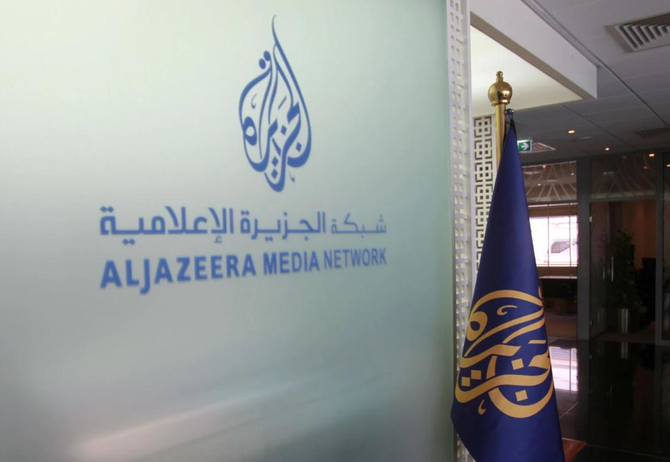
The Al Jazeera Media Network logo is seen inside its headquarters in Doha, Qatar. (File/Reuters)
Short Url
Updated 10 June 2021
Follow

Qatar’s Al Jazeera network says it combated cyberattack

  • Al Jazeera’s websites and platforms experienced continued electronic attacks
  • The Qatar-funded channel’s coverage of Middle East politics is regarded as inflammatory by many in the region

DUBAI: Pan-Arab satellite network Al Jazeera said it was subjected to continual hacking attempts over recent days but the cyberattack on Qatar’s flagship broadcaster had been fended off.

Al Jazeera’s websites and platforms experienced “continued electronic attacks aimed at accessing, disrupting and controlling some of the news platforms” from last Saturday to Tuesday, the network said in a statement.

“Al Jazeera’s service provider was able to monitor and fend off all the hacking attacks and prevent them from achieving their goal,” it said in the late Wednesday statement.

It said the peak of the attacks came on Sunday ahead of a documentary described on Al Jazeera’s Arabic YouTube channel as detailing indirect negotiations between Israel and Palestinian militant group Hamas, which included a voice recording purportedly of an Israeli held prisoner in Gaza.

Al Jazeera had no immediate further comment when contacted by Reuters early on Thursday.

The Qatar-funded channel’s coverage of Middle East politics is regarded as inflammatory by many in the region and was one of the factors that led four Arab states to boycott Qatar in 2017.

Ahead of the embargo, Al Jazeera combated a large-scale cyberattack after Qatar’s state news agency QNA was hacked.

Saudi Arabia and its allies last January announced the end of the row in which the boycotting states accused Qatar of supporting terrorism, an accusation it denies.


Israel says ban on Gaza media access should stay: court document

Updated 05 January 2026
Follow

Israel says ban on Gaza media access should stay: court document

  • Israeli authorities have told the Supreme Court that a ban on international media access to Gaza should remain in place, arguing it is necessary for security reasons

JERUSALEM: Israeli authorities have told the Supreme Court that a ban on international media access to Gaza should remain in place, arguing it is necessary for security reasons, according to a government submission filed by the public prosecutor.
Since the outbreak of the Gaza war in October 2023, Israeli authorities have barred foreign journalists from independently entering the devastated territory.
Instead, Israel has allowed only a limited number of reporters to enter Gaza on a case-by-case basis, embedded with its military forces inside the blockaded territory.
The Foreign Press Association (FPA), which represents hundreds of foreign journalists working in Israel and the Palestinian territories, filed a petition with the Supreme Court in 2024 seeking immediate and unrestricted access for international media to the Gaza Strip.
Since then the court has given several extensions to the Israeli authorities to come up with a plan, but at a hearing last month it set January 4 as a final deadline.
Late on Sunday, the Israeli authorities filed their response with the court, a copy of which was obtained by AFP.
In the submission, the government said the ban on media access to Gaza should continue, citing security risks in the territory.
“Even at this time, entry of journalists into the Gaza Strip without escort, as requested in the petition, should not be permitted,” said the government submission.
“This is for security reasons, based on the position of the defense establishment, which maintains that a security risk associated with such entry still exists.”
The Israeli authorities said the ceasefire in Gaza, which came into effect on October 10, continues to face regular threats.
At least 420 Palestinians have been killed in Gaza by Israeli forces since the ceasefire took effect, according to Gaza’s health ministry.
The Israeli military said three of its soldiers have also been killed by militants during the same period.
The Israeli authorities said in their submission that the search for the remains of the last hostage held in Gaza is ongoing, suggesting that allowing journalists into the territory at this stage could hinder the operation.
The remains of Ran Gvili, whose body was taken to Gaza after he was killed during the Hamas attack on October 7, 2023, have still not been recovered despite the ceasefire.
All other 250 hostages seized on that day — both the living and the deceased — have been returned to Israel.
The Supreme Court is expected to issue a ruling on the matter, though it is unclear when a decision will be handed down.
An AFP journalist sits on the board of the FPA.