

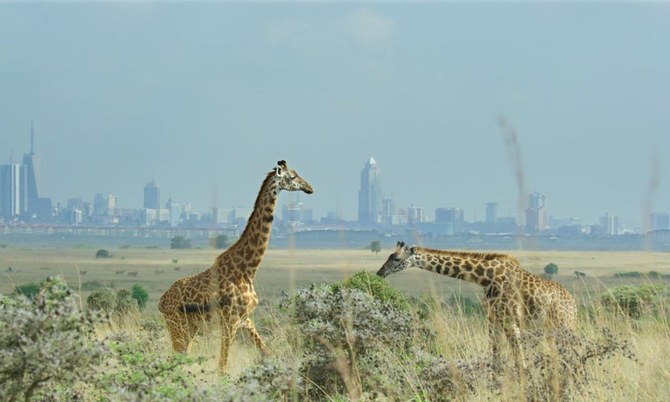
‘Breaking Boundaries’ on Netflix: A desperate call for action to save Earth

The documentary is now streaming on Netflix. Supplied
Short Url
Updated 09 June 2021
Follow

‘Breaking Boundaries’ on Netflix: A desperate call for action to save Earth

CHENNAI: It is no longer a secret that the Earth is under tremendous pressure from the hundreds of thousands of humans who have been plundering it for centuries. Animals have been poached for their body parts, and forests are being plundered for wood, transforming lush greenery into ugly patches of brown.

All these activities contribute in one way or another to climate change, and glaciers have begun to melt, generating higher temperatures and changing weather patterns in a frightening way.

Netflix’s original 75-minute documentary, “Breaking Boundaries: The Science of our Planet,” directed by Jonathan Clay and powerfully narrated by the legendary David Attenborough, sounds a warning note that is loud enough for action, and is notably ambitious in its attempt to educate the average viewer on what is happening in the world around them.

The documentary features Johan Rockstrom, a renowned environmental scientist from Sweden. He does not mince words when he tells us that if humans continue to be callous toward our Earth, life on the planet could become unsustainable. Rockstrom explains it all through the prism of nine natural processes upon which all life on Earth depends, and the limits within each that cannot be exceeded without endangering humanity. He then goes on to explain how we are pushing those limits every day in unflinching detail.


The Netflix original was directed by Jonathan Clay and narrated by David Attenborough. Supplied

Much of the runtime has been devoted to the dark and the depressing. For example, Greenland has been losing 10,000 cubic meters of ice every second, leading to the Earth getting hotter and hotter, and Prof. Terry Hughes laments the bleaching of Australia’s Great Barrier Reef, which Attenborough describes as a “coral graveyard.”

The film talks about disappearing insects, reptiles and animals, and it shows how desperate some among us are to save this planet. For example, the documentary highlights a dispute that occurred after British scientists captured hundreds of short-haired bumblebee queens — used for pollinating food crops — from Sweden in the 1990s after they became extinct in the UK.
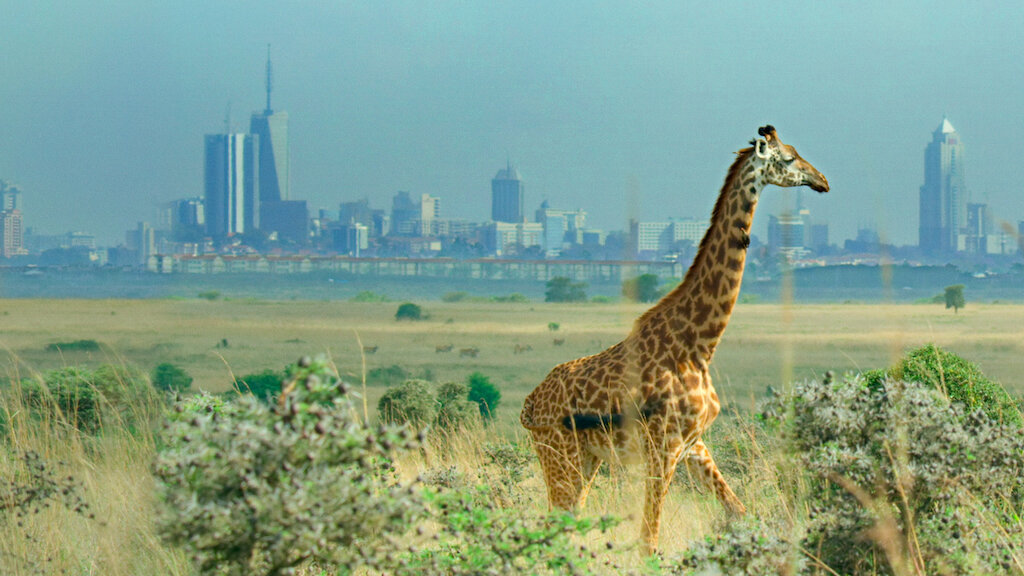


The film talks about disappearing insects, reptiles and animals, and it shows how desperate some among us are to save this planet. Supplied

In fact, the emotional testimony from the world’s leading scientists is compelling, sometimes more so than the dramatic graphics showing Earth in flames or shattering like glass — although both elements work to emphasize the sense of urgency.

Despite the desperate situation we find ourselves in, there is still a sliver of hope, the documentary says, pointing the finger at the world’s political leaders who have the power to reduce the negative effects of mass industrialization.

The commentary was so engaging and such an eye-opener that my attention hardly ever veered toward the imagery, which was of course magnificent.

Photography by Adam Lincoln in the documentary is simply breathtaking, and the images of lush rainforests as well as white icy expanses and underwater creatures manage to take us away from the darkness of the subject. And despite a large part of the film being commentary, one did not find the work lagged at all, packed as it is with so much information.


Russian cyclist finds warm welcome on Saudi Arabia’s roads 

Updated 20 January 2026
Follow

Russian cyclist finds warm welcome on Saudi Arabia’s roads 

  • Anna Rodnishcheva’s ride through Kingdom is defining chapter in solo expedition
  • Rodnishcheva cycled to Aqaba, crossed the border into Saudi Arabia, and has since traveled through Tabuk, AlUla, Madinah, Jeddah, and Taif on her way to Riyadh

MAKKAH: Solo adventurer Anna Rodnishcheva, 27, has undertaken an ambitious journey that spans countries, climates and cultures — on a bicycle. 

Born and raised in Moscow and trained as a biologist before becoming an event photographer, she now finds herself pedaling thousands of kilometers across unfamiliar landscapes in pursuit of discovery, connection, and the simple joy of movement.

In her conversation with Arab News, Rodnishcheva offered a detailed account of her ongoing route in Saudi Arabia, describing how the expedition is her third major cycling adventure.

After previously riding from Moscow to Sochi and later from Vladivostok to Sochi — a route that stretches across the entirety of Russia — she felt compelled to explore foreign lands by bicycle.

She set off from Moscow heading south last June, passing through Russia, Georgia, and Turkiye before flying from Antalya to Amman. She cycled to Aqaba, crossed the border into Saudi Arabia, and has since traveled through Tabuk, AlUla, Madinah, Jeddah, and Taif on her way to Riyadh.

Rodnishcheva explained that physical preparation played only a small role in her planning. She began slowly and allowed her body to adapt naturally over the first month. 

The true challenge, she said, was in the mental and financial preparation. She spent a year and a half planning the journey, even though she originally intended to postpone it for several more years. 

Ultimately, her belief that “life is short” convinced her to start with the resources she already had. Although she sought medical evaluations and additional vaccinations, she was unable to complete them all and decided to continue regardless.

Her journey through Georgia and Turkiye presented unexpected difficulties. Simple tasks such as finding groceries or locating bicycle repair shops became more challenging outside of Russia, where she knew how to navigate on a budget. 

She also encountered language barriers, though the situation improved when a local cyclist joined her in Georgia. The intense midsummer heat added another layer of difficulty, but she had prepared herself for such conditions.

One of the most striking moments of her trip occurred as she crossed from Jordan into Saudi Arabia. She described the experience as surreal and emotionally overwhelming, likening it to the adventures of a literary hero traveling across the Arabian Peninsula. 

Her anxiety eased unexpectedly when she got a flat tire at the border, bringing her back to the present. 

Despite being warned that crossing by bicycle would be prohibited, the process went smoothly, and she was struck by the friendliness of both Jordanian and Saudi officials. She expressed particular surprise at meeting a female Saudi passport officer, an encounter that challenged her previous assumptions about women’s roles in the Kingdom.

Rodnishcheva said the hospitality she had experienced in Saudi Arabia surpassed anything she had encountered on previous journeys. Drivers frequently stop to offer her water, fruit, or sweets, and several families have generously hosted her in their homes or guest flats. 

She emphasized that she feels completely safe traveling across the Kingdom, especially on the open roads between cities, noting the strong and visible security presence.

She has also observed significant differences in weather. While the stretch from the border to Jeddah was hot despite being winter, the climate changed dramatically after climbing Al-Hada in Taif, turning cooler and windier — a climate she compared to Russian summers.

Rodnishcheva documents her travels primarily through Russian-language platforms such as VK and Telegram. Although she maintains YouTube and Instagram accounts, she explained that her schedule left little time for frequent updates.

Offering a message to women around the world who dream of embarking on similar adventures, she said such journeys were “not as scary as they seem before you start,” though they may not suit everyone.

Her closing advice? “Listen to your heart.”