

France to set up agency to combat foreign fake election news

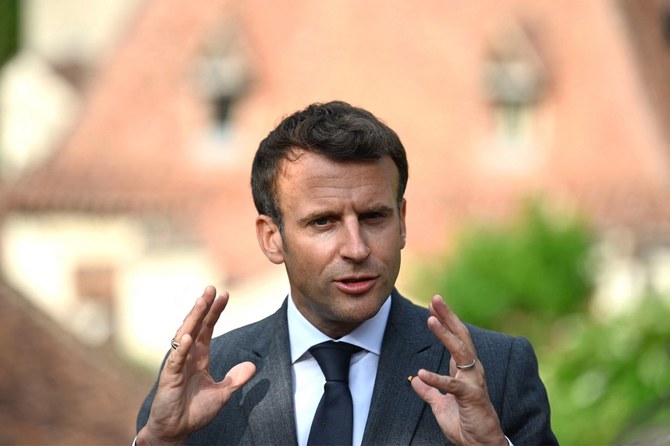
Russian-linked groups were accused of a huge hacking attack on the party of centrist French President Emmanuel Macron in 2017. (File/AFP)
Short Url
Updated 04 June 2021
Follow

France to set up agency to combat foreign fake election news

  • France Wwill set up a special agency to combat foreign misinformation and fake news generated to “undermine the state.”
  • The agency will be run by the bureau of the French Secretariat-General for National Defense and Security.

LONDON: France has revealed plans to set up a special agency to combat foreign misinformation and fake news generated to “undermine the state.”

The move, announced by government officials on Wednesday, was designed to tackle attempts to influence voting in the run-up to the country’s upcoming presidential elections.

The agency, expected to be launched in September, will be run by the bureau of the French Secretariat-General for National Defense and Security (SGDSN) and will employ up to 60 people to investigate online content.

SGDSN chief, Stephane Bouillon, pointed out that the agency would not act as an intelligence service and was “not about correcting or establishing the truth” but rather identifying attacks that came “from a foreign country or organization that aims to destabilize the state politically.”

During the 2017 presidential elections in France, Russian-linked groups were accused of a huge hacking attack on the party of centrist French President Emmanuel Macron, who was facing anti-EU nationalist Marine Le Pen.

The same groups were also blamed for attempting to rig the 2016 US election in favor of former American President Donald Trump and of meddling in Britain’s Brexit vote.


DCO and Arab News partner to combat digital misinformation, explore AI’s impact on media

Updated 06 February 2026
Follow

DCO and Arab News partner to combat digital misinformation, explore AI’s impact on media

KUWAIT CITY: The Digital Cooperation Organization (DCO) and the international Saudi newspaper Arab News have signed a Letter of Engagement aimed at strengthening knowledge and expertise exchange on the impact of artificial intelligence in the media sector, as well as leveraging expert insights to develop best practices to combat online misinformation amid accelerating technological advancements.

DCO said this step aligned with its efforts to strengthen collaboration with international media institutions to support responsible dialogue around digital transformation and contribute to building a more reliable, inclusive, and sustainable digital media environment.

Commenting on the agreement, Deemah AlYahya, Secretary-General of the Digital Cooperation Organization, said: “At a moment when AI is reshaping how truth is produced, distributed, and trusted, partnership with credible media institutions is essential.”

She added that “working with Arab News allows us to bridge technology and journalism in a way that protects integrity, strengthens public trust, and elevates responsible innovation. This collaboration is about equipping media ecosystems with the tools, insight, and ethical grounding needed to navigate AI’s impact, while ensuring digital transformation serves people and their prosperity.”

Faisal J. Abbas, Editor-in-Chief of Arab News, emphasized that the partnership enhances media institutions’ ability to keep pace with technological shifts, noting that engagement with representatives of DCO Member States enables deeper understanding of emerging technologies and regulatory developments in the digital space.

He added: “DCO’s commitment to initiatives addressing online content integrity reflects a clear dedication to supporting a responsible digital environment that serves societies and strengthens trust in the digital ecosystem.”

The Letter of agreement was signed on the sidelines of the Fifth DCO General Assembly held in Kuwait City under the theme “Inclusive Prosperity in the Age of AI”, alongside the second edition of the International Digital Cooperation Forum, held from 4–5 February, which brought together ministers, policymakers, business leaders, entrepreneurs, and civil society representatives from more than 60 countries to strengthen international cooperation toward a human-centric, inclusive, and sustainable digital economy.