

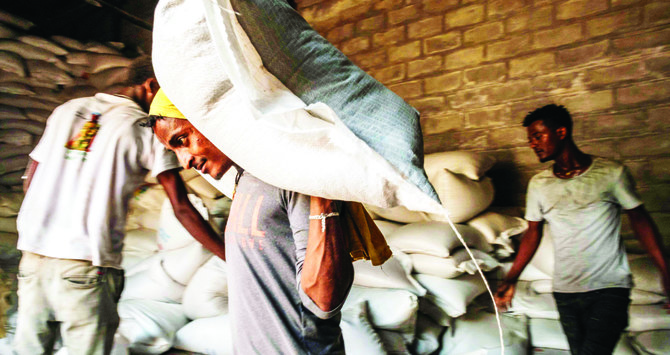
World food price index surges in May to highest level since 2011

The Food and Agriculture Organization’s food price index, which measures monthly changes for a basket of cereals, oilseeds, dairy products, meat and sugar, averaged 127.1 points last month versus a revised 121.3 in April. (AFP)
Short Url
Updated 04 June 2021
Follow

World food price index surges in May to highest level since 2011

  • FAO’s cereal price index rose 6.0 percent in May month-on-month and 36.6 percent year-on-year

ROME: World food prices rose in May at their fastest monthly rate in more than a decade, posting a 12th consecutive monthly increase to hit their highest level since September 2011, the United Nations food agency said on Thursday.
FAO also issued its first forecast for world cereal production in 2021, predicting output of nearly 2.821 billion tons — a new record and 1.9 percent up on 2020 levels.
The Food and Agriculture Organization’s food price index, which measures monthly changes for a basket of cereals, oilseeds, dairy products, meat and sugar, averaged 127.1 points last month versus a revised 121.3 in April.
The April figure was previously given as 120.9.
On a year-on-year basis, prices were up 39.7 percent in May.
FAO’s cereal price index rose 6.0 percent in May month-on-month and 36.6 percent year-on-year. Maize prices led the surge and are now 89.9 percent above their year-earlier value, however FAO said they fell back at the end of the month, lifted by an improved production outlook in the US.

FASTFACT

1.9%

FAO also issued its first forecast for world cereal production in 2021, predicting output of nearly 2.821 billion tons — a new record and 1.9 percent up on 2020 levels.

The vegetable oil price index jumped 7.8 percent in May, lifted primarily by rising palm, soy and rapeseed oil quotations. Palm oil prices were boosted by slow production growth in southeast Asia, while prospects of robust global demand, especially from the biodiesel sector, drove up soyoil prices.
The sugar index posted a 6.8 percent month-on-month gain, due largely to harvest delays and concerns over reduced crop yields in Brazil, the world’s largest sugar exporter, FAO said.
The meat index rose 2.2 percent from April, with quotations for all meat types buoyed by a faster pace of import purchases by east Asian countries, mainly China.
Dairy prices rose 1.8 percent on a monthly basis and were up 28 percent on a year earlier. The increase was led by “solid import demand” for skim and whole milk powders, while butter prices fell for the first time in almost a year on increased export supplies from New Zealand.
FAO said its forecast for record world cereal production this year was underpinned by a projected 3.7 percent annual growth in maize output. Global wheat production was seen rising 1.4 percent year-on-year, while rice production was forecast to grow 1.0 percent.
World cereal utilization in 2021/22 was seen increasing by 1.7 percent to a new peak of 2.826 billion tons, just above production levels.
“Total cereal food consumption is forecast to rise in tandem with world population,” FAO said.


Saudi Tourism Development Fund signs deal to explore new resort developments 

Updated 8 sec ago
Follow

Saudi Tourism Development Fund signs deal to explore new resort developments 

RIYADH: Saudi Arabia’s hotel supply is set to expand after the Tourism Development Fund signed a deal with Palladium Hotel Group to study new resort projects. 

The memorandum of understanding will assess opportunities and conduct feasibility studies for tourism projects, including identifying appropriate investment structures and reviewing technical and operational arrangements, according to a press release.  

The initial focus of the collaboration will be on tourism investment opportunities in Jeddah and Yanbu, leveraging TDF’s incentives and investment enablers. 

The move is part of TDF’s efforts to attract investment and support the Kingdom’s tourism sector, in line with the National Tourism Strategy and Saudi Vision 2030. 

This comes as Saudi Arabia reached its original 2030 tourism target of 100 million visitors seven years ahead of schedule, leading authorities to raise the goal to 150 million. 

TDF CEO Qusai bin Abdullah Al-Fakhri said the agreement marks a new milestone in the fund’s efforts to attract global expertise and develop world-class tourism facilities across the Kingdom. 

Palladium Hotel Group CEO Jesus Sobrino described the partnership as a unique opportunity to explore entry into Saudi Arabia’s fast-growing tourism sector, noting the Kingdom’s rapid growth and distinctive investment prospects. 

Palladium Hotel Group operates 45 hotels worldwide and has more than 50 years of experience developing and managing hospitality assets across international markets. The collaboration with TDF marks a continued effort to position Saudi Arabia as a leading global tourism destination, supporting economic diversification and enriching visitor experiences. 

TDF is Saudi Arabia’s national enabler for the tourism sector, providing financial and non-financial support to develop major projects. It works to attract international investment, build partnerships, and support the goals of Saudi Vision 2030. 

The new MoU with Palladium Hotel Group follows a series of recent partnerships by TDF, including agreements signed last December worth more than SR4 billion ($1 billion), which expanded financing for tourism MSMEs. 

Through its Tourism Empowerment Programs, TDF has delivered nearly SR3 billion in funding, created over 74,000 jobs, and supported more than 10,000 enterprises, forming part of its strategy to attract global investors and develop projects aligned with Saudi Vision 2030.