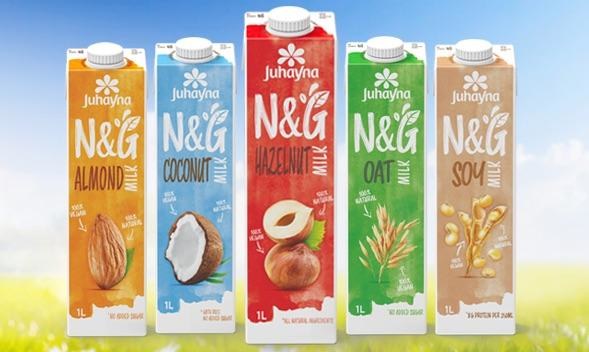
RIYADH: ADQ is considering acquiring a stake in Juhayna Food Industries as the Abu Dhabi sovereign wealth fund pursues more deals in Egypt, Bloomberg reported citing people familiar with the matter.
Abu Dhabi’s newest state fund has been weighing a potential investment in Egypt’s largest dairy and juice producer, the people said, asking not to be identified as the matter is private. Shares in Juhayna have fallen 29 percent this year, giving the company a market value of 4 billion Egyptian pounds ($254 million).
Deliberations are in the early stages and there’s no certainty ADQ will proceed with any transaction, the people said.
ADQ has been among the most active Middle East investors since its inception in 2018 and has been looking for deals beyond the UAE, focusing on Egypt, Bloomberg said.

Abu Dhabi’s ADQ said to eye stake in top Egyptian dairy firm
https://arab.news/r4ca5
Abu Dhabi’s ADQ said to eye stake in top Egyptian dairy firm
- DQ has been among the most active Middle East investors since its inception in 2018
Saudi business optimism holds firm above 60 on non-oil strength
RIYADH: Saudi Arabia’s Business Confidence Index held at 61.6 points in January, reflecting sustained optimism across the Kingdom’s non-oil sectors, official data showed.
The index slipped 0.6 percent from 62 points in December, the General Authority for Statistics said, but remained well above the neutral 50 threshold, indicating continued expansion in business sentiment.
The sustained momentum in the BCI underscores the progress made under Saudi Arabia’s Vision 2030 agenda, which seeks to diversify the economy by reducing reliance on crude revenues.
“The index continues to reflect prevailing optimism in the business sector, supported by establishments’ confidence in the stability of economic activity and the continued growth across various sectors,” said GASTAT.
According to the report, the BCI for the industrial sector recorded 61.7 points in January, maintaining an optimistic level despite a slight decline of 0.8 percent compared to the previous month.
The slight decline in the industrial sector was driven by weaker confidence around current input costs and expectations for the coming month.
In January, the BCI for the services sector recorded 61.3 points, marginally down 1.2 percent from December, due to a limited decline in confidence related to input costs for the current month and expected inputs for the coming month.
The construction sector’s BCI stood at 61.6 points in January, marking a slight fall of 0.3 percent compared to the previous month.
“The marginal decrease (in the construction sector) is attributed to a limited decline in confidence among construction sector establishments, particularly with regard to input costs for the current month and expected inputs for the coming month,” added GASTAT.
Earlier this month, the Riyad Bank Purchasing Managers’ Index compiled by S&P Global showed Saudi Arabia’s PMI at 56.3 in January, driven by output growth, improving market conditions and stronger demand among non-oil businesses.
A separate January report by Standard Chartered forecasts Saudi Arabia’s economy will expand 4.5 percent in 2026, supported by sustained momentum in both hydrocarbon and non-oil sectors. The bank expects non-oil growth at a similar pace, driven by investment and consumption.


