

Human Rights Watch says Houthis blocking COVID-19 vaccines

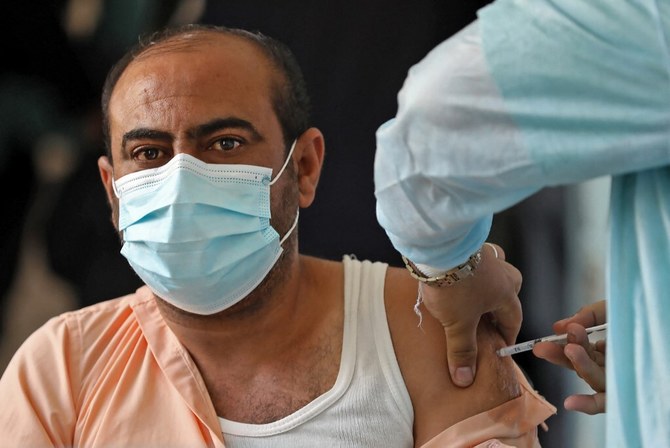
A Yemeni health worker receives a dose of the AstraZeneca COVID-19 vaccine at a vaccination centre in Yemen's third city of Taez, on April 21, 2021. (AFP)
Short Url
Updated 02 June 2021
Follow

Human Rights Watch says Houthis blocking COVID-19 vaccines

  • Iran-backed Yemen militia says coronavirus is a US conspiracy
  • Yemen received 360,000 doses of the AstraZeneca vaccine on March 31

JEDDAH: 

The Iran-backed Houthi militia was accused on Tuesday of risking lives in northern Yemen by blocking people’s access to coronavirus vaccines.


Houthi leaders have suppressed information about the dangers of COVID-19 and the prevalence of the disease in territory under their control, including the capital, Sanaa, Human Rights Watch said.

“Since the start of the pandemic in Yemen in April 2020, Houthi officials have actively spread disinformation about the virus and vaccines,” the rights group’s deputy Middle East director, Michael Page, said.

“The deliberate decision of the Houthi authorities to keep the real number of cases of COVID-19 under wraps and their opposition to vaccines are putting Yemeni lives at risk.

“Pretending COVID-19 does not exist is not a mitigation strategy and will only lead to mass suffering. Given the weakened healthcare system in Yemen, Houthi authorities should at least ensure transparency so that civilians living in their areas can understand the scale of the pandemic and facilitate an international vaccination plan that meets the needs on the ground.”

Yemen received 360,000 doses of the AstraZeneca vaccine on March 31, the first of 1.9 million doses to be delivered this year through the Covax program for poorer countries. Yemen’s COVID-19 vaccination campaign began in government-held areas on April 20, giving a boost to a healthcare system shattered by war, economic collapse and a shortfall in humanitarian aid funding.

A batch of 10,000 of those doses intended for Houthi-run areas has been caught up in wrangling between parties over how it would be administered, according to humanitarian aid sources and Yemeni officials.

The World Health Organization’s representative in Yemen, Adham Abdel-Moneim, said the 10,000 vaccine doses had arrived at Sanaa airport on Monday and were now in cold storage.

Houthi authorities, who control Sanaa and most major urban areas in northern Yemen, have provided no coronavirus infection or fatality figures since a couple of cases in May 2020. But numbers of confirmed cases in the rest of Yemen started to rise rapidly in mid-February.

The government’s emergency coronavirus committee has recorded 6,742 coronavirus infections and 1,321 deaths so far, although the true figure is widely thought to be much higher as the war has restricted COVID-19 testing and reporting.

Senior Houthi leaders have dismissed the coronavirus as a conspiracy. “America bears the primary responsibility for the COVID-19 epidemic,” militia chief Abdul Malik Al-Houthi said last year.


Family of Palestinian-American shot dead by Israeli settler demand accountability

Updated 21 February 2026
Follow

Family of Palestinian-American shot dead by Israeli settler demand accountability

  • Relatives say Abu Siyam was among about 30 residents from the village of Mukhmas who confronted armed settlers attempting to steal goats from the community

LONDON: The family of a 19-year-old Palestinian-American man reportedly shot dead by an Israeli settler in the occupied West Bank have demanded accountability, amid mounting scrutiny over a surge in settler violence and a lack of prosecutions.

Nasrallah Abu Siyam, a US citizen born in Philadelphia, was killed near the city of Ramallah on Wednesday, becoming at least the sixth American citizen to die in incidents involving Israeli settlers or soldiers in the territory in the past two years.

Relatives say Abu Siyam was among about 30 residents from the village of Mukhmas who confronted armed settlers attempting to steal goats from the community. Witnesses said that stones were thrown by both sides before settlers opened fire, wounding at least three villagers.

Abu Siyam was struck and later died of his injuries.

Abdulhamid Siyam, the victim’s cousin, said the killing reflected a wider pattern of impunity.

“A young man of 19 shot and killed in cold blood, and no responsibility,” he told the BBC. “Impunity completely.”

The US State Department said that it was aware of the death of a US citizen and was “carefully monitoring the situation,” while the Trump administration said that it stood ready to provide consular assistance.

The Israeli embassy in Washington said the incident was under review and that an operational inquiry “must be completed as soon as possible.”

A spokesperson for the Israeli Defense Forces said troops were deployed to the scene and used “riot dispersal means to restore order,” adding that no IDF gunfire was reported.

The military confirmed that the incident remained under review and said that a continued presence would be maintained in the area to prevent further unrest.

Palestinians and human rights organizations say such reviews rarely lead to criminal accountability, arguing that Israeli authorities routinely fail to prosecute settlers accused of violence.

A US embassy spokesperson later said that Washington “condemns this violence,” as international concern continues to grow over conditions in the occupied West Bank.

Palestinians and human rights groups say Israeli authorities routinely fail to investigate or prosecute settlers accused of violence against civilians.

Those concerns were echoed this week by the UN, which warned that Israel’s actions in the occupied West Bank may amount to ethnic cleansing.

A UN human rights office report on Thursday said that Israeli settlement expansion, settler attacks and military operations have increasingly displaced Palestinian communities, with dozens of villages reportedly emptied since the start of the Gaza war.

The report also criticized Israeli military tactics in the northern West Bank, saying that they resembled warfare and led to mass displacement, while noting abuses by Palestinian security forces, including the use of unnecessary lethal force and the intimidation of critics.

Neither Israel’s foreign ministry nor the Palestinian Authority has commented on the findings.