



MAKKAH: It is no secret that generosity runs deep in Saudi society, even to the point of saving lives.
And organ donation, permissible in Islam, is one of the greatest acts of charity.
In 2017, there were 19,659 dialysis patients in Saudi Arabia, most aged between 26 and 60, with only 1 percent under 15 years of age, according to the Saudi Journal of Kidney Diseases and Transplantation.
Earlier this year, Abdulrahman Al-Dosri, a young, healthy Saudi in his early 30s living in Al-Khurma province, northeast of Taif, decided to donate a kidney to a child living thousands of miles away who was suffering from advanced renal disease.
Ten-year-old Faisal Al-Subaie had been undergoing dialysis treatment since December 2018, but as his illness worsened, his family grew increasingly desperate.
The boy’s ordeal showed no sign of ending — until Al-Dosri’s selfless act of generosity gave him another chance at life.
Speaking to Arab News, Al-Dosri said that he has been an avid reader in the humanities and social sciences since his middle school days.
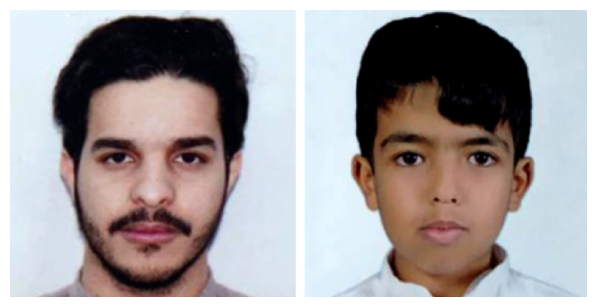
Abdulrahman Al-Dosri, donor, and Faisal Al-Subaie, recipient.
Over time, this passion for reading began to enlighten him, opening his eyes to different prospects in life and his role in it. Soon he found himself volunteering in different fields.
Al-Dosri said that his wide reading helped to encourage his humanitarian efforts — already a cultural pillar in the Kingdom — pushing him to interpret what he had read and embody it in his life.
From a young age, he used to tell himself that “humans should be humans and not be parsimonious when it comes to helping others,” recalling the verse of the Qur’an that says: “Whoever saves a life, it will be as if they saved all of humanity.”
In Saudi Arabia, organ transplant operations began over three decades ago, with the first a kidney transplant from a live donor.
Organ donations from the deceased began in 1985. Since then there have been many medical advances, all of which offered a sense of security to many citizens who are able, healthy and willing to make the sacrifice, understand the weight it carries, and create a lasting connection between donor and recipient.
I registered in the organ donation program after learning that King Salman and Crown Prince Mohammed bin Salman had done so.
Abdulrahman Al-Dosri
The story behind organ donation is often simple but inspiring.
Al-Dosri found himself moved by the story of the child who needed a kidney, which was relayed over social media. He was touched when he saw images of the child’s suffering. So, he took a picture of Al-Subaie on his mobile phone, and began considering donating a kidney to end the boy’s suffering and that of his parents.
Al-Subaie’s parents had moved to Riyadh to be close to their son, who had been staying in one of the capital’s hospitals in order to follow up on his case.
Al-Dosri searched for the child until he was able to reach the parents. They were in tears after hearing of his unparalleled humanitarian gesture, and full of praise for a young man willing to give up one of his kidneys to save their child.
FASTFACTS
• In Saudi Arabia, organ transplant operations began over three decades ago, with the first a kidney transplant from a live donor.
• Organ donations from the deceased began in 1985.
• In 2017, there were 19,659 dialysis patients in Saudi Arabia, most aged between 26 and 60, with only 1 percent under 15 years of age, according to the Saudi Journal of Kidney Diseases and Transplantation.
Transplants depend on blood groups, donor availability, urgency and immunological matching.
Al-Dosri fulfilled all the criteria, and preparations began for what would be one of thousands of operations conducted in the Kingdom by public-spirited medical specialists.
The operation was performed earlier this year and was successful. The child was able to return to his normal life, and both patient and the donor fully recovered, creating a lifelong bond.
Earlier this month, the generous donor was awarded the King Abdul Aziz Medal for his humanitarian act.
Al-Dosri said that he registered in the organ donation program after learning that King Salman and Crown Prince Mohammed bin Salman had done so — an announcement that led to a wave of registrations in the Kingdom.
The program is a key part of the significant and important humanitarian work giving the sick, whose lives depend on transplants, life and hope.


