
Pakistani girl feared dead in Italy after refusing arranged marriage

This undated file photograph shows Pakistani girl Saman Abbas who has been missing since May 5, 2021, in Italy. (Photo courtesy: ANSA)
Short Url
Updated 29 May 2021
Follow

Pakistani girl feared dead in Italy after refusing arranged marriage

  • Last year, 18-year-old Saman Abbas rebelled against her family's plan to have her wedded to a cousin in their home country and reported her parents to police
  • Abbas has been missing since May 5 and her five family members, suspected of her murder, are believed to have left Italy for Pakistan

ROME: Police in Italy are searching for the body of an 18-year-old girl suspected to have been killed by her Pakistani family after refusing an arranged Muslim marriage.

The girl's parents, an uncle and two cousins are under investigation for murder, lieutenant colonel Stefano Bove of the Carabinieri police said Saturday.

All "are supposed to have taken part in the crime," he told reporters, while officers were combing through farmland to find the missing girl, Saman Abbas.

Bove said the Carabinieri were inspecting "wells, irrigation canals and greenhouses."

Saman Abbas, who lived in the northern town of Novellara, last year rebelled against her family's traditional plan to have her wedded to a cousin in their home country.

While still a minor, she turned to social services and in November was moved into a shelter home. She also reported her parents to police, but on April 11 returned to them.

Police has been searching for her since May 5, when officers visited her house and found nobody, triggering an investigation.

Officers then discovered that the girl's parents had left for Pakistan without her, and found images from a nearby security camera that made them fear the worst.

Late on April 29, five people can be seen walking off from the house holding shovels, a crowbar and a bucket, and returning after about two-and-a-half hours.

The Carabinieri have identified the five as the family members suspected of murder. All are believed to have left Italy for Pakistan.

Meanwhile, hundreds of people took part in a solidarity rally for the missing girl organized on Friday night by the town hall of Novellara.

"Saman, tonight you are not alone and you will never again be alone," Mayor Elena Carletti said in a video posted on local news website Reggioonline.
Pakistan approves $713 million to ease power sector’s cash flow constraints

Updated 5 sec ago
Follow

Pakistan approves $713 million to ease power sector’s cash flow constraints

  • Finance minister chairs Economic Coordination Committee meeting to approve grants, review economic situation
  • Pakistan is grappling with a ballooning “circular debt,” or unpaid bills and subsidies, that has choked its power sector

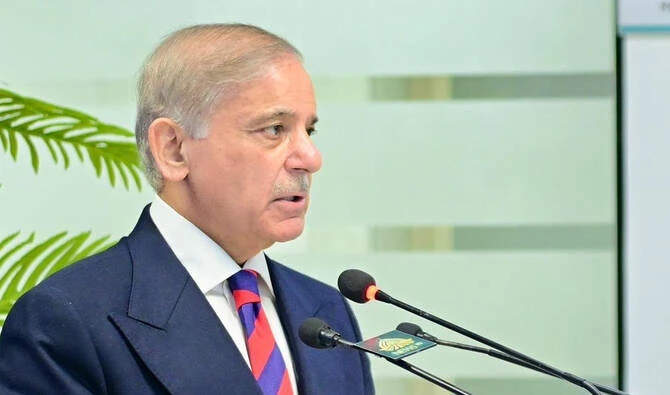
KARACHI: Pakistan’s top economic body this week approved a grant of $713 million to ease the power sector’s cash flow constraints, the Finance Division said in a statement, as Islamabad looks to reform its priority sectors. 

The development took place as Finance Minister Muhammad Aurangzeb chaired a meeting of the Economic Coordination Committee (ECC) to approve grants for various projects and review the overall economic situation of the country. 

“[ECC approved] another Technical Supplementary Grant amounting to Rs200 billion ($713 million) under the head of Government of Pakistan investment in DISCOs’ equity to address cash flow constraints in the power sector,” the Finance Division said on Thursday. 

DISCOs, which handle billing, recoveries and grid maintenance, have long suffered from corruption and political interference. 

Pakistan has attempted to privatize its loss-making state-owned enterprises to raise funds and reform them as envisaged under a $7 billion International Monetary Fund (IMF) program secured last year. 

Prime Minister Shehbaz Sharif’s government plans to privatize three DISCOs, the Islamabad Electric Supply Company (IESCO), Faisalabad Electric Supply Company (FESCO) and Gujranwala Electric Power Company (GEPCO) in the months ahead. 

The Pakistani government, which owns or controls much of the power infrastructure, is grappling with a ballooning “circular debt,” or unpaid bills and subsidies, that has choked the power sector and weighed on the economy.

The liquidity crunch has disrupted supply, discouraged investment and added to fiscal pressure, making it a key focus under Pakistan’s IMF program.

The ECC also approved, on the interior ministry’s proposal, a provision of Rs 4.775 billion [$17.19 million] as payment to 945 families of “missing persons” as identified by the Commission of Inquiry on Enforced Disappearances. 

“The disbursement will be made under the supervision of the Commission in accordance with approved procedures,” it added. 

Taking stock of the economic situation, the ECC noted that cumulative inflation for the period July–November averaged 5 percent, which it said was “significantly lower” than the 7.9 percent figure recorded during the corresponding period of the previous year. 

It attributed this improvement to prudent fiscal management, effective price stabilization measures and close market monitoring by the government.